 Login
LoginChateau de Gromesnil historic architecture and gardens in France
24 May 2026 at 12:50
Luc V. de Zeeuw posted a photo:

Chateau de Gromesnil standing in its landscaped gardens with a path and manicured shrubs under a cloudy sky



Luc V. de Zeeuw posted a photo:
Chateau de Gromesnil standing in its landscaped gardens with a path and manicured shrubs under a cloudy sky

The Academy of Motion Picture Arts and Sciences has officially announced their winners of the 49th Student Academy Awards competition!
A total of 1,796 entries from 614 colleges and universities around the world were submitted.
Congratulations to the student winners below!

Names: Jan Gadermann and Sebastian Gadow
School: Konrad Wolf Film University of Babelsberg
Location: Germany
About:
Nemo looks different. Nobody else wears a diving suit and such a huge helmet. But then he meets Laika, an astronaut.

Name: Lachlan Pendragon
School: Griffith Film School
Location: Australia
About:
A young office worker uncovers the flaws in his stop-motion universe with the help of a mysterious talking ostrich.

Names:Yanis Belaid, Eliott Benard and Nicolas Mayeur
School: Pôle 3D Digital & Creative School
Location: France
About:
Algerian workers take to the streets in October of 1961 to protest the mandatory curfew imposed by the Police prefecture.
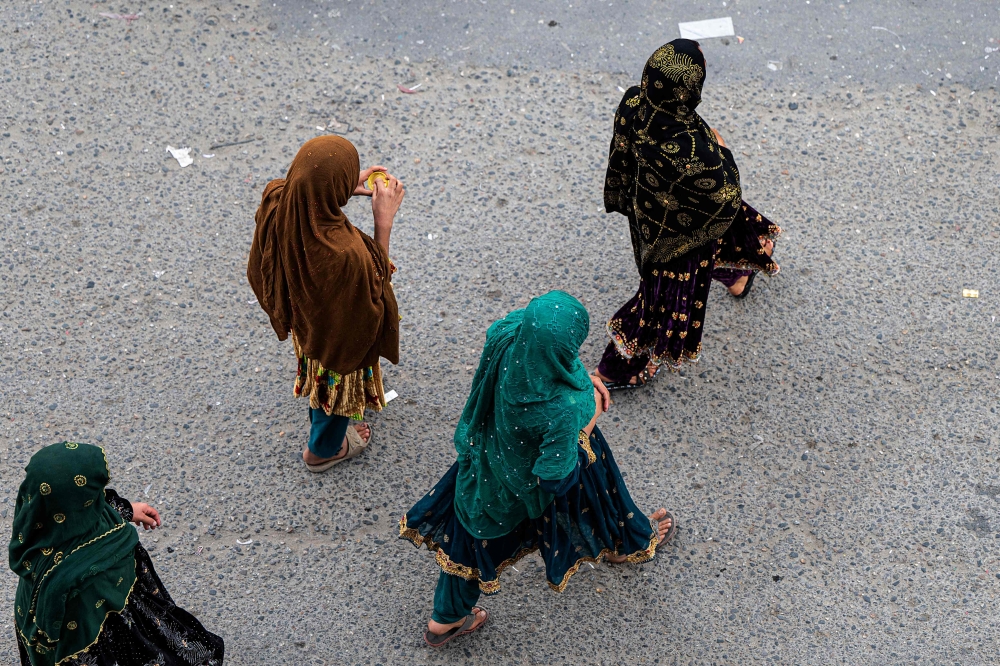
KABUL, June 8 — The United Nations mission in Afghanistan has expressed concern over the arrest and detention of women in a western province for allegedly failing to comply with “dress requirements” and urged Taliban authorities to treat all people equally.
The United Nations Assistance Mission in Afghanistan (Unama) did not specify how many women had been affected, though local media reported last week that at least 21 women and girls were detained in Herat province.
The Afghan Taliban did not respond to Reuters request for comment.
“Unama is concerned over multiple arrests and detentions of women in Herat... for alleged non-compliance with dress requirements, which raises serious human rights concerns,” Unama said in a post on X late on Sunday.
“We remind the de facto authorities that all people have the right to freedom of movement and that all persons, both women and men, are entitled to equality before the law,” it said.
The reported detentions follow a Taliban directive issued last week prohibiting women from appearing in public without what authorities described as a “proper hijab,” according to local media.
The directive warned that women who failed to comply with the dress code — including those showing their faces or wearing makeup — would face punitive measures, the reports said. Reuters was unable to independently verify the directive.
Since seizing power in Kabul in 2021, the Taliban has imposed sweeping restrictions on women and girls in the war-shattered country, including limits on access to education, employment and sport, drawing widespread international criticism.
A Unicef report released in April had warned the country was at risk of losing more than 25,000 female teachers and health workers by 2030 if restrictions on girls’ education and women’s employment remain in place.
The Taliban says it respects women’s rights in accordance with its interpretation of Islamic law. — Reuters
A Guardian analysis reveals how most of 39 countries facing US entry restrictions are most vulnerable environmentally
Donald Trump’s immigration crackdown is largely targeting people from the countries most vulnerable to displacement from climate-driven disasters, a Guardian analysis shows.
As the Trump administration pushes policies to boost planet-heating fossil fuels, millions of people are being forced to flee their homelands due to storms, floods and droughts worsened by the climate crisis.
Continue reading...
© Composite: The Guardian, AFP via Getty Images
© Composite: The Guardian, AFP via Getty Images
© Composite: The Guardian, AFP via Getty Images
The archetype of the LIFE photographer was a combination of artist and adventurer. That ideal was celebrated in the form of Sean Penn’s character in the 2013 film The Secret Life of Walter Mitty, but in real life no one embodied it better than Margaret Bourke-White.
Bourke-White was one of the magazine’s original four staff photographers, and her adventurous spirit was on display in LIFE’s Oct. 25, 1937 issue, which featured two related stories from her. The first, which began on page 40, was headlined “A 10,000-Mile Tour of Canada’s Northwest with Lord Tweedsmuir.” She had traveled along with Canada’s governor general as he visited remote communities in the Northwest Territories.
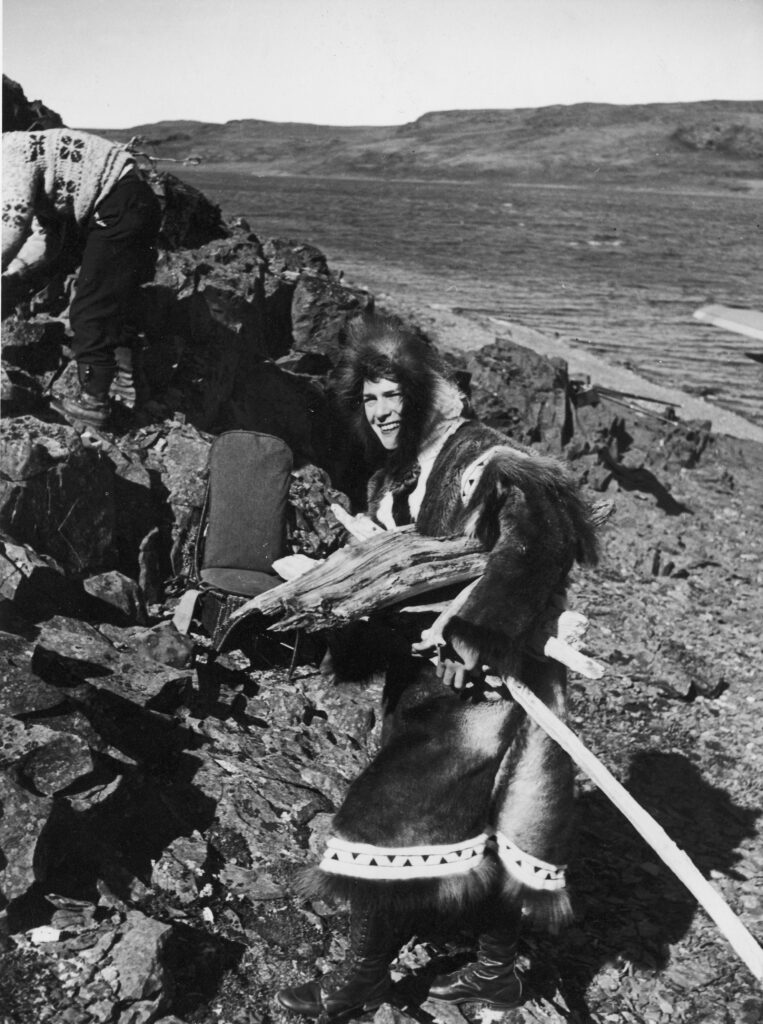
Bourke-White’s second story in that issue, which began on page 119, was also set in Canada’s Northwest Territories, but in that one the photographer briefly became a subject. She was on a separate tour with Archibald Fleming, the Anglican Church’s first-ever Bishop of the Arctic, when their small plane encountered heavy fog and had to make an unplanned landing in an unpopulated location. Bourke-White was the lone woman in the traveling party of five, and she pitched in to gather driftwood to build a fire while they waited who-knows-how-long for the fog to clear. That was typical of the hardiness she demonstrated throughout her career.
Bourke-White’s willingness to go the distance in the Northwest Territories resulted in an intimate portrait of the lives of indigenous people in one of the most remote locations in North America. Her photo essays in that 1937 issue, which include shots of Inuit people at their homes and at a Hudson’s Bay Company trading post, document an ancient culture being touched by outside forces, and are the reason LIFE photographers like her were always up for a journey, no matter how arduous.
LIFE photographer Margaret Bourke-White gathered driftwood for a fire after her plane made a forced landing due to fog in the Canadian Arctic, 1937.
Margaret Bourke-White/Life Picture Collection/Shutterstock
After a forced landing due to fog in the Canadian Arctic, members of the traveling party of Archbishop Archibald Fleming studied maps to determine their whereabouts, 1937.
Margaret Bourke-White/Life Picture Collection/Shutterstock
Rev. Archibald Fleming served as the Anglican Church’s first-ever Archbishop of the Arctic, 1937.
Margaret Bourke-White/Life Picture Collection/Shutterstock
Inuit people arrived by boat to meet the plane of Rev. Archibald Fleming, Anglican Bishop of the Arctic, in the Northwest Territories, 1937.
Margaret Bourke-White/Life Picture Collection/Shutterstock
Inuit people greeted Rev. Archibald Fleming, Anglican Bishop of the Arctic, after his landing in the Northwest Territories, 1937.
Margaret Bourke-White/Life Picture Collection/Shutterstock
A priest played during vespers in the Church of St. Theresa, Fort Norman, Northwest Territories, Canada, 1937.
Margaret Bourke-White/Life Picture Collection/Shutterstock
An aerial view of Aklavik, a town on the Mackenzie River delta in the Northwest Territories of Canada, 1937.
Margaret Bourke-White/Life Picture Collection/Shutterstock
Canada’s governor general, Lord Tweedsmuir, looked at a map of his domain made of moosehide and embroidered with silk that was given to him by the townsfolk of Fort Simpson in the Northwest Territories, 1937.
Margaret Bourke-White/Life Picture Collection/Shutterstock
In Kugluktuk (then known as Coppermine) people gathered outside the Hudson’s Bay Company trading post, 1937.
Margaret Bourke-White/Life Picture Collection/Shutterstock
An Inuit person traded wolverine fur for flour, baking soda, tallow, butter, jam and tobacco at the Hudson’s Bay Company store in Kugluktuk (then known as Coppermine) in the Northwest Territories, 1947.
Margaret Bourke-White/Life Picture Collection/Shutterstock
Furs at the Hudson’s Bay store in the Northwest Territories, 1937.
Margaret Bourke-White/Life Picture Collection/Shutterstock
White fox pelts at the Hudson’s Bay Company store in the Northwest Territories, 1937.
Margaret Bourke-White/Life Picture Collection/Shutterstock
Inuit children at the Sacred Heart school in the tiny town of Fort Providence in the Northwest Territories awaited a visit from Canada’s governor general and the chance to perform a dance they had spent months rehearsing, 1937.
Margaret Bourke-White/Life Picture Collection/Shutterstock
The sisters of the Sacred Heart School harmonized along with an organ in Fort Providence, Northwest Territories, 1937.
Margaret Bourke-White/Life Picture Collection/Shutterstock
This Inuit family enjoyed such modern conveniences as a victrola, a sewing machine, and a coal-burning stove in their tent, 1937.
Margaret Bourke-White/Life Picture Collection/Shutterstock
Portrait of an Inuit mother and her child in Kugluktuk (then known as Coppermine), Northwest Territories, Canada, 1937.
.Margaret Bourke-White/Life Picture Collection/Shutterstock
An unidentified Inuit couple in Kugluktuk (then known as Coppermine), Northwest Territories, Canada, 1937.
Margaret Bourke-White/Life Picture Collection/Shutterstock
An Inuit mother tended to her child in Canada’s Northwest Territories, 1937.
Margaret Bourke-White/Life Picture Collection/Shutterstock
A scene from Inuit life in Canada’s Northwest Territories, 1937.
Margaret Bourke-White/Life Picture Collection/Shutterstock
The post Bourke-White’s Images of the Northwest Territories, 1937 appeared first on LIFE.

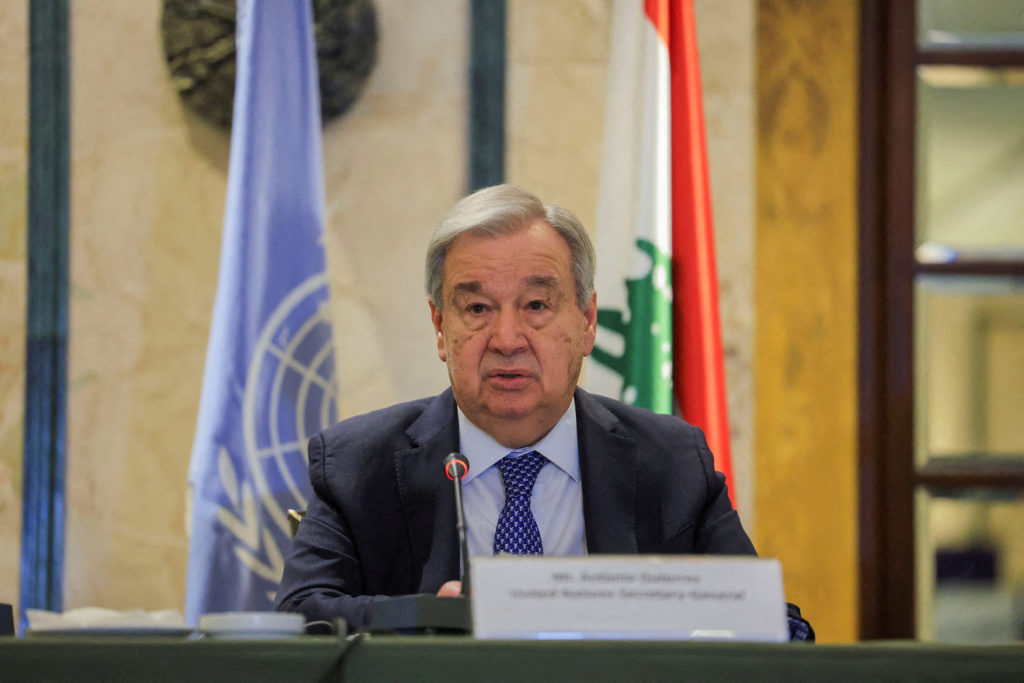
The United Nations (UN) has entered into formal negotiations with the United States regarding the entry of fuel supplies to Cuba amid acute fuel shortages caused by a U.S. oil blockade, said Francisco Pichón, the permanent representative of the UN to Cuba.
Members of the UN Office for the Coordination of Humanitarian Affairs and the Trump administration are discussing ways “to ensure that fuel can be accessed for humanitarian purposes,” according to Pichón.
The UN representative clarified that those fuel supplies would be used for “emergency response operations” and to protect the access of “vulnerable people and groups” to “vital services”.
The recent U.S. oil blockade on oil has led to a growing nationwide humanitarian crisis: many regions are facing prolonged power outages, hospitals are facing increasing pressure as life-saving treatments are disrupted, and the economy is crumbling as schools and workplaces reduce their operational hours.
The U.S. campaign of economic pressure is widely seen as an attempt to force the Cuban regime into collapse or make its leader grant political concessions to Washington. Senior Republicans in the U.S. have repeatedly suggested that some form of regime change in Cuba is imminent.
During the Shield of the Americas Summit on Saturday, President Trump promised that “great change” was coming to Cuba and its “bad regime that has been bad for a long time.”
On Monday, President Trump reiterated his warning, claiming that Cuba may soon face either a “friendly” or “unfriendly” takeover by the U.S.
Republican U.S. Senator Lindsey Graham also told Fox News on Sunday that “the liberation of Cuba is upon us. It’s just a matter of time now.”
Although there are reports that an economic deal between Washington and Havana could soon be announced, the “unfriendly” option remains a possibility. The U.S. administration’s strikes on Iran or its operation to capture Venezuelan President Nicolás Maduro could serve as templates for a potential military operation against Cuba.
Read more: U.S. Reportedly Closing In On Economic Deal With Cuba
Ricardo Torres, a Cuban economist and research fellow at the Center for Latin American and Latino Studies at American University, spoke to Latin America Reports about the current Cuban crisis and the various iterations of regime change that could occur as a result.
“Whatever emotional and material reserves [Cuban] people once had are now largely exhausted … if the United States strictly enforces the oil embargo, a negotiated solution will likely become inevitable, given the limited support Cuba is receiving from its allies,” the economist said.
Venezuela, Cuba’s erstwhile closest regional ally, has stopped supplying the island with oil since the capture of President Nicolás Maduro by U.S. forces and in early March an oil tanker bound for the island from Russia – a traditional ally – reversed route under suspected U.S. pressure.
Commenting on recent revelations about UN-U.S. negotiations, Torres pointed out that the discussions between the White House and the UN will likely be limited to “aid delivery” as opposed to opening an avenue for de-escalation.
The U.S., he argued, “would [probably] favor a full [political] transition in Cuba” and an end to Communist party rule. Failing that, “they may be prepared to support a phased agreement that starts with building a more stable economic base and proceed from there,” the research fellow concluded.
Featured Image: A horse-drawn cart in Cuba during the Cuban ‘Período Especial’, the term used to describe the Cuban economic struggles in the 1990s after the Soviet collapse. The scale of current fuel shortages in Cuba has not been seen since the ‘Período Especial’
Image Credit: Nick via Wikimedia Commons
License: Creative Commons Licenses
The post United Nations negotiates with US to allow fuel into Cuba appeared first on Latin America Reports.
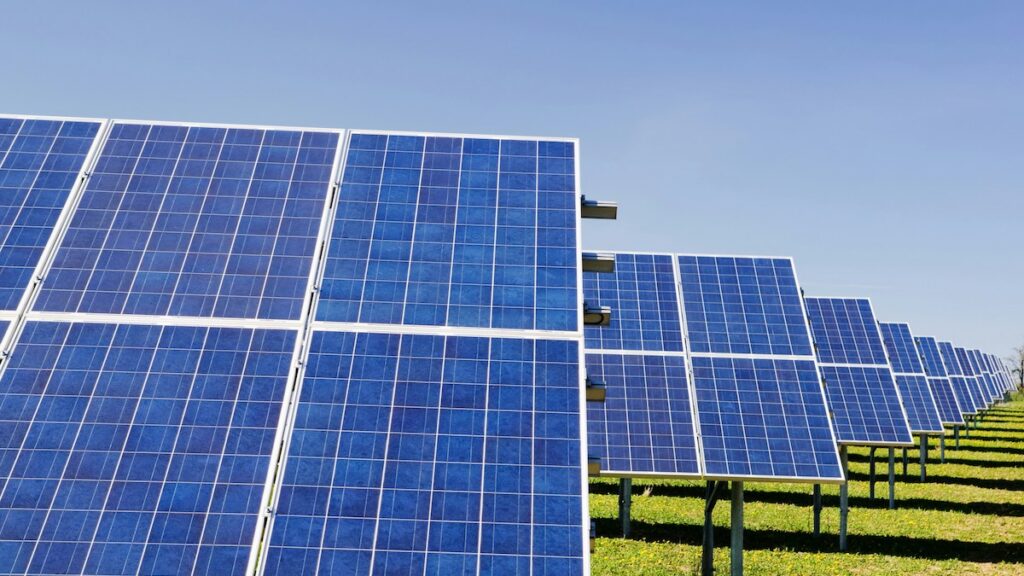
The Intergovernmental Panel on Climate Change (IPCC), the United Nations body whose mission is to “provide governments at all levels with scientific information that they can use to develop climate policies” will likely update the emissions and land use scenarios used in the models it considers in its bellwether assessment reports.
The IPCC has used these scenarios, known as Shared Socioeconomic Pathways (SSPs) or Representative Concentration Pathways (RCPs), in its two most recent assessment reports (AR), AR5 released in 2014 and AR6 released in 2023. The upcoming AR7 will be informed by a new set of scenarios, as described in a paper published last month in Geoscientific Model Development.
The paper is drawing widespread attention—both within the scientific community and in wider discourse—for its statement regarding one current scenario that has become familiar to anyone following climate science and policy. The scientists said the emissions levels associated with the most extreme, worst-case scenario, SSP5-8.5 (and its predecessor, RCP8.5), “have become implausible.”
Even President Donald Trump weighed in with a post on Truth Social on 17 May, where he wrote “GOOD RIDDANCE,” and “the United Nations TOP Climate Committee just admitted that its own projections (RCP8.5) were WRONG! WRONG! WRONG!”
But as scientists have pointed out for years, RCP8.5 was never meant to represent a likely emissions scenario or a forecast of humanity’s future. Some scientists questioned whether it’s even possible for RCP8.5 to play out in real life.
RCP8.5 is one of four hypothetical emissions scenarios developed in 2011 for climate modeling experiments. When RCP8.5 was created, it was meant to represent a “very high baseline emission scenario” that would warm the world nearly 5°C (9°F) compared with preindustrial temperatures by 2100. Parallel scenarios (SSPs) were presented in 2017. SSP5-8.5 is the worst-case scenario in that framework, representing a world in which fossil fuels are widely exploited and more of the world adopts energy-intensive lifestyles alongside the warming projected by RCP8.5.
“The scenarios we create today are different than the scenarios we created 15 years ago, because the world is different today than 15 years ago.”
The authors of the new paper wrote that “trends in the costs of renewables, the emergence of climate policy and recent emissions trends” justify the implausibility of the highest-emissions scenarios such as RCP8.5 and SSP5-8.5.
For scientists, the idea of dropping these scenarios is neither new nor controversial. As three climate scientists (Zeke Hausfather of Berkeley Earth, Glen Peters of the CICERO Center for International Climate Research, and Piers Forster at the University of Leeds) wrote in a blog post: “[RCP8.5] was never a likely outcome even in a world that did not address climate change; rather it was always intended to represent a worst case scenario that pushed fossil fuel expansion to the max.”
The new scenarios presented in Geoscientific Model Development include a high-emissions scenario in which clean energy policy is rolled back, and the world warms about 3.5°C (6.3°F) by 2100—still a level at which humanity can expect very severe impacts, from worsening weather extremes to rapidly rising sea levels.
The IPCC’s likely elimination of RCP8.5, even if it was never a plausible scenario, is a small sign of improvement in global climate change mitigation efforts, Hausfather, Peters, and Forster wrote: “Rapid declines in clean energy costs have bent the curve of future emissions downward, with new scenarios designed to reflect current policies notably lower than most baseline scenarios in the literature.”
“Of course, we still have a long way to go to get emissions down to (net) zero and stabilize global temperatures,” they noted.
The new paper captures the difficult road ahead for climate action: The new scenarios are based on a reduced projection for the increase in emissions, not for the overall amount of emissions—those are still increasing. Unlike before, none of the new emissions scenarios keep the world below 1.5°C (2.7°F) of warming, the limit originally set by the Paris Agreement in 2016. That’s no surprise to scientists, who suggest Earth is already in the 20-year period in which warming will formally surpass this benchmark.
“The scenarios we create today are different than the scenarios we created 15 years ago, because the world is different today than 15 years ago,” Hausfather told the Washington Post.
—Grace van Deelen (@gvd.bsky.social), Staff Writer
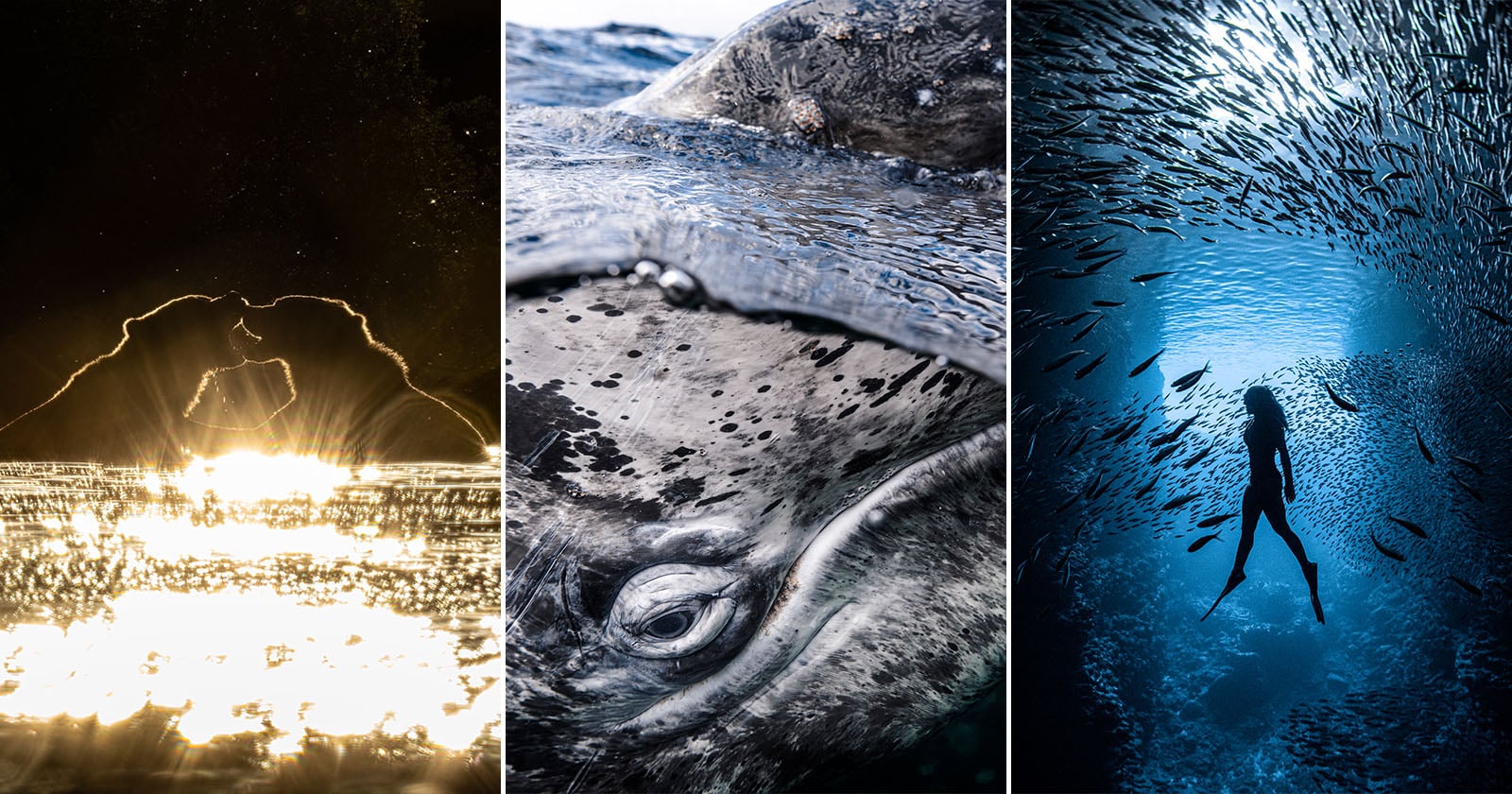
The 13 winners of the 13th annual Photo Competition for United Nations World Oceans Day have been announced.


