
Normal view

  • ✇SoraNews24 Japan
  • Six towering historical warrior floats will grace Fukui’s Mikuni Festival for three days Krista Rogers
    This annual procession is the perfect stop for samurai buffs who enjoy traditional Japanese festivals with a warrior twist. The streets of Sakai, Fukui Prefecture, are about to be packed when the city’s Mikuni Festival kicks off on May 19 for three days. Considered one of the Hokuriku region of Japan’s “three great festivals,” the annual festival spans approximately 300 years of tradition. This year, six newly crafted floats over six meters (6.6 yards) in height that depict historical samurai
     

Six towering historical warrior floats will grace Fukui’s Mikuni Festival for three days

18 May 2026 at 17:30

This annual procession is the perfect stop for samurai buffs who enjoy traditional Japanese festivals with a warrior twist.

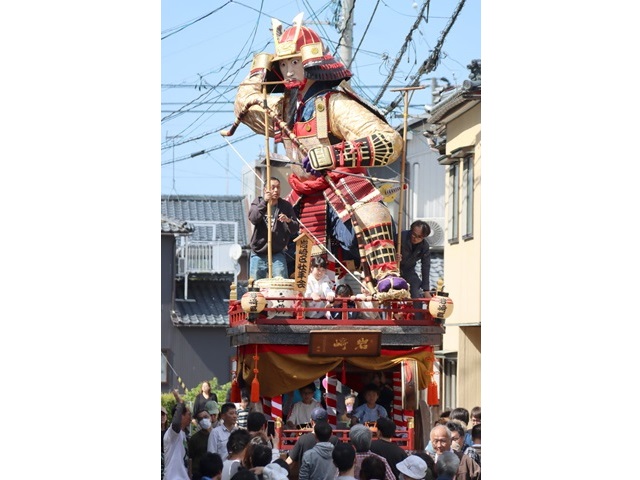
The streets of Sakai, Fukui Prefecture, are about to be packed when the city’s Mikuni Festival kicks off on May 19 for three days. Considered one of the Hokuriku region of Japan’s “three great festivals,” the annual festival spans approximately 300 years of tradition. This year, six newly crafted floats over six meters (6.6 yards) in height that depict historical samurai of legend as well as famous scenes from kabuki plays and historical battles will be paraded around different districts of the city.

▼ Kamakura Gongoro Kagemasa (born 1069), as depicted in the play “Shibaraku,” one of the 18 Best Kabuki Plays

▼ Keiji Maeda (1543-1612)

The new floats were first unveiled to the public on 9 May. Festivities will officially begin at 6:30 p.m. on 19 May when the Maeda Keiji float will be showcased in the vicinity of Mikuni Shrine by the harbor. Then, at 1 p.m. on 20 May, all six floats will join in a procession around the city beginning at Mikuni Shrine. On this day, a special mikoshi portable shrine will also leave from the shrine, along with a procession of locals donning warrior-inspired garb.

▼ Magistrate Kinshiro Toyama (1793-1855)

▼ Minamoto no Yoshitsune (1159-1189)

In addition, this year’s festival marks a first as the newly assembled Sakai City Board of Education’s Mikuni Festival General Investigative Committee, comprised of 11 expert individuals from the municipality, will begin conducting a multi-year, comprehensive study of the festival. Their investigation will examine everything from the craftsmanship of the floats and how they’re pulled around, to the various musical accompaniments in different districts of the city. It will also seek to answer overarching questions such as why the floats came to include figures of samurai in the first place and why those are destroyed upon the conclusion of the festival every year. As the first study of its kind to be funded by governmental aid, a formal written report is expected to be published in 2029.

▼ Taira no Tomomori (1152-1185) with the anchor he used to drown himself upon losing the Sea Battle of Dan no Ura (1185)

▼ The assault of Naganori Asano (1667-1701) on Yoshinaka Kira (1641-1703) in the Pine Corridor of Edo Castle, the trigger that led to the legend of the 47 Ronin (1703)

Another new feature of this year’s festival is the creation of a special seated viewing area in the Echizen Railway’s Mikuni Station plaza. Between 4:30-6:30 p.m. on 20 May, spectators can view all six floats in succession as they approach the station and circle the intersection. 40 seats are available for purchase for 5,000 yen ($31.55) each in advance or for 6,000 yen on the day of the event. The viewing area will be split into four levels, with the highest one at 1.8 meters for prime viewing. Seats can be reserved by contacting the Mikuni Community Center at mikuni-cc@city.fukui-sakai.lg.jp or (+81) 0776-82-6400.

While you’re in town, you may also want to see what Fukui has to offer in the gastronomic delights department, such as the sasazuke preserved fish that’s popular among the locals.

Source, images: PR Times
● Want to hear about SoraNews24’s latest articles as soon as they’re published? Follow us on Facebook and Twitter!

  • ✇MyFitnessPal Blog
  • Coconut-Green Apple Muesli MyFitnessPal’s Recipes
    Muesli is a cold porridge of oats, fruit and milk or yogurt that can be eaten immediately, or can be left to soften in the fridge overnight. However, don’t be fooled by this humble dish. Something magical happens while the muesli sits in the fridge over time, turning the oats into a soft, creamy and satisfying breakfast. Active time: 20 minutes | Total time: 20 minutes Coconut-Green Apple Muesli Ingredients 1 1/2 cups (368g) plain 0% Greek yogurt 1/2 cup (122g) unsweetened coconut milk ¼ cup (
     

Coconut-Green Apple Muesli

Coconut-Green Apple Muesli

Muesli is a cold porridge of oats, fruit and milk or yogurt that can be eaten immediately, or can be left to soften in the fridge overnight. However, don’t be fooled by this humble dish. Something magical happens while the muesli sits in the fridge over time, turning the oats into a soft, creamy and satisfying breakfast.

Active time: 20 minutes | Total time: 20 minutes

Coconut-Green Apple Muesli

Ingredients

  • 1 1/2 cups (368g) plain 0% Greek yogurt
  • 1/2 cup (122g) unsweetened coconut milk
  • ¼ cup (62g) freshly squeezed orange juice
  • 2 tbsp light honey or maple syrup
  • ¼ tsp ground cinnamon
  • ⅛ tsp kosher salt
  • 1 cup (80g) rolled oats
  • ½ cup (46g) sliced almonds, roasted and unsalted
  • ½ cup (59g) pepitas, roasted and unsalted
  • 1/2 cup (21g) shredded unsweetened coconut
  • 1 large Granny Smith apple, cored and shredded

Optional garnishes

  • Ground cinnamon, for sprinkling
  • Honey or maple syrup, for drizzling
  • Toasted shredded coconut
  • Shredded apple
  • Toasted chopped nuts, such as almonds, hazelnuts or walnuts

Directions

In a medium bowl, whisk the yogurt and milk with the orange juice, honey, cinnamon and salt. Fold in the oats, almonds, pepitas, coconut and apple until thoroughly combined. Scrape the muesli into four 1-cup jars with tight-fitting lids. Refrigerate at least 1 hour, preferably overnight.

Eat right out of the jar, garnished with cinnamon, honey, toasted coconut, shredded apple or toasted nuts, if desired.

Serves: 4 | Serving Size: About 1 cup

Nutrition (per serving): Calories: 426; Total Fat: 22g; Saturated Fat: 9g; Monounsaturated Fat: 7g; Polyunsaturated Fat: 5g; Cholesterol: 5mg; Sodium: 120mg; Carbohydrate: 42g; Dietary Fiber: 7g; Sugar: 20g; Protein 20g

Nutrition Bonus: Potassium: 585 mg; Iron: 17%; Vitamin C: 8%; Calcium: 20%

Originally published February 8, 2020; Updated December 2025

The post Coconut-Green Apple Muesli appeared first on MyFitnessPal Blog.

  • ✇Malay Mail - All
  • From operating theatre to livestock farm, cardiac anaesthesiologist Saedah Ali finds new peace
    BACHOK,  May 17 — If her life was once filled with pressure and the adrenaline of saving patients in the operating theatre, a former cardiac anaesthesiologist at Universiti Sains Malaysia Specialist Hospital (HPUSM) has now found a new sense of peace in sheep and goat farming.Dr Saedah Ali, 59, who began her career as a medical doctor in 1992 and was involved in pioneering cardiac surgery services at HPUSM in 2001, ventured into livestock farming in June 2018, ab
     

From operating theatre to livestock farm, cardiac anaesthesiologist Saedah Ali finds new peace

16 May 2026 at 23:00

Malay Mail

BACHOK,  May 17 — If her life was once filled with pressure and the adrenaline of saving patients in the operating theatre, a former cardiac anaesthesiologist at Universiti Sains Malaysia Specialist Hospital (HPUSM) has now found a new sense of peace in sheep and goat farming.

Dr Saedah Ali, 59, who began her career as a medical doctor in 1992 and was involved in pioneering cardiac surgery services at HPUSM in 2001, ventured into livestock farming in June 2018, about four years before taking optional retirement in 2022.

She said her interest in the field was sparked after seeing her late father’s 1-hectare (2.5-acre) inherited land left overgrown with bushes and undergrowth, prompting her to develop it into a livestock farm as a side activity.

“At first, I only rented out the land to villagers for about RM100 a year, but over time, I developed the idea of venturing into livestock farming, as it is also considered a sunnah.

“There is a form of communication and emotional connection when raising livestock. Although it can be exhausting, especially when I have to stay up at night when the animals are sick or giving birth, it has actually become a form of therapy to relieve work-related stress,” she told Bernama recently.

According to her, the stress of being an anaesthesiologist is very different from the stress of managing livestock.

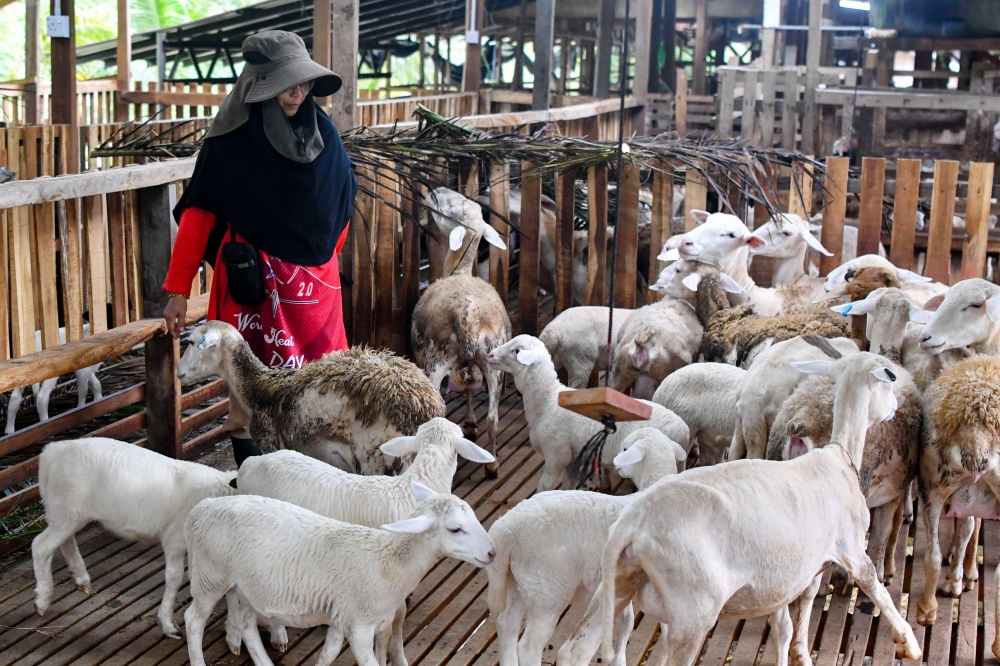
Starting with just eight goats, the farm she runs has since grown to include about 250 sheep and 90 goats.

Dr Saedah said she focuses on the Dorper breed, a cross between Dorset and Persian Blackhead sheep that is known as a premium meat breed, with nearly 90 per cent of the breeding stock imported from Australia.

Besides sheep, she also raises Boer goats and Boer crossbreeds for meat production. To ensure operating costs remain efficient and sustainable, she prioritises the use of natural feed sources by reducing dependence on bran and pellets.

“More than 70 per cent of the livestock feed at this farm consists of Napier grass and Bermuda grass grown on-site, in addition to silage, which is fermented grass,” she said.

However, she acknowledged that the local livestock industry is currently facing various challenges, including an influx of cheap imported goats that has affected local breeders.

According to her, some of the imported livestock are believed to consist of older or lower-quality goats, but they continue to attract demand due to their lower prices.

“Over the past three to four years, many local breeders have been forced to shut down because operating costs can no longer be sustained by current selling prices.

“Besides that, we are also facing rising feed prices due to global geopolitical factors, as well as weather-related challenges such as droughts and floods,” she said.

In this regard, she hopes the government and relevant agencies will intervene by introducing certain controls on the entry of imported supplies to protect the local livestock industry and strengthen the country’s food security.

Besides generating income, Dr Saedah’s farm also contributes to the local community through a Corporate Social Initiative (CSI) collaboration with the prison authorities by providing employment opportunities to parolees over the past two years.

According to her, the farm also frequently serves as a practical training centre for students from various educational institutions, including Universiti Malaysia Kelantan, Universiti Putra Malaysia, Universiti Sultan Zainal Abidin, vocational colleges and the Institut Pertanian Titi Gantung in Perak.

Her success in livestock farming has also been supported by her husband, who is an ear, nose and throat (ENT) specialist at HPUSM and often helps treat sick livestock after working hours.

Concluding the interview, Dr Saedah advised professionals to engage in outdoor activities or hobbies to avoid excessive work-related stress.

“Professionals greatly need outdoor activities to avoid burnout. Whether it is gardening, fishing or raising livestock, find an activity that you enjoy so that when retirement comes, you can remain active and healthy,” she said. — Bernama

❌
Subscriptions