Trump approval on economy slips among Republicans: Survey


![]()
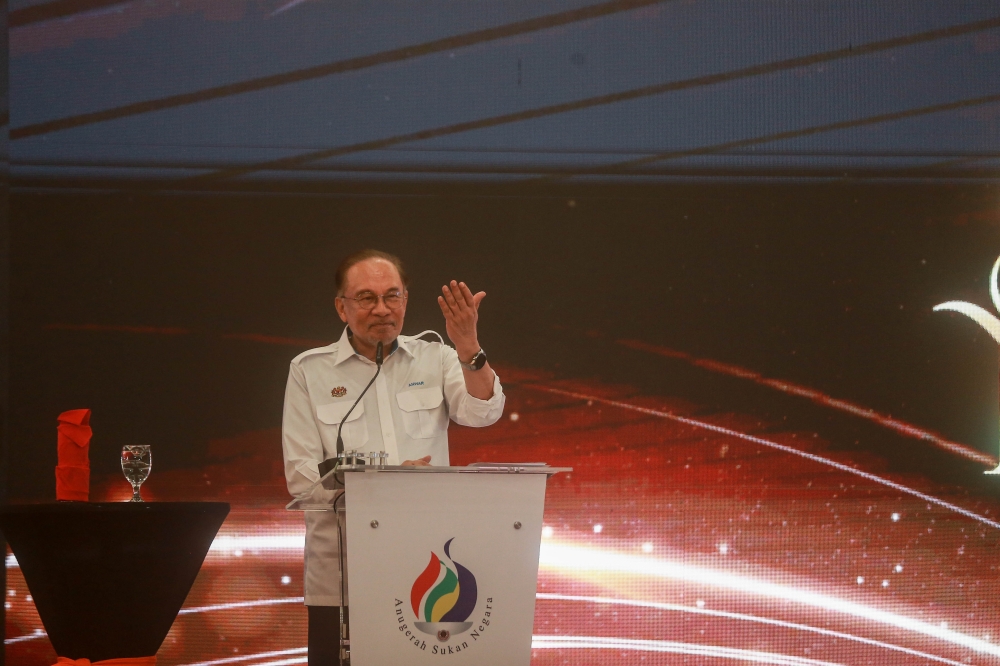
KUALA LUMPUR, May 19 — Malaysia’s economic performance has continued to outperform initial forecasts, despite global pressures and rising oil prices, according to Prime Minister Datuk Seri Anwar Ibrahim.
He said that economic projections had earlier been based on oil prices of around US$70 (RM278) per barrel, but these have since climbed to above US$100 amid shifting global conditions.
“I heard projections indicating improved performance. However, forecasts are often slightly optimistic.
“When earlier economic projections were made, oil prices were around US$70 per barrel. They are now above US$100,” he said in his speech during the National Sports Awards 2025 here today.
He said that nevertheless, despite the challenging conditions, Malaysia’s economic growth performance for last year and the first quarter of this year had still come in higher than projected.
The increase in global oil prices has been driven partly by escalating tensions in the Middle East, including the Iran-Israel conflict, which has intensified since February this year.
Ongoing hostilities have contributed to volatility in global energy markets, particularly amid concerns over potential disruptions to key shipping routes such as the Strait of Hormuz.
![]()
KUALA LUMPUR, May 19 — The ringgit opened slightly higher against the US dollar on Tuesday as market sentiment continued to focus on developments in West Asia.
At 8 am, the local unit rose to 3.9705/9760 against the greenback from Monday’s close of 3.9720/9770.
Bank Muamalat Malaysia Bhd chief economist Mohd Afzanizam Abdul Rashid said market sentiment continued to revolve around the situation in West Asia, as the United States (US) and Iran continued negotiations for a resolution, which, to a large extent, remained highly elusive.
"The latest development showed that US President Donald Trump had called off plans to attack Iran as serious negotiations with Tehran are ongoing,” he told Bernama.
Mohd Afzanizam said that despite ongoing negotiations between the US and Iran, the rise in crude oil prices indicated that concerns over escalating geopolitical tensions persisted.
"Still, West Texas Intermediate and Brent crude oil prices rose 3.07 per cent and 2.60 per cent to US$108.66 per barrel and US$112.10 per barrel, respectively.
"Meanwhile, the US dollar index (DXY) fell 0.34 per cent to 98.947 points,” he said.
As such, Mohd Afzanizam said the ringgit would likely trade within a narrow range of 3.96 to 3.97 against the US dollar today.
At the opening, the ringgit traded lower against a basket of major currencies.
The local note weakened against the British pound to 5.3336/3410 from 5.3078/3145 at Monday’s close, slipped against the euro to 4.6276/6340 from 4.6214/6272 previously, and eased against the Japanese yen to 2.4992/5028 from 2.4991/5024.
The ringgit also traded mostly lower against its regional peers.
It weakened against the Thai baht to 12.2053/2305 from 12.1646/1848 and depreciated against the Singapore dollar to 3.1056/1104 from 3.1036/1078 previously.
However, the local currency edged higher against the Indonesian rupiah to 224.7/225.1 from 224.8/225.1 previously.
The ringgit was little changed against the Philippine peso at 6.43/6.44 from 6.43/6.45 previously. — Bernama

![]()
PARIS, May 16 — Here are the latest developments in the Middle East war:
Israel, Lebanon extend ceasefire
Lebanon and Israel yesterday extended a ceasefire for 45 days, despite a new flare-up in violence, the US State Department said after mediating talks.
“The April 16 cessation of hostilities will be extended by 45 days to enable further progress,” State Department spokesman Tommy Pigott said.
The department would hold negotiations aimed at reaching a permanent political agreement on June 2 and 3, he said, adding that the Pentagon would bring together delegations from the countries’ militaries on May 29.
Lebanon see path to ‘lasting stability’
Lebanon’s delegation at the talks in Washington said yesterday that the truce extension and the establishment of a US-facilitated security track pave the way for “lasting stability”.
“The Lebanese delegation welcomes today’s outcome,” it said, in a statement shared by the Lebanese presidency, adding that it provides “critical breathing space for our citizens.”
Lebanese PM wants end to ‘reckless’ wars -
Lebanese Prime Minister Nawaf Salam yesterday said his country has had enough “reckless” wars for foreign interests, calling for Arab and international support in Beirut’s negotiations with Israel.
Speaking at an NGO dinner, Salam said that he hoped to “mobilise all Arab and international support to bolster our position in the negotiations” with Israel, shortly after the last round of talks ended and extended the truce.
Strike hits building in Lebanon’s Tyre
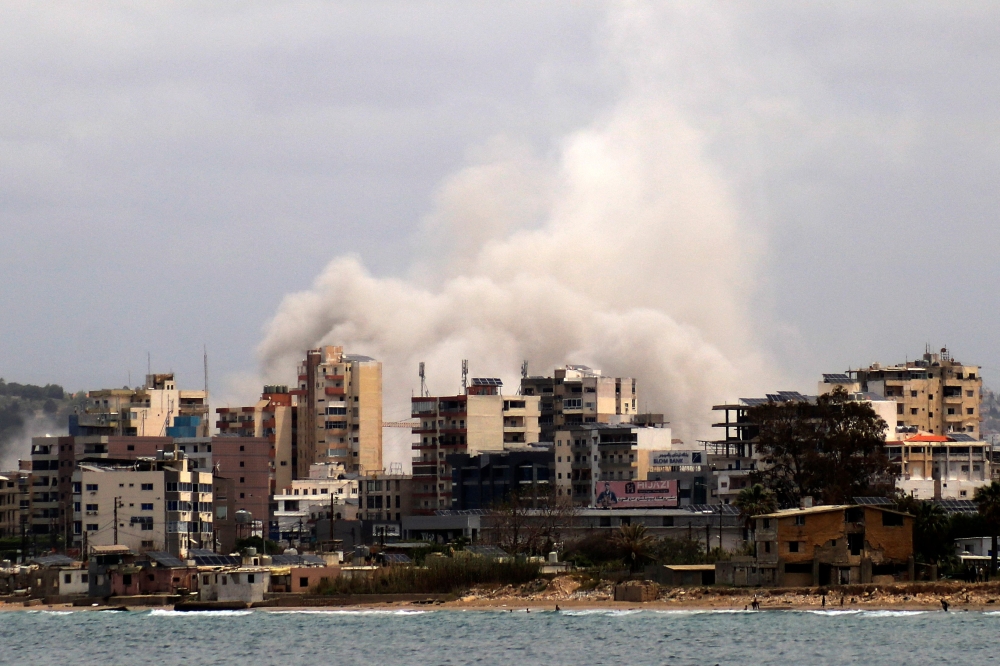
An Israeli strike hit a building in the southern Lebanese city of Tyre yesterday after an evacuation warning by the Israeli army, state media reported, despite the extension in the truce between Israel and Hezbollah.
An AFP correspondent saw a strike hit one of the threatened buildings.
Also yesterday, an Israeli strike in Haruf, south Lebanon, killed three paramedics from the Hezbollah-linked Islamic Health Committee, the Lebanese health ministry said.
Stocks slip, oil rises
Global stocks slumped as summit talks between the US and China failed to deliver progress on reopening the Strait of Hormuz, reigniting worries of persistent inflation pressures that could derail economic growth.
Oil prices, however, rose three per cent, with the international benchmark Brent crude contract at nearly US$109 a barrel.
Israel says 220 militants killed in past week
The Israeli military said yesterday its forces killed more than 220 Hezbollah militants in southern Lebanon over the past week.
During the same period, Israeli forces also struck more than 440 Hezbollah targets in that region, the military added.
UAE rejects Iran war role claims
The United Arab Emirates rejected “attempts to justify Iranian terrorist attacks” after Tehran accused the wealthy Gulf state of playing an active role in the war.
Minister of State Khalifa bin Shaheen Al Marar “affirmed the UAE’s categorical rejection of Iranian claims and attempts to justify Iranian terrorist attacks targeting the UAE” and other nations, a statement said.
More ships pass Hormuz: Iran
Iran is allowing more ships to pass through the strategic Strait of Hormuz, state television has said, because “many countries have accepted the new legal protocols” it has put in place.
Iran open to China help
Iran’s Foreign Minister Abbas Araghchi said the US had sent messages indicating it was willing to continue talks, and that he was open to any support — including from China.
“We appreciate any country who has the ability to help, particularly China,” Araghchi said. — AFP
![]()
MAY 15 — Even if the war in West Asia were to stop tomorrow, the world economy would not suddenly return to normal.
The illusion ceasefire alone can instantly stabilize global energy markets misunderstands the deeper structural damage already inflicted upon the international system.
Their economic aftershocks travel far beyond the battlefield and linger long after political leaders declare victory or ceasefire.
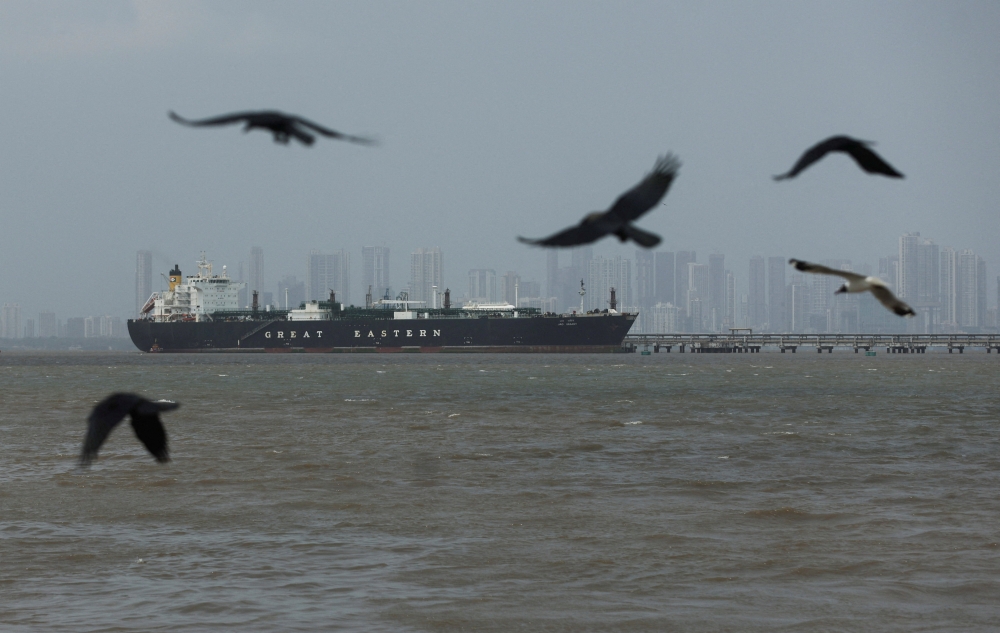
At the center of this crisis remains the Strait of Hormuz. Roughly one-fifth of global oil flows move through this narrow maritime artery.
A substantial percentage of liquefied natural gas exports also passes through the same corridor.
When uncertainty surrounds Hormuz, the world does not merely fear shortages of oil but it’s derivatives too.
It fears the collapse of predictability itself.
To be sure, energy markets are driven as much by psychology as by physical supply. All the prices now are actually based on how events will unfold two months from now. Known as spot prices.
Tanker operators, insurers, sovereign wealth funds, refiners and central banks all price in the risk.
Even temporary disruptions can send shockwaves through futures markets because no shipping company wishes to expose billion-dollar cargoes to missile attacks, naval interception or drone warfare.
To the degree there are some companies in the UAE willing to insure the cargoes, the situation still warrants too much concer for any traders to get into the business.
This explains why oil prices often remain elevated even after ceasefires are announced.
Insurance premiums for tankers rarely decline immediately. Shipping firms continue to reroute vessels.
Some refiners maintain emergency inventories instead of releasing them. Investors fear renewed escalation. In effect, the market develops a memory of instability.
For Asia, the consequences are particularly severe.
East Asia and Southeast Asia remain heavily dependent on West Asian crude oil and LNG supplies. China, Japan, South Korea and much of ASEAN still derive energy imports from the Gulf region.
Any prolonged uncertainty surrounding Hormuz therefore reverberates directly through the economies of Asia.
The Indo-Pacific may speak increasingly about digital transformation, artificial intelligence and semiconductor supremacy.
Yet all these ambitions remain dependent on stable energy flows. Factories cannot operate on geopolitical rhetoric alone.
Their effects extend well beyond petrol prices.
Liquefied natural gas markets tighten rapidly during crises.
Fertilizer prices surge because ammonia and urea production rely heavily on stable hydrocarbon inputs.
Petrochemical costs rise, affecting plastics, textiles and industrial manufacturing.
Shipping bottlenecks elevate freight costs across global supply chains.
Even helium, critical to semiconductors and CT scans, becomes vulnerable when Gulf logistics are disrupted.
Sulfur supplies used in refining and industrial processing are similarly exposed.
The result is not one isolated energy crisis, but an interconnected industrial shock affecting food, healthcare, manufacturing and technological sectors simultaneously.
This is precisely why the world cannot “switch back to normal” overnight
Since the pandemic, global markets have endured repeated systemic shocks: Covid-19, the Russia-Ukraine war, Red Sea disruptions, technological decoupling between the United States and China, and now prolonged instability in West Asia.
Investors increasingly no longer view geopolitical crises as temporary disruptions.
They now see them as permanent features of the international landscape.
That psychological shift is profound.
The world economy is entering an era where strategic insecurity itself becomes embedded into pricing mechanisms.
Oil is no longer priced solely according to supply and demand. It is priced according to geopolitical survivability.
Consequently, many countries are accelerating energy diversification strategies.
Thailand has quietly increased energy purchases from the United States, Libya and Brunei. Japan and South Korea are strengthening strategic petroleum reserves.
China continues expanding overland pipeline systems and maritime redundancy under its broader energy security architecture.
India is diversifying procurement to avoid excessive dependence on any single corridor.
Yet diversification is neither simple nor immediate.
New LNG terminals require years to construct.
Refineries are calibrated for specific crude blends. Shipping fleets cannot be reorganized instantly.
Long-term contracts must be renegotiated carefully. Infrastructure transitions require billions of dollars in financing and political coordination.
At the same time, governments face mounting fiscal pressure.
Countries that subsidize fuel, including several ASEAN economies, may struggle to absorb prolonged energy volatility.
Higher oil and gas prices quickly spill into transportation, electricity generation, food production and household inflation.
Central banks, meanwhile, fear that another prolonged energy shock could reverse fragile post-pandemic stabilization efforts.
This is why the six-to-eighteen-month estimate deserves serious attention.
The issue is no longer simply whether the war ends. The issue is whether confidence in the continuity of global energy flows can be restored.
Without confidence, markets remain defensive.
Without trust, volatility becomes normalized.
And therein lies the deeper tragedy of the present moment.
The modern global economy was built upon the assumption that major sea lanes, energy routes and trading corridors would remain fundamentally secure under a broadly functioning international order.
Today, that assumption is weakening.
The world is therefore confronting not merely a temporary energy crisis, but a crisis of geopolitical predictability itself.
For ASEAN and medium sized powers, the lesson is sobering. Strategic neutrality alone is insufficient without economic resilience.
Diversification, maritime security cooperation, strategic reserves and multilateral diplomacy are no longer optional policy tools. They are necessities of survival in an increasingly fractured world.
The global energy system may eventually stabilize again. But the era of cheap assumptions about uninterrupted globalization has already ended.
Indeed, even if the war between US-Israel and Iran were to stop today, the damage on the international trading system is done.
* Phar Kim Beng is a professor of Asean Studies and director of the Institute of Internationalisation and Asean Studies, International Islamic University of Malaysia.
** This is the personal opinion of the writer or publication and does not necessarily represent the views of Malay Mail.

![]()
SINGAPORE: When the United Arab Emirates announced on Tuesday (April 28) that it was leaving the Organization of the Petroleum Exporting Countries (OPEC), which it had been part of for more than 50 years, this understandably made the headlines amid the backdrop of the conflict in the Middle East that has caused widespread global impacts.
Nevertheless, many analysts say that the short-term impact of the UAE’s decision is limited. Over the long term, however, the announcement is likely to be potentially important for oil prices and market stability.
This is important for Southeast Asia, including Singapore, because it affects the price of energy, which translates to changes in transport costs, which in turn affect people’s daily expenses.
While there is likely to be no noticeable change in daily life, over the long-term, the UAE’s decision may result in lower fuel and transport costs, and the region could benefit from cheaper logistics and trade flows. However, more volatility in the price of oil may also be expected.
Leaving OPEC
The conflict in the Middle East started on Feb 28, when the United States and Israel began bombing Iran. It has resulted in the closure of the Strait of Hormuz, a key chokepoint over which a fifth of the world’s energy needs transit.
The war in Iran has caused OPEC’s oil production to fall by 27%, which translates to 7.88 million barrels a day. This is the largest supply collapse OPEC has seen in the past few decades, The Guardian reported.
For the UAE, one of the most heavily-targeted countries by Iran’s retaliation, oil production decreased by 44% last month. The Emirati government said it was leaving OPEC in order to increase its oil production and meet the market’s long-term needs. Adnoc, which is run by the state, said that it is able to increase proaction from 3.4 million barrels each day before Feb 28 to 5 million barrels by 2027.
What this means for Asia
As Asia is the world’s largest oil-importing region, it is very sensitive to price changes. If the UAE is indeed able to pump more oil in the coming years and add to the global supply, this could mean lower oil prices or volatility in the market, with some analysts estimating that the price of oil could drop between US$5 and US$10 (S$6.39 and S$12.77) per barrel.
When oil prices drop, it means the cheaper importation of fuel, which in turn means reduced electricity, manufacturing, and aviation costs.
Furthermore, with trade and shipping being important to Southeast Asia, cheaper fuel could reduce global shipping costs, which is advantageous for trade flows to the region. Also, as Southeast Asia is heavily export-driven, especially in terms of electronics and manufacturing, lower logistics costs can boost competitiveness, which is also beneficial.
However, the UAE leaving OPEC also means weaker coordination, which could cause more swings in the price of oil, not just lower prices
What it means specifically for Singapore
In Southeast Asia, Singapore is a special case because it’s not just a consumer, it’s a major oil trading and refining hub.
In terms of everyday life in Singapore, changes in fuel prices are apt to be felt in terms of pump prices for car owners, electricity tariffs, airfares and shipping costs, and, as transport costs are affected, food prices as well.
As for businesses, Singapore may actually benefit from the UAE’s separation from OPEC, as it gives the city-state more trading opportunities. Furthermore, with Singapore being a global oil hub, it is to be noted as well that volatility often increases trading activity and margins.
How soon will the world be affected by the UAE’s choice?
Analysts are saying that the Emirati government’s division is unlikely to be felt quite yet. Reuters quoted HSBC saying on April 28 that it will have a “limited near-term impact” due to the current closure of the Strait of Hormuz. An increase in the UAE’s oil supply will most likely be a gradual one over the next 12 to 18 months. /TISG
Read also: Instability affects Southeast Asia, China positions itself as steady regional partner
This article (UAE exits OPEC: What it means for Singapore and Southeast Asia) first appeared on The Independent Singapore News.