
Normal view

  • ✇Eos
  • 超级闪电之外-隐形超级风暴揭示木星上的闪电 Saima May Sidik
    Source: AGU Advances This is an authorized translation of an Eos article. 本文是Eos文章的授权翻译。 木星的闪电一直是行星科学家关注的焦点,因为它标志着风暴活跃的区域,研究人员可以在这些区域深入研究以进一步了解木星大气中的对流现象。 远距离观测闪电并非易事,因此科学家们将研究重点放在最容易观测的闪电上:夜间发生的强闪电。因此,一些研究得出结论,木星上的闪电都与地球上最强的闪电——“超级闪电”——类似。然而,这一结论最近受到了质疑,因为NASA朱诺号探测器上的高灵敏度星体追踪相机探测到了微弱的浅层闪电。 Wong等人进行了更深入的研究,重点观察了2021年和2022年木星北赤道带的闪电高度集中在一些强大的孤立风暴中的情形,研究人员将这些风暴称为“隐形超级风暴”。这种不寻常的气象条件使研究人员能够更精确地确定闪电的位置。 科学家们并没有仅仅关注可见光,而是利用了朱诺号探测器携带的微波辐射计和Waves实验的数据。朱诺号在过去十年中一直在环绕木星运行。无线电波只是闪电产生的电磁辐射的一
     

超级闪电之外-隐形超级风暴揭示木星上的闪电

18 May 2026 at 12:52
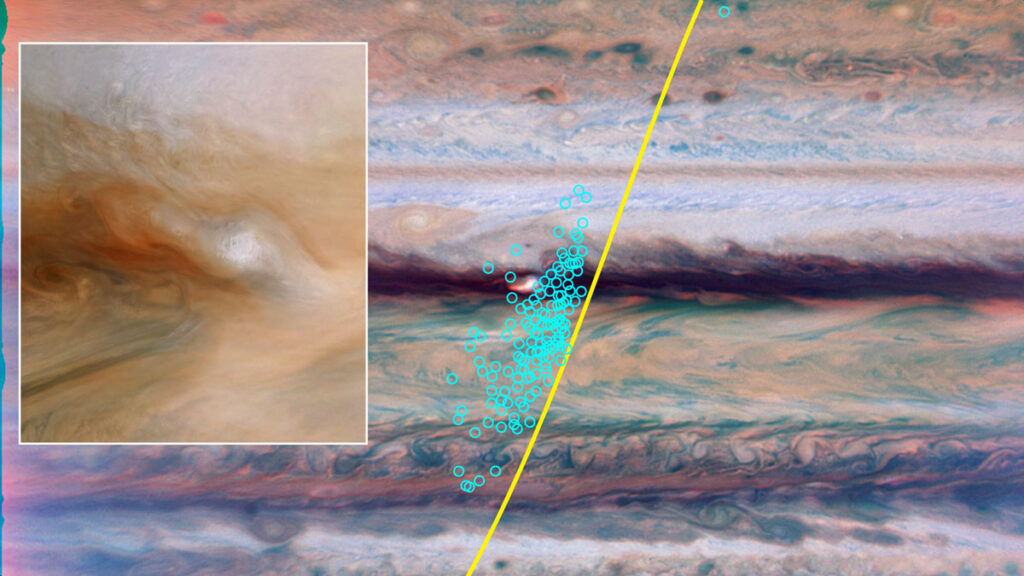
木星带有条纹和漩涡状图案的表面覆盖着一条从上到下延伸的黄色线条,与一系列蓝色圆点相交。旁边的小图展示了木星的更近距离特写。
Source: AGU Advances

This is an authorized translation of an Eos article. 本文是Eos文章的授权翻译。

木星的闪电一直是行星科学家关注的焦点,因为它标志着风暴活跃的区域,研究人员可以在这些区域深入研究以进一步了解木星大气中的对流现象。

远距离观测闪电并非易事,因此科学家们将研究重点放在最容易观测的闪电上:夜间发生的强闪电。因此,一些研究得出结论,木星上的闪电都与地球上最强的闪电——“超级闪电”——类似。然而,这一结论最近受到了质疑,因为NASA朱诺号探测器上的高灵敏度星体追踪相机探测到了微弱的浅层闪电

Wong等人进行了更深入的研究,重点观察了2021年和2022年木星北赤道带的闪电高度集中在一些强大的孤立风暴中的情形,研究人员将这些风暴称为“隐形超级风暴”。这种不寻常的气象条件使研究人员能够更精确地确定闪电的位置。

科学家们并没有仅仅关注可见光,而是利用了朱诺号探测器携带的微波辐射计Waves实验的数据。朱诺号在过去十年中一直在环绕木星运行。无线电波只是闪电产生的电磁辐射的一种形式,但它却是一种特别有价值的信息来源,因为即使云层或其他大气成分阻挡了视觉信号,科学家们仍然可以对其进行研究。这种方法使研究人员能够超越其他研究人员以往关注的那些强烈的夜间闪电,去探索其他类型的闪电。

研究人员报告称,在这些隐形超级风暴中,闪电无线电脉冲的出现频率为每秒三次,这与之前一些夜侧成像研究中的闪电频率相似。然而,这些闪电的强度仍然存在争议。一些闪电的强度可能与地球大气层中发现的平均闪电强度相似。但由于所分析的木星闪电信号和地球闪电信号的无线电频率存在巨大差异,有些闪电的强度也可能是地球闪电的上百万倍。

—科学撰稿人Saima May Sidik (@saimamay.bsky.social)

This translation was made by Wiley. 本文翻译由Wiley提供。

Read this article on WeChat. 在微信上阅读本文。
A photo of a telescope array appears in a circle over a field of blue along with the Eos logo and the following text: Support Eos’s mission to broadly share science news and research. Below the text is a darker blue button that reads “donate today.”
Text © 2026. AGU. CC BY-NC-ND 3.0
Except where otherwise noted, images are subject to copyright. Any reuse without express permission from the copyright owner is prohibited.
  • ✇Eos
  • Taking the Pulse of Atmospheric Drag to Predict Satellite Trajectory Alberto Montanari
    Editors’ Highlights are summaries of recent papers by AGU’s journal editors. Source: AGU Advances In low Earth orbit (typically below about 700 kilometers altitude), atmospheric drag is the primary source of uncertainty when predicting the trajectories of satellites. These prediction errors largely arise from limitations and inaccuracies in the models used to estimate the density of the upper atmosphere, particularly within the thermosphere. Mutschler et al. [2026] introduce a new met
     

Taking the Pulse of Atmospheric Drag to Predict Satellite Trajectory

6 May 2026 at 12:00
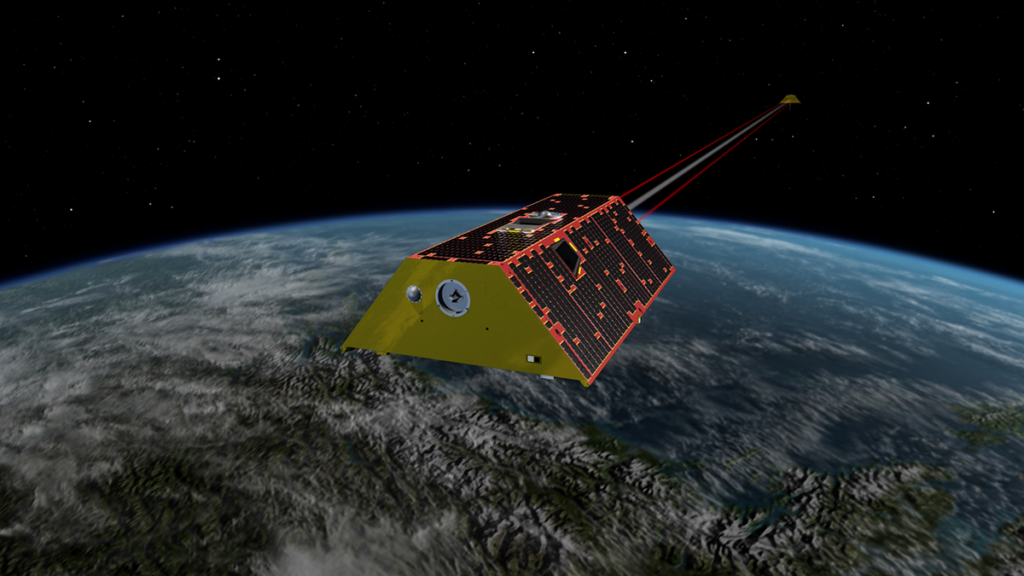
Illustration of a satellite orbiting Earth.
Editors’ Highlights are summaries of recent papers by AGU’s journal editors.
Source: AGU Advances

In low Earth orbit (typically below about 700 kilometers altitude), atmospheric drag is the primary source of uncertainty when predicting the trajectories of satellites. These prediction errors largely arise from limitations and inaccuracies in the models used to estimate the density of the upper atmosphere, particularly within the thermosphere.

Mutschler et al. [2026] introduce a new method for estimating atmospheric density along the path of an individual satellite by using Energy Dissipation Rates (EDRs). The derived single-satellite density measurements provide valuable insight into variations in thermospheric density and can help characterize how the upper atmosphere responds to disturbances such as geomagnetic storms. Incorporating these observations can contribute to ultimately improving the accuracy of satellite orbit predictions.

Effective density and Space Force effective density estimated by the Kosmos 1508 satellite (plotted on the right-hand y axes) compared to estimates from satellites Swarm-A and Swarm-C (plotted on the left-hand y-axes). Credit: Mutschler et al. [2026], Figure 17a

Citation: Mutschler, S., Pilinski, M., Zesta, E., Oliveira, D. M., Delano, K., Garcia-Sage, K., & Tobiska, W. K. (2026). First results of a new inversion tool for thermospheric neutral mass density computations during severe geomagnetic storms. AGU Advances, 7, e2025AV002079. https://doi.org/10.1029/2025AV002079

—Alberto Montanari, Editor-in-Chief, AGU Advances

Text © 2026. The authors. CC BY-NC-ND 3.0
Except where otherwise noted, images are subject to copyright. Any reuse without express permission from the copyright owner is prohibited.
❌
Subscriptions