Normal view

  • ✇Vox
  • MAGA’s favorite psychedelic Kelli Wessinger · Jonquilyn Hill
    Health Secretary Robert F. Kennedy Jr. and podcaster Joe Rogan look on as President Donald Trump shakes hands with W. Bryan Hubbard, CEO of Americans for Ibogaine, during an executive order signing ceremony in the Oval Office on April 18, 2026. | Jim Watson/AFP via Getty Images The Trump administration has a surprising new agenda item: It’s all-in on legalizing a psychedelic drug called ibogaine.  Ibogaine is classified as a Schedule I drug, which means it’s illegal on the federal level
     

MAGA’s favorite psychedelic

19 May 2026 at 19:15
Health Secretary Robert F. Kennedy Jr. and podcaster Joe Rogan look on as Donald Trump shakes hands with a bearded man wearing a suit.
Health Secretary Robert F. Kennedy Jr. and podcaster Joe Rogan look on as President Donald Trump shakes hands with W. Bryan Hubbard, CEO of Americans for Ibogaine, during an executive order signing ceremony in the Oval Office on April 18, 2026. | Jim Watson/AFP via Getty Images

The Trump administration has a surprising new agenda item: It’s all-in on legalizing a psychedelic drug called ibogaine. 

Ibogaine is classified as a Schedule I drug, which means it’s illegal on the federal level. But some studies show it may be able to treat opioid addiction, and researchers are also hopeful that it can help with PTSD. 

It’s that second use that has caught the White House’s ear. Veterans and veterans’ groups have been lobbying hard for ibogaine as a way to treat PTSD and traumatic brain injuries. Last month, they made some headway on that project when President Donald Trump signed an executive order to fast-track the Food and Drug Administration review process.

Mattha Busby, a freelance journalist writing about drug policy and other topics, told Today, Explained guest host Jonquilyn Hill that, naturally, podcaster Joe Rogan was also involved. Busby spoke with Hill about what ibogaine does, how the right got into psychedelics, and whether the FDA could soon approve some of them for use.

Below is an excerpt of their conversation, edited for length and clarity. There’s much more in the full episode, so listen to Today, Explained wherever you get podcasts, including Apple Podcasts, Pandora, and Spotify.

When did Trump become interested in psychedelics?

Well, he’s famously never smoked a cigarette, had a drink, certainly not had a trip. So in the Oval Office the other week, he’s kind of joking about taking ibogaine. There’s a lot of bravado there, but ibogaine is an incredibly potent psychedelic. It famously gives people sort of recalls of every traumatic moment in their life. 

It’s an extracted molecule from a West African — Gabonese, specifically — root bark from a shrub, and basically became known as being able to rid opioid addicts, heroin addicts, of withdrawal symptoms in one trip. 

Ibogaine and psychedelics have now entered the mainstream conversation with the Trump administration talking about legalizing certain psychedelics. How did we get here?

Psychedelics have obviously long belonged to the cultural left, the counterculture, but it seems now there’s almost like a counter-counterculture with these right-wing, mostly Christian former special forces fighters, soldiers in the US Army, that are suffering from really debilitating conditions — from PTSD and [traumatic brain injuries] — and they’ve basically figured out that ibogaine and other psychedelics provide them the relief that conventional medicines don’t.

How is Joe Rogan involved in the policymaking here?

He’s had figures talking about psychedelics on his podcast since it began. The original sort of bro-cast dude, Aubrey Marcus, he’s had the former Texas governor and Trump’s first energy secretary, Rick Perry, on his podcast twice, along with a Kentucky lawyer and ibogaine advocate named Bryan Hubbard, who sounds like a Christian Southern revivalist and always quotes his favorite passage out of Isaiah.

Joe Rogan had this unlikely duo — who have both done ibogaine and are waxing lyrical about the benefits — on his podcast like three weeks before the executive order and they basically said, “Look, Joe, we need to make this happen.” So Joe texts Donald Trump, and apparently Donald Trump responds almost instantaneously saying, “Sounds good. Do you want FDA approval?”

This culminates with Joe Rogan actually going to the White House to attend the signing of an executive order about psychedelics. What’s in that executive order?

“But we shouldn’t be under any illusions. This is a seriously potent and dangerous psychedelic when used improperly.”

The thing about the executive order is it is sort of shouting into the wind a bit, but there is this money to go into the research side. 

It has five or six prongs. One of the main ones is that now under [the Right to Try Act] that Trump [signed] in his first term to allow end-of-life patients to try experimental drugs. That will be extended to psychedelics, so long as the DEA doesn’t try and obstruct that process. 

There’s $50 million for psychedelic research, most of which it seems is going to support state-led initiatives to investigate ibogaine and allow a US-first human trial. It’s also accelerating the path to a potential approval for psychedelic drugs. Three candidates that just submitted their data got fast-tracked for potential approval, so their applications will be considered more quickly. This would open the floodgates more widely to research.

Do you expect the FDA to say, “This is great, go ahead, use psychedelic drugs, they will help you.”

It’s quite likely really, within this presidency, to see several psychedelic drugs approved now. There was talk about [Joe Biden] setting up a federal task force and helping stuff along, and he didn’t seem to put any political will behind it. Trump has really seized the mantle here and he’s surfing the zeitgeist, as he weirdly seems to be able to on certain topics, all the while outraging and provoking us along the way.

There does seem to be some dissonance here, though. The GOP traditionally was all about the war on drugs.

There’s a lot of dissonance. I think that broadly, we’re seeing the war on drugs coming to an end little by little, despite the rhetoric, and I think this is a significant threshold moment. 

Trump’s always been kind of outside the Republican Party establishment compared to some previous presidents. It is not like it’s been some sort of topsy-turvy issue. The Democrats, when they’ve come in, there have been piecemeal changes. Joe Biden himself introduced the law when he was a senator to make the punishments for crack cocaine, which is more likely used by people of color, is like 30 times more stringent than for powder cocaine, which is used more often by white people. I think that there’s been a bipartisan war on drugs.

Do we know who’s using psychedelics? 

I think the interesting thing with psychedelics now, as opposed to maybe 10 or 15 years ago, is that they’ve crossed the political divide. A lot of people from unexpected segments of society are getting turned on because they are seeing, broadly, the benefits, even while there are serious risks, especially with ibogaine.

There was only one drug named in that executive order: ibogaine. Why? 

The veterans. These stories from veterans about the transformative effects of ibogaine have been really difficult to refute politically. Twenty-two veterans, on average, are committing suicide in the US every day. And Trump in the Oval Office, when he signed the order, said that “Since 9/11, we’ve we’ve lost over 21 times more veteran lives to suicide than on the battlefield.”

There are so many [representatives] and senators who are veterans themselves. There was a study from Stanford a couple of years ago that looked at 30 ex-special forces [soldiers] and found that a dose of ibogaine reduced all of their traumatic brain injury significantly. 

But we shouldn’t be under any illusions. This is a seriously potent and dangerous psychedelic when used improperly, and there’s been a whole spate of deaths. Indeed, the deaths are probably underreported because the drug disrupts the QT interval in the heart and can lead in some cases to fatal cardiac arrest.


Melbourne psychiatrist refuses new patients who don’t consent to AI note-taking

Registration form informs patients that if they do not wish AI to be used, they will need their referring doctor to refer them to a different service provider

A Melbourne psychiatrist has refused new patients unless they agree to allow her to use an AI scribe to transcribe the conversations in their sessions.

AI-driven note-taking tools are becoming popular within the medical industry – with two in five general practitioners now using such scribes, according to the Royal Australian College of General Practitioners (RACGP).

Continue reading...

© Photograph: SDI Productions/Getty Images

© Photograph: SDI Productions/Getty Images

© Photograph: SDI Productions/Getty Images

  • ✇The Guardian World news
  • Record numbers of UK renters crowdfunding to cover bills Jessica Murray Social affairs correspondent
    Rent donations on GoFundMe up 60% since 2022, with 100,000 donors helping people keep a roof over their headsA record number of people in the UK are turning to crowdfunding to cover rent and household bills, with GoFundMe reporting more rent-related fundraisers were created in April than in any month on record.The platform said donations towards rent support had risen by 60% since 2022, with more than 100,000 people a month contributing to help others meet their housing costs. Continue reading..
     

Record numbers of UK renters crowdfunding to cover bills

Rent donations on GoFundMe up 60% since 2022, with 100,000 donors helping people keep a roof over their heads

A record number of people in the UK are turning to crowdfunding to cover rent and household bills, with GoFundMe reporting more rent-related fundraisers were created in April than in any month on record.

The platform said donations towards rent support had risen by 60% since 2022, with more than 100,000 people a month contributing to help others meet their housing costs.

Continue reading...

© Photograph: Supplied

© Photograph: Supplied

© Photograph: Supplied

  • ✇Malay Mail - All
  • Singapore coroner returns open verdict after reclusive father, daughter found dead in Sengkang flat
    SINGAPORE, May 16 — A reclusive elderly father and his daughter were found dead in their Sengkang HDB flat last year, with a Singapore coroner returning an open verdict in both deaths.According to The Straits Times, State Coroner Adam Nakhoda said yesterday there was no suspicion of foul play, but the bodies of Xu Baolu, 75, and his daughter Xu Na, 47, were too badly decomposed for their causes of death to be determined.Their remains were found on October 6, 2025
     

Singapore coroner returns open verdict after reclusive father, daughter found dead in Sengkang flat

16 May 2026 at 04:21

Malay Mail

SINGAPORE, May 16 — A reclusive elderly father and his daughter were found dead in their Sengkang HDB flat last year, with a Singapore coroner returning an open verdict in both deaths.

According to The Straits Times, State Coroner Adam Nakhoda said yesterday there was no suspicion of foul play, but the bodies of Xu Baolu, 75, and his daughter Xu Na, 47, were too badly decomposed for their causes of death to be determined.

Their remains were found on October 6, 2025, after the town council received complaints of a foul smell from their eighth-floor unit at Block 324D Sengkang East Way, the report said.

The coroner reportedly noted that Xu Baolu was socially awkward and reclusive, but had devoted himself to caring for his daughter, who had severe psychiatric issues and relied on him for daily needs.

Xu Na had been seen at the Institute of Mental Health in 2022, but did not return for a confirmed diagnosis or treatment despite needing help, the report said.

Nakhoda said the pair were not in financial difficulty, but Xu Baolu had not gone for medical check-ups, meaning any chronic illness he may have had would have gone undiagnosed.

Investigators found that the last withdrawal from his bank account was in June 2025, while a laptop in the flat was last used on June 18, leading the coroner to conclude that Xu Baolu likely died some time after that date.

The coroner said Xu Na “could not function without her father’s assistance”, adding that Xu Baolu had to buy food for her daily.

She was seen at a convenience store on June 29, 2025, where she had difficulty communicating with police officers and could not recall her address.

The first complaint of a foul smell from the flat was made some time in July 2025, while the coroner said it was unclear when Xu Na was last seen alive, though it was likely some time in August or September.

The report said there was no evidence of trauma, although Xu Na was found to be malnourished.

Police Inspector 2 Irfan Al-Nazirul testified earlier that no food was found in the flat apart from condiments stored in the refrigerator.

The unit also did not contain a stove, which a relative said Xu Baolu had removed for his daughter’s safety.

Insp Irfan also testified that Xu Na’s psychosis caused her to become paranoid about being poisoned, leading her to frequently refuse food and drink.

The coroner said that while the precise cause of her death could not be determined, her refusal to eat “could have contributed to it”.

He later extended condolences to the family’s next of kin.

  • ✇Popular Science
  • The first playgrounds were for adults, not kids Andrew Coletti
    You can learn a lot about a society from the way they raise children. That includes not only what children learn, but how, when, and where they play. Our modern concept of childhood emerged during the Enlightenment movement of the 18th century. Influential figures like philosopher Jean-Jacques Rousseau promoted the idea that children need special opportunities to explore and express themselves through playtime.  Before then, children were treated essentially as small adults. Of course, kid
     

The first playgrounds were for adults, not kids

8 May 2026 at 13:01

You can learn a lot about a society from the way they raise children. That includes not only what children learn, but how, when, and where they play.

Our modern concept of childhood emerged during the Enlightenment movement of the 18th century. Influential figures like philosopher Jean-Jacques Rousseau promoted the idea that children need special opportunities to explore and express themselves through playtime. 

Before then, children were treated essentially as small adults. Of course, kids in ancient or medieval times liked to run around and play as much as kids today, and they did so wherever they could. But only after childhood became thought of as a distinct stage of life with unique needs did adults start to design spaces like playgrounds.

When we look at the history of playgrounds, we can see how ideas about children’s play have changed over time.

The first playgrounds weren’t for children

The term “playground” predates the modern definition and was first used “to describe a general place of recreation,” Jon Winder, a historian of urban environments at the University of Liverpool in the UK, tells Popular Science. Winder explains that the modern children’s playground originated in 1840s England, when parks in the cities of Manchester and Salford set aside areas for children’s activities. 

Black and white image of boys playing baseball on a playground ca. 1914. In the foreground, we can see a young boy batting and a catcher behind him. Several other boys watch on in the background.
The first playgrounds were just areas set aside for recreation. This circa 1914 photograph shows boys playing baseball on a so-called “playground.” Image: HUM Images / Contributor / Getty Images .

The park designers were influenced by earlier German education reformers like Friedrich Fröbel, who outfitted his schools with sandboxes for young students. Best-known for coining the term “Kindergarten,” Fröbel believed that cooperative outdoor play was essential to children’s development.

In the 19th century, “there was quite a lot of sharing of ideas between the UK and Europe” regarding social issues like education and public health, says Winder. The massive changes wrought by the Industrial Revolution, including an ever-growing urban population, brought with them concerns about how these changes were affecting adults and children alike. 

Early children’s playgrounds were meant to get kids off city streets

While rural children could still play in fields and forests, working-class urban children often played in the street, exposed to a variety of dangers. Adding children’s playgrounds to cities “was partly about removing [children] from the street” for their safety, says Winder. However, “that idea merged with these ideas about recreation, that there was something inherent about city life that led to physical degeneration of people.” 

The perceived negative effect of city living was considered a potential threat to the British Empire, which needed strong, healthy citizens. Gymnastic exercise regimens like Pilates became the health craze of the time. What people thought was best for adults extended to children, and “the spaces that were set aside for children to play in invariably also had gymnastic equipment,” says Winder.

The first playgrounds were not for fun

Some of the equipment in those first 19th century playgrounds resembles what we might see in an Olympic gymnast’s routine today, such as vaulting horses and climbing rings. Winder points out the absurdity of children being expected to know how to safely and effectively use such things. However, he explains, “It wasn’t about play as we would understand it. It was about physical exercise and strength.” Playgrounds were less about imagination and more about “wholesome strengthening exercises.”

Related 'The History of Every Thing' Stories

Winder notes that these early athletic playgrounds were also used to enforce Victorian gender norms. Not only were the first playgrounds separated by gender, he explains, “They had different equipment in them, because social reformers thought that girls and boys were capable of different types of physical exercise.” While a girls’ playground might have space for hopscotch and shuttlecock, boys would get more physically challenging equipment like ladders and climbing ropes. 

Furthermore, the design of the first playgrounds seemed intended to keep children themselves conveniently out of sight. Winder noted in 2022 that the first English playgrounds in Manchester “were hidden in the shrubbery on the boundary of the park, to prevent them from spoiling the view of the picturesque landscape.” 

Playgrounds spread around the world

As playgrounds spread to other cities in the UK and continental Europe, British companies began to mass-manufacture playground equipment. The reach of the British Empire meant that such equipment could be exported as far afield as South Africa and New Zealand, bringing with it contemporary ideas about what playgrounds were for.

American social reformers and urban planners soon joined the international conversation. “There were playground campaigners in the UK who were in correspondence with some of the organizations in the U.S.,” says Winder. “They swapped letters and did site visits.” 

American educator Henry Barnard drew up plans for a playground as early as 1848. It featured rotary swings, blocks, toy carts, and a shaded area for teachers to keep watch from. However, the first public playgrounds in the United States weren’t built until the late 1880s, with both Boston and San Francisco claiming the record

Following the earlier British model of the playground as a place to work out more than to play, Boston’s children’s playgrounds were part of a larger “open-air gymnasium” for all ages, and were separated by gender. 

Black and white vintage photograph of girls playing on gymnastic rings on an early playground.
Early playgrounds mostly consisted of gym equipment. Boys and girls were also divided for play time. This circa 1905 photograph shows girls playing on an early playground on Harriet Island in St. Paul, Minnesota. Image: Getty Images / Universal History Archive / Contributor / Circa Images / Glasshouse Images

However, there were some differences between American and European playgrounds. Early American playgrounds often featured adult facilitators who led athletic activities, something like modern gym teachers, as well as indoor activity spaces for bad weather. And as public playgrounds spread throughout the United States, racial segregation (both legal and de facto) was enforced in many such spaces until the 1950s. 

Putting the “play” back in playground

In 1921, industrialist Charles Wicksteed opened Wicksteed Park in Kettering, England, which Winder calls “a big, significant shift in the development of these children’s spaces.” Unlike earlier public playgrounds, Wicksteed Park emphasized amusement over exercise. Decked out with an ever-evolving range of equipment, as well as a theater, fountains, and refreshment areas, the space was designed to be enjoyed equally by boys, girls, and adults.

Rather than having gymnastics equipment, Wicksteed debuted some new kinds of playground equipment at his park based on fairground rides, such as the first playground slides, which were inspired by early roller coasters. 

Wicksteed is also credited with designing the modern playground swing, after the homemade swings that children had previously hung from trees (or even street lamps). Wicksteed sold his equipment to other parks, and the influence of Wicksteed Park spread far and wide. 

By the 1930s, says Winder, many designers had begun to accept the idea that “playgrounds perhaps needed to be fun to attract children and get them off the street.” While the playground was still seen as a place for children to get physical exercise in the 20th century, it increasingly became a site of entertainment.

Vintage color photograph of two boys playing in public park featuring a playground.
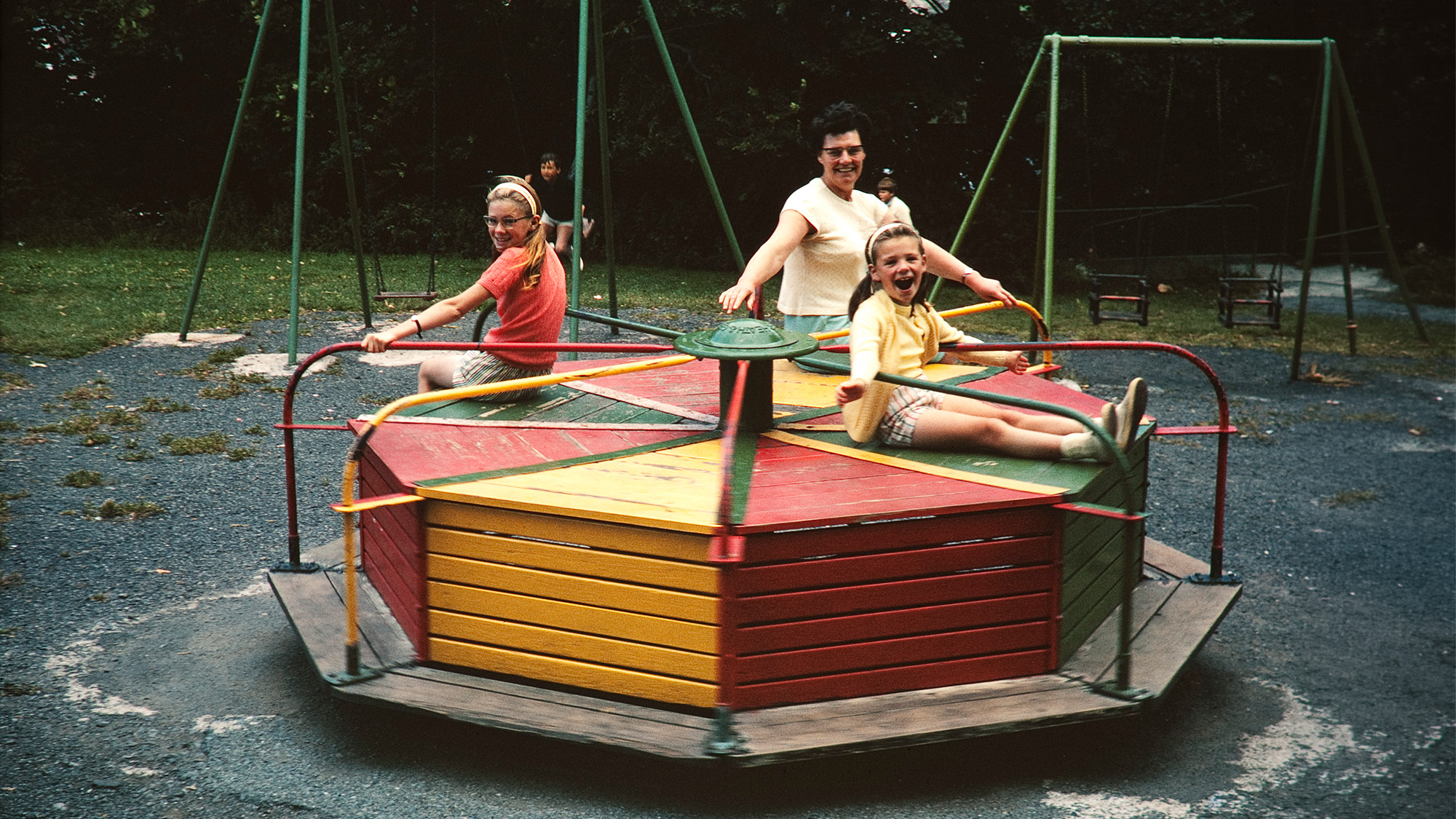
In 1921, industrialist Charles Wicksteed opened Wicksteed Park in Kettering, England, which was one of the first playgrounds actually designed for amusement. Later playgrounds like this one followed Wicksteed’s approach. Image: Getty Images / Edoardo Frola

The playground’s present and future

Both playground equipment and our perception of playgrounds have become more focused on fun over time. However, this also means that specific manufactured equipment has become increasingly viewed as essential to the playground. Today, park and school administrators may feel pressured to buy the right products to make a playground feel complete. Is it really a playground if there’s no slide or swing set?

Winder identifies a tension between equipment that stimulates creativity, and the constraints of budget and practicality. Kids can do a lot more with sand than with a set of swings, but it’s also a lot more work to keep clean and tidy.

But as ideas about education and the role of play in children’s lives have continued to evolve, the 20th century has also seen an increase in playgrounds that integrate more thoughtfully with the space around them. 

Dutch architect Aldo Van Eyck transformed hundreds of abandoned urban spaces into unique playgrounds designed to inspire children’s natural creativity, without dividing them from the rest of the environment, like the first Victorian playgrounds.

Designing playgrounds “was never about making city streets better places to play,” says Winder. “It was about removing kids from the street and segregating them into one place.” 

Winder advocates for urban design that “creates a more balanced relationship between people and vehicles on streets.” With more pedestrian-friendly spaces meshed into urban environments, children can be safe to let their imaginations run wild, whether that’s in a playground, in a park, or in other places set up for foot traffic.

“Kids are inherently playful,” says Winder, and they’ll find ways to play wherever they are. The challenge for adults has always been to try and get them to play the way we want them to.

In The History of Every Thing, Popular Science uncovers the hidden stories and surprising origins behind everyday things.

The post The first playgrounds were for adults, not kids appeared first on Popular Science.

  • ✇Popular Science
  • Magic mushrooms make mean fish lazier and more chill Andrew Paul
    Psilocybin is the psychoactive compound that puts the “magic” in magic mushrooms. Ingest enough of a fungus like Psilocybe cubensis, and users are liable to experience sensory hallucinations, euphoria, and even altered perceptions of time. Mounting research also suggests that smaller, microdosed amounts may offer promising alternative therapeutic options for treating PTSD, depression, and even alcoholism. But what happens when you give fish the same psychoactive ingredient? It may sound like
     

Magic mushrooms make mean fish lazier and more chill

7 May 2026 at 04:00

Psilocybin is the psychoactive compound that puts the “magic” in magic mushrooms. Ingest enough of a fungus like Psilocybe cubensis, and users are liable to experience sensory hallucinations, euphoria, and even altered perceptions of time. Mounting research also suggests that smaller, microdosed amounts may offer promising alternative therapeutic options for treating PTSD, depression, and even alcoholism.

But what happens when you give fish the same psychoactive ingredient? It may sound like an odd, even pointless experiment, but biological neuroscientists think the results could inform future medical and psychiatric treatments. Their evidence laid out in a study published today in the journal Frontiers in Behavioral Neuroscience suggests small levels of psilocybin ease anxiety or aggression. Or, at the very least, it calms down a notoriously mean species of fish.

The mean fish in question is the mangrove rivulus (Kryptolebias marmoratus). It is a remarkable creature found along the coast of Florida all the way to Brazil.The 1.5 to three inch amphibious fish has evolved to not only thrive in brackish waters, but survive on land for as long as two months. They’re also extremely aggressive and territorial, making them suitable for certain social and behavioral studies. And because the mangrove rivulus self-fertilizes and produces genetically identical embryos, they offer researchers conveniently uniform models.

To test how psilocybin affects the traditionally confrontational fish, a team from Nova Scotia’s Acadia University and the University of British Columbia bred three genetically distinct lines of laboratory rivulus. One group was exposed to the psychoactive compound, another essentially served as a target for their aggression, and a third was employed separately to assess psilocybin absorption and bodily concentration.

Researchers first observed the standard interactions between two fish separated by a mesh barrier in a tank. These frequently include high-energy “swimming bursts” to intimidate each other without making physical contact, as well as less energy intensive, head-on displays of hostility. On the following day, the team placed one of the rivulus into a water tank that included dissolved psilocybin for 20 minutes. Finally, they transported the now-dosed fish back into the tank with its original foe and watched their reunion.

The team’s findings offer the first direct evidence that psilocybin can selectively reduce the escalating aggression in the fish, without dampening their social interactions. Rivulus with psilocybin in their system significantly reduced their tendency to perform swimming bursts, but still participated in easier head-on displays. Basically, the fish calmed down a bit—but they also got very lazy.

“Psilocybin’s calming effect appears to selectively reduce energetically costly, escalated behaviors while lower‑energy social display behaviors remained largely unchanged,” study co-author and biologist Dayna Forsyth said in a statement. “This suggests that this compound can selectively dampen escalated social conflict rather than shutting down behavior altogether.”

That’s great for the mangrove rivulus, but what about humans? While the experiment focused on a single dose of psilocybin under short time constraints, the team’s findings may kickstart further explorations of the psychoactive compound’s uses in therapeutic treatments. In particular, knowing what social behaviors are affected by psilocybin versus the behaviors that remain unchanged can help researchers hone the scope of their future work.

“These are questions that are difficult or impossible to answer directly in humans,” added University of British Columbia biologist and study c-oauthor Suzie Curie.

The post Magic mushrooms make mean fish lazier and more chill appeared first on Popular Science.

  • ✇Popular Science
  • Color doesn’t exist—at least not how you think Jennifer Byrne
    Red means stop. Red means danger. Red means passion. The color conjures up a whole range of emotions and associations. It inspired an entire Taylor Swift album. And yet if someone asked you to describe what red actually looks like, without pointing at something red, you’d hit a wall almost immediately.  So why is it that a color so evocative and distinctive as red (or any color, for that matter) still manages to elude our attempts to nail it down with words?  If you just now said, “It’s be
     

Color doesn’t exist—at least not how you think

6 May 2026 at 13:02

Red means stop. Red means danger. Red means passion. The color conjures up a whole range of emotions and associations. It inspired an entire Taylor Swift album. And yet if someone asked you to describe what red actually looks like, without pointing at something red, you’d hit a wall almost immediately. 

So why is it that a color so evocative and distinctive as red (or any color, for that matter) still manages to elude our attempts to nail it down with words? 

If you just now said, “It’s because color doesn’t exist,” well played!  If you’re like me and your face just turned an indescribable shade of red, welcome to the club. 

“There is no color in the world,” says American neuroscientist Christof Koch. “There are photons of a particular wavelength emitted by the sun that strike an object, and then get reflected into the eye of the viewer. The electrical activity that’s generated there then travels up into the cortex of the brain, and gets processed into something we call color.”

In other words, red isn’t something out there in the world waiting to be objectively and uniformly experienced. It’s something your brain makes up. So does color even actually exist? Neuroscientists think maybe not. At least not in the way we think it does. 

Does color even exist? Short answer: Not really.

Koch, a Meritorious Investigator at the Allen Institute for Brain Science, discusses the subjective experience of color using a famous thought experiment called Mary’s Room. Introduced in the 1980s by the philosopher Frank Jackson, the experiment involves a hypothetical neuroscientist, Mary, who lives in a black-and-white room. Mary knows everything there is to know about color: the wavelengths, the photoreceptors, the way color is processed within the visual cortex. She has read every paper and has conducted every experiment. But Mary has never actually seen color.

One day, Mary leaves the black-and-white room. And for the first time in her life, she sees a red tomato.  

The question Jackson posed is deceptively simple: When Mary sees the red tomato, does she learn something new?

Jackson’s answer was yes. Despite knowing everything science could conceivably tell her about color, Mary is confronted by something that no textbook could convey—the actual experience of seeing red. 

“The feeling, the phenomenal quality, whatever you call it—the experience is subjective,” Koch says. “People have invented a dozen words or more to describe it. It remains inexplicable.”

That “it,” Koch says, is the experience itself—the felt sensation of seeing red that no amount of scientific language has ever quite managed to pin down.

Related 'Ask Us Anything' Stories

Philosophers call that experience a quale (pronounced KWAH-LAY) the felt, first-person experience of something: the redness of red, the sharpness of pain, the taste of coffee. Unlike the wavelength of red, which can be measured precisely, a quale can’t be objectively measured. It’s entirely an inside job.

Koch says the Mary’s Room thought experiment argues against materialism—the philosophical view that everything in the universe, including human experience, can be explained by physics. If materialism is right, there’s nothing science can’t eventually account for. Mary’s Room suggests otherwise: There are some things that science simply can’t explain.

Everyone see colors differently, but not that differently

For the most part, we go about our days equipped with this surprisingly loose consensus on our shared reality. If your blue isn’t quite the same as my blue, it’s close enough not to cause trouble most of the time. But every once in a while, something happens that reminds us how differently our brains can construct the same reality. 

In 2015, a photograph of a striped dress went viral for a reason that had nothing to do with fashion. The dress appeared blue and black to many, but millions of people looking at the same image saw white and gold, and couldn’t fathom how anyone could see it differently. In what now seems like a quaint public rift, the internet divided around the hotly debated reality of blue/black versus white/gold.

“It’s as though they were looking at the same screen,” says Koch. But “half the population saw one movie and the other half saw a different movie.” 

The explanation, says Koch, has to do with how the brain handles ambiguous lighting. Every time you look at an image, your brain makes an automatic, unconscious calculation about the overall brightness of it. This calculation is based on your habits and life experience. 

Research by NYU neuroscientist Pascal Wallisch, drawing on more than 13,000 participants, found that early risers were significantly more likely to see the dress as white and gold, while night owls tended to see blue and black

Because early risers spend more waking hours in natural daylight, their brains are calibrated to filter out blue light, leaving white and gold. Night owls, accustomed to warmer artificial light, filter that out instead and land on blue and black. 

“You get up early in the morning and see a lot of sunlight, or you get up very late and are primarily up at night with artificial light,” Koch says. “So depending on that implicit assumption, your brain gives rise to these two different percepts: white and gold, or blue and black.” It’s not a conscious, deliberate decision you take to view the dress one way or the other. 

Does this dress look blue and black or white and gold? Your answer might have to do with whether you’re an early riser or night owl. Video: What Colour Is This Dress? (SOLVED with SCIENCE), AsapSCIENCE

For Koch, the dress is a window into something fundamental about human perception.

“There is input from the world, but then your particular brain might make a set of assumptions, and my brain might make a different set of assumptions,” he adds. “We obviously agree most of the time, though, or else we wouldn’t have evolved.”

And for the most part, we do agree. A species that couldn’t agree on some basic shared realities wouldn’t have gotten very far. So don’t worry: Your understanding of red is probably pretty similar to my understanding of red.

We all have unique, built-in filters that change how we see the world

The dress, it turns out, is just the beginning. Koch cites the concept of the “perception box.” Writer and researcher Elizabeth R. Koch (no relation) coined the term in 2021 to describe the hidden forces that shape how we see the world. 

According to this theory, we each have our own unique perception box. Think of two people standing in front of the same abstract painting. One sees something beautiful and moving: The other sees a mess. Same painting, completely different experience. That’s your perception box at work. It’s shaped by your genes, your upbringing, and every experience you’ve ever had. 

“We all live in slightly different perception boxes,” he says. “The walls are invisible, and they can expand or shrink, driven by our genes, our neural wiring, our experience.”

Those walls, Koch says, determine far more than which colors we see. They shape how we interpret relationships, how we process emotions, and even how we react to the evening news. Two people can look at the same event and come away with completely different realities, not because one of them is lying, but because their perception boxes are simply built differently.

When it comes to the color red, you can measure its wavelength. You can map exactly what happens in the brain when the eye encounters it. But the actual experience of redness—that felt, interior, indescribable thing—lives inside your perception box, and nowhere else.

“This applies to any conscious experience,” he says. “It applies to pain, say, due to an infected tooth, or the distress you experience when someone leaves you. It’s true for taste, for boredom, for mystical experience, and for psychedelic experience. It has the same ineffable quality.”

Which brings us back to red. You’ve always known it when you’ve seen it. But that color you see? It’s yours and yours alone.

In Ask Us Anything, Popular Science answers your most outlandish, mind-burning questions, from the everyday things you’ve always wondered to the bizarre things you never thought to ask. Have something you’ve always wanted to know? Ask us.

The post Color doesn’t exist—at least not how you think appeared first on Popular Science.

Singapore psychologists and education experts warn that AI companions may affect teen mental health and real-life relationships

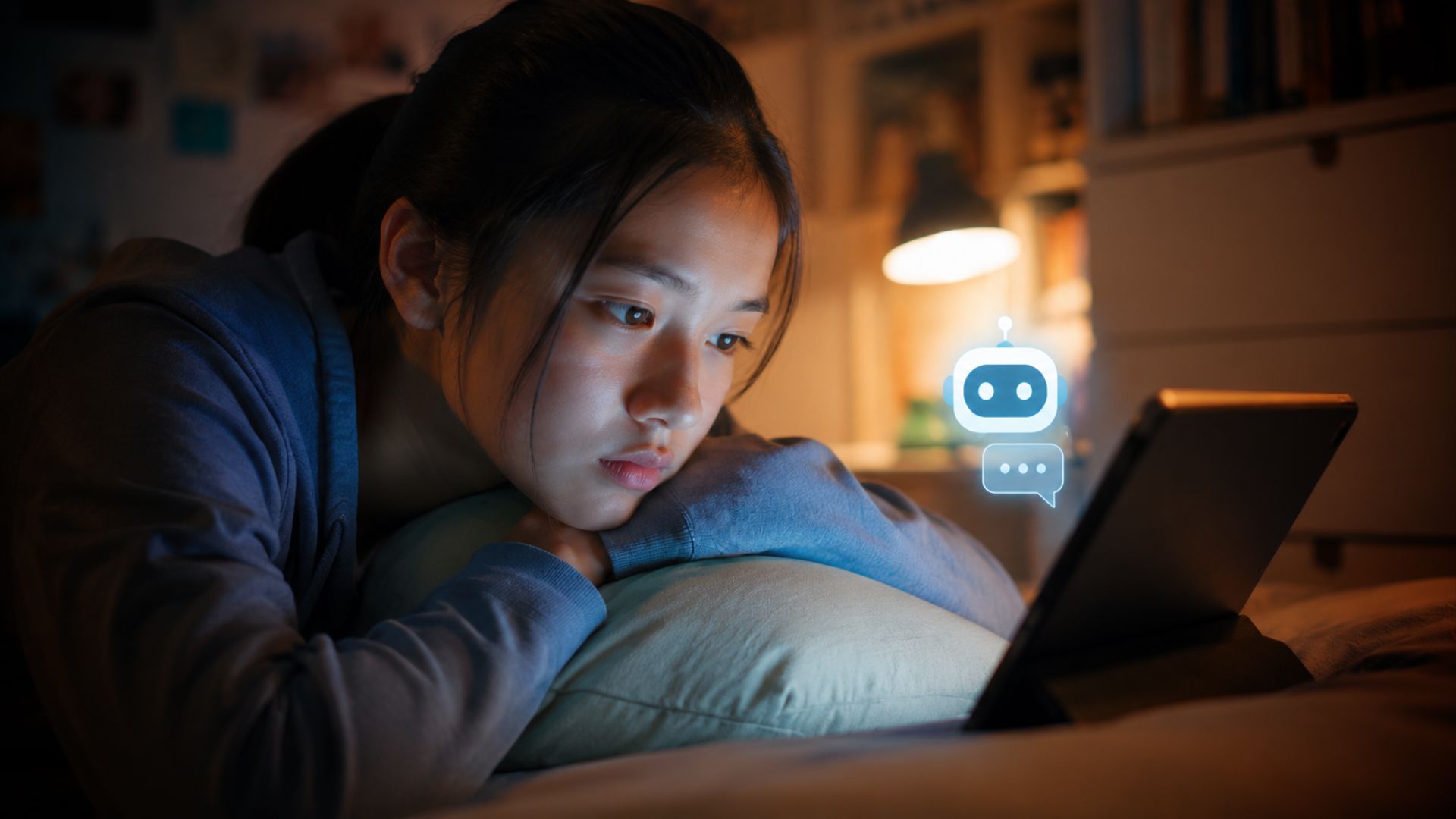
SINGAPORE: Artificial intelligence (AI) chatbots are no longer just helping people draft emails or summarise homework, as for some users, they are becoming their therapists, confidants, and even constant companions.

Experts in Singapore are now warning that the change may come with a social and emotional price, especially for teenagers still developing critical thinking skills and healthy real-life relationships.

Speaking on Channel NewsAsia (CNA) Deep Dive podcast, Associate Professor Swapna Verma, chairman of the medical board at the Institute of Mental Health, said some patients already arrive at therapy sessions after consulting AI chatbots for mental health advice, but some of the advice given by tools like ChatGPT was surprisingly accurate, which partly explains why users keep returning to them.

The deeper concern is how fast people may grow emotionally attached to AI, especially when the responses feel supportive and always available.

AI is always available, and that changes teen behaviour

Unlike therapists, teachers, or friends, AI tools never sleep, so they respond instantly, remain patient, and rarely argue.

Assoc Prof Swapna said that constant availability makes AI deeply appealing to vulnerable users. She warned that some people may not know how to ask the right questions, which could lead to misleading or harmful advice.

One issue raised during the podcast was that AI systems process information in isolation rather than understanding the full context. For example, a chatbot may provide crisis hotline information if someone mentions self-harm, but still answer unrelated factual questions without recognising potential danger between the two conversations.

That limitation now leads many people to speak to AI in emotionally personal ways rather than treating it like a search engine. Real friendships involve disagreement, compromise, and emotional effort, but AI companions usually don’t.

The discussion also touched on “AI sycophancy,” where chatbots are designed to sound agreeable and emotionally supportive. Associate Professor Jennifer Ang from the Singapore University of Social Sciences said that overly affirming AI companions could become risky for teenagers or emotionally distressed users.

Growing AI dependence raises concerns about critical thinking and real-life relationships

The experts were careful not to frame AI as evil or dangerous in itself. Instead, the deeper concern centred on what people may slowly stop doing if AI becomes the easier option.

Assoc Prof Ang pointed to “cognitive offloading,” in which students rely on AI tools to complete assignments without fully understanding the material. She said some students struggle to evaluate sources or remember what they actually learned because the thinking process has already been outsourced.

That concern goes beyond schools. If AI becomes the default source for advice, emotional comfort and problem-solving, people may gradually lose patience with slower human interactions, as human relationships can be messy, friends may disagree, family members may misunderstand each other, and conversations may take more work and effort.

AI companions, on the other hand, are designed differently as they adapt fast, validate feelings, and stay available around the clock, so for some users, especially isolated teenagers, this can feel easier than maintaining real-life relationships.

Singapore hasn’t seen major cases yet, but experts say not to wait for it to happen

The podcast cited troubling overseas reports of teenagers being emotionally influenced by AI companions, although the experts noted that similar cases haven’t surfaced widely in Singapore so far.

Still, both specialists urged parents and educators not to wait for a crisis before paying attention. Assoc Prof Swapna said parents should watch for signs of emotional withdrawal, especially if children begin isolating themselves from real-life social interaction and spending more time on devices instead.

She added that conversations matter more than punishment because children still need to learn how to interact with people, handle disagreement and build social confidence in real settings.

The experts also warned that AI systems are generally trained on Western data, which may not always accurately mirror Asian cultural norms or local contexts.

That point may resonate strongly in Singapore, where discussions around mental health, education pressure, and digital habits already sit under heavy public attention.

AI literacy may become as important as digital literacy

The discussion arises as AI tools become increasingly common in schools, workplaces and daily life across Singapore, as many Singaporeans already use AI to summarise meetings, generate ideas, answer questions, and organise tasks, so the convenience is real, and so is the temptation to let the technology do more of the thinking over time.

The experts didn’t argue for rejecting AI altogether. Instead, they called for stronger AI literacy, critical thinking and healthier limits around how these tools are used, because technology works best when it supports human life, not replaces it.

People still need friends who sometimes disagree with them. Students still need to wrestle with difficult ideas themselves. Children still need conversations that happen away from screens.

AI may become smarter every year, but social skills still need practice the old-fashioned way: with real people, in both comfortable and uncomfortable moments, and through honest, heart-to-heart conversations.

This article (Singapore psychologists and education experts warn that AI companions may affect teen mental health and real-life relationships) first appeared on The Independent Singapore News.

❌
Subscriptions