Normal view

Singapore strapmaker Delugs races to turn viral AP x Swatch pocket watch into wristwear (VIDEO)

22 May 2026 at 08:28

Malay Mail

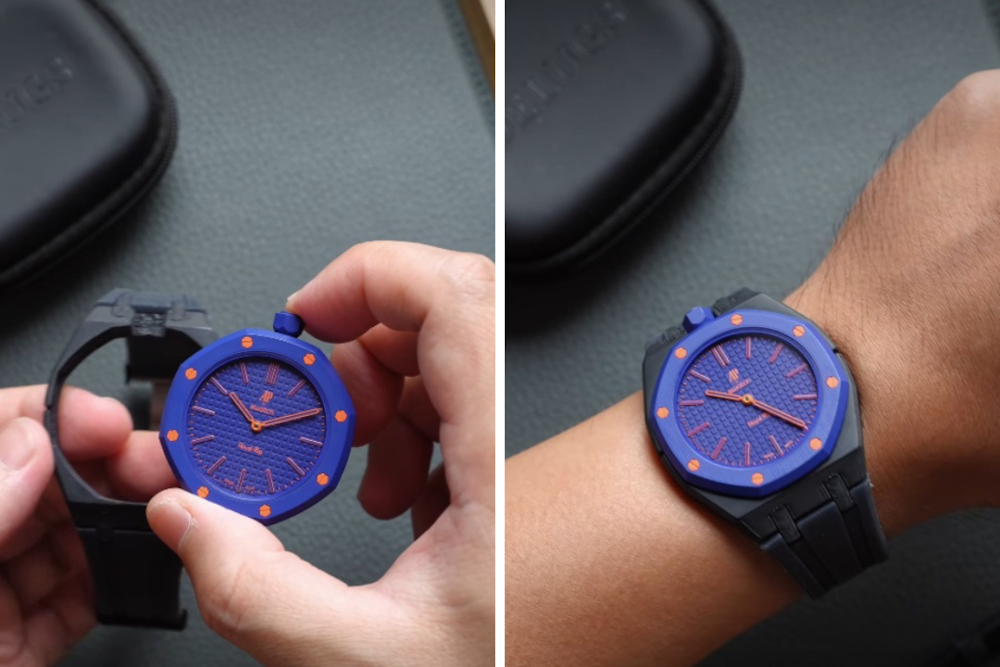
SINGAPORE, May 22 — A race is under way to transform the viral Audemars Piguet x Swatch Royal Pop pocket watch into a wearable wristpiece, with Singapore-based strapmaker Delugs among the frontrunners developing a custom solution.

The company is in the final stages of prototyping an integrated strap system designed for the collaboration, with sample production expected soon, co-founder Ken Kuan told The Straits Times.

Development began almost immediately after the hybrid watch was unveiled on May 12, as interest surged among collectors who were disappointed the collaboration did not offer a traditional wristwatch format.

The Royal Pop series, which launched globally on May 16, features eight designs priced at around US$535 (RM2,120) to US$570 depending on configuration, significantly lower than Audemars Piguet’s signature Royal Oak models.

Kuan said demand for a wrist-worn version was clear from the outset, arguing that watches are ultimately designed to be worn on the wrist rather than carried as accessories.

Delugs’ approach involves an integrated strap system where the band is directly connected to a custom case, eliminating the gaps typically seen with standard aftermarket straps.

While several brands are also attempting similar conversions — some already taking pre-orders based on concept renders — Delugs is holding back until physical samples are finalised.

Kuan said the company’s email waiting list has already drawn around 10,000 sign-ups, despite the product not yet being released.

One of the key engineering challenges has been designing a secure case for the watch’s detachable “pop-in, pop-out” structure, which was originally intended for lanyard-style use.

Delugs, which does not usually design watch cases, has produced a 3D-printed prototype and is now preparing material testing to ensure durability, flexibility and a secure fit for daily wear.

Kuan said the team has carried out multiple rounds of testing to account for real-world movement, including impacts and wrist expansion.

The company also sourced two units of the watch at inflated resale prices after missing initial retail drops amid global launch chaos that saw long queues and store disruptions in several countries.

Swatch X Audemars Piguet Royal Pop watches are displayed in a presentation case at Mid Valley Megamall in Kuala Lumpur on May 16, 2026. — Picture by Yusof Isa

Delugs has since documented its development process online, partly to counter widespread AI-generated mock-ups circulating on social media and to capitalise on intense global interest in the collaboration.

Kuan said the project also serves an educational purpose, offering transparency on how such wearable conversions are engineered from concept to production.

The final product is expected to bundle the strap and case at a price range of about US$150 to US$200, with multiple colour options planned for both components.

Delugs, founded in 2018, has grown into a niche but fast-rising watch accessory brand with international reach, expanding from online retail into physical boutiques in Singapore and Hong Kong.

  • ✇PetaPixel
  • Before the Frame: A Filmmaker’s Approach to Street Photography Michael Bonocore
    Six in the morning on the Brooklyn Bridge, and New York City is something it rarely is. It is quiet. Not empty, but quiet. Dan Aragon is standing on the walkway watching the light come up across the East River. The bridge holds a few early walkers, runners, and cyclists. A ferry is just starting to move on the water below. He has not raised the camera yet. He is still enjoying the silence. [Read More]
     

Before the Frame: A Filmmaker’s Approach to Street Photography

21 May 2026 at 20:08

Split image: On the left, a view of the Manhattan Bridge framed by red brick buildings. On the right, two women face the Brooklyn Bridge and city skyline, one smiling and wearing sunglasses.

Six in the morning on the Brooklyn Bridge, and New York City is something it rarely is. It is quiet. Not empty, but quiet. Dan Aragon is standing on the walkway watching the light come up across the East River. The bridge holds a few early walkers, runners, and cyclists. A ferry is just starting to move on the water below. He has not raised the camera yet. He is still enjoying the silence.

[Read More]

Coming soon: KL’s trains, buses to allow credit cards for tap-in, tap-out; Prasarana says project in award stage

21 May 2026 at 23:00

Malay Mail

KUALA LUMPUR, May 22 — Ever wished you could just tap in with your credit card at an MRT or LRT fare gate in Kuala Lumpur, instead of buying a token or looking for the Touch ‘n Go card that you left in the car?

The good news is that it is coming soon.

The other good news is that you will also be able to use other cashless payment options — such as debit cards, QR codes, mobile wallets (e.g. Apple Pay, Google Pay, Samsung Pay) — for buses and trains in Kuala Lumpur in the future too.

Current options for KL’s rail services: Buy a token or use TNG card 

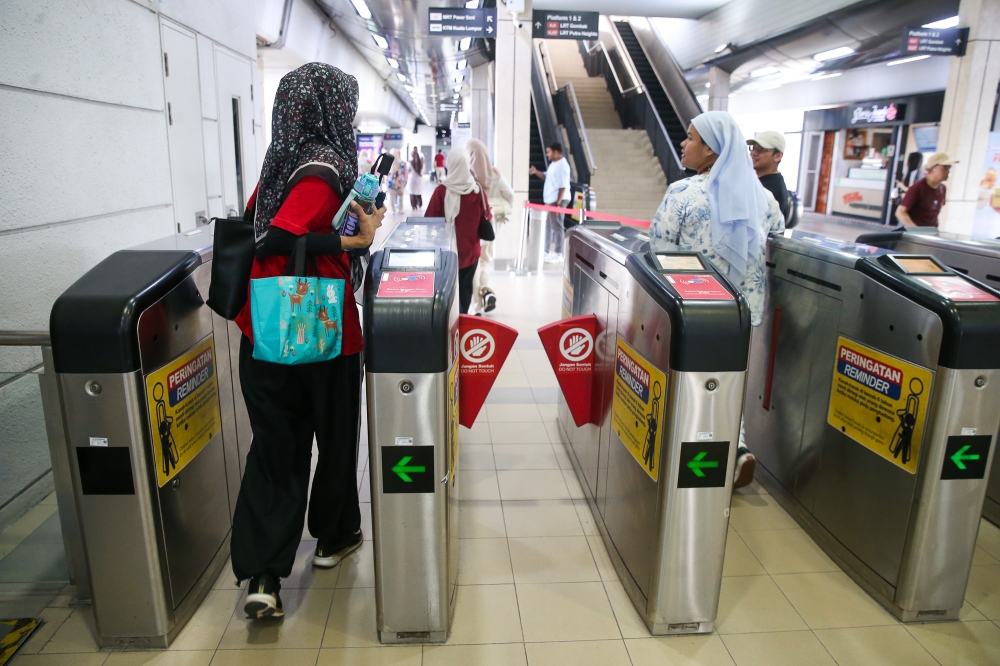
Public transport operator Prasarana Malaysia Berhad explained why passengers currently cannot use credit cards, mobile wallets and QR codes yet to directly tap in and out for Rapid KL’s train services.

“Rapid KL’s current automated fare collection (AFC) system utilises the Touch ‘n Go platform, which has been the backbone of the network’s cashless ticketing since 1999.

“As a closed-loop system, it currently restricts tap-in and tap-out functionality exclusively to Touch ‘n Go as the sole stored value card media, alongside single-journey tokens for cash-based ticketing.

“While this system has served commuters reliably for decades, it was designed before the emergence of newer open payment technologies such as contactless bank cards and mobile wallets. 

“As such, the existing infrastructure does not currently support direct integration with these newer payment methods,” the company said in a response to Malay Mail’s enquiry.

Currently, you can use cash, credit cards or debit cards at a ticket machine at Rapid KL’s train stations... but only to buy a token or reload your Touch ‘n Go card.

Now, you can only use a Touch ‘n Go card or a token to tap in and out for Rapid KL’s train rides, as seen here. — Picture by Choo Choy May

According to Prasarana, QR code payment “is available at all LRT, MRT, Monorail and BRT station counters”, which is also where you can buy tokens and reload Touch ‘n Go cards.

You can, of course, use cash or credit cards and debit cards at these station counters too to buy tokens or top-up your Touch ‘n Go cards’ value.

Current options for KL’s bus services  

For Rapid KL’s buses, you can only pay using Touch ‘n Go cards or Rapid KL cards now, as cash is no longer an option since May 2019, based on Prasarana’s My Rapid website.

You can use cash, credit card or debit card at the ticket machine to buy a token or top-up your Touch ‘n Go card for a train ride. — Picture by Choo Choy May

Prasarana confirmed to Malay Mail that QR code payments to hop on Rapid KL buses are “not yet” available.

“At present, alternative payment options are limited: Rapid KL On-Demand (ROD) allows bookings via app-based payments, including QR code payments.

“However, credit cards, debit cards, and mobile wallets (Apple Pay, Google Pay, Samsung Pay) are not yet enabled for direct tap-in/tap-out across rail or bus services,” it said.

In the future: What we can expect  

Prasarana confirmed that it plans to enable an open payment system (including credit cards, debit cards, QR codes, mobile wallets) for directly tapping in and out for all its train and bus services.

“Yes, Prasarana is actively working towards implementing an open payment system. The project is currently at the award stage, with finalisation expected soon,” it said.

Prasarana said this project is “currently in the final stages of the award process”.

It added that this initiative “will allow commuters to use credit/ debit cards and, eventually, mobile wallets for seamless travel”.

Prasarana said “QR code payment capability is included as part of the open payment system rollout”, and that this will be made available for both its rail services and bus services.

“The implementation timeline will align with the broader open payment deployment for rail and bus services,” it said.

Expected timeline for open payment system rollout  

After the project is awarded, Prasarana said the open payment system is expected to be fully available within 30 months for its rail services, and within 15 months for its bus services in the Klang Valley.

In the future, QR code payments will be one of the alternative available payment methods for Rapid KL’s buses, according to Prasarana. — Picture by Shafwan Zaidon

Prasarana said “all payment modes under the open payment system, including credit cards, debit cards, QR, and NFC, will be delivered within the project timeline”.

“Once the project is awarded, open payment will be rolled out in phases in accordance with the project timeline. 

“It is planned to cover all rail services (LRT, MRT, and Monorail) as well as bus services (BRT, Rapid KL, MRT Feeder bus, and Rapid Penang).

“Implementation for Rapid KL On-Demand (ROD) may follow a different timeline, subject to business direction/ prioritisation.” 


  • ✇Malay Mail - All
  • MOF: RON97 up 15 sen, unsubsidised RON95 up 20 sen, diesel up 10 sen for May 21–27
    KUALA LUMPUR, May 21 — The retail prices of RON97, unsubsidised RON95 and diesel in Peninsular Malaysia will increase by 15 sen, 20 sen and 10 sen per litre respectively for the period from May 21 to 27.The Ministry of Finance (MOF) said in a statement yesterday that the retail price of RON97 would be set at RM4.85 per litre compared with RM4.70 previously, while unsubsidised RON95 would rise to RM4.07 per litre from RM3.87 previously.The price of diesel in Penin
     

MOF: RON97 up 15 sen, unsubsidised RON95 up 20 sen, diesel up 10 sen for May 21–27

21 May 2026 at 02:07

Malay Mail

KUALA LUMPUR, May 21 — The retail prices of RON97, unsubsidised RON95 and diesel in Peninsular Malaysia will increase by 15 sen, 20 sen and 10 sen per litre respectively for the period from May 21 to 27.

The Ministry of Finance (MOF) said in a statement yesterday that the retail price of RON97 would be set at RM4.85 per litre compared with RM4.70 previously, while unsubsidised RON95 would rise to RM4.07 per litre from RM3.87 previously.

The price of diesel in Peninsular Malaysia will meanwhile be set at RM4.97 per litre compared with RM4.87 previously.

According to MOF, the new retail price adjustment is in line with the Automatic Pricing Mechanism (APM) formula.

At the same time, the Madani Government will maintain targeted subsidised prices for the people and selected sectors, covering RON95 (BUDI95) at RM1.99 per litre, diesel in Sabah, Sarawak and Labuan, as well as the Subsidised Diesel Control System (SKDS) at RM2.15 per litre, the Subsidised Petrol Control System (SKPS) at RM2.05 per litre.

MOF said that at the current unsubsidised RON95 price of RM4.07 per litre, the use of 200 litres would cost RM814.

“This means the Madani Government is bearing RM416, or more than half of the actual RON95 cost, for each recipient using the full BUDI95 entitlement,” it said.

It said Brent crude oil prices have now reached around USD110 per barrel, nearly 60 per cent higher compared with the pre-conflict level of around USD70 per barrel, as logistics costs and insurance premiums increased significantly due to shipping risks through conflict zones, further pressuring petroleum product prices.

The statement said disruptions to global oil supply were becoming more severe as the conflict continues with the Strait of Hormuz is a route for about 20 per cent of the world’s petroleum supply, while damage to oil production and refining facilities in West Asia will take time to restore.

“In view of the still uncertain global market conditions, MOF said the Madani Government urged the public to continue practising prudent fuel consumption to help extend the country’s supply,” it added. — Bernama

  • ✇Popular Science
  • Mars shines in ethereal photo from Psyche space probe Andrew Paul
    NASA’s Psyche spacecraft is currently en route to a small, metal-rich asteroid near Jupiter. However, the barely 3,600-pound probe recently required a little help from Mars to complete its lengthy 2.2-billion-mile mission. Despite its complex gravity assist earlier this month, the groundbreaking spacecraft still found time to snap some travel photos showcasing its Red Planet flyby. NASA released the latest image from Psyche’s trip on May 20, which offers a gorgeous view of Mars just hours before
     

Mars shines in ethereal photo from Psyche space probe

20 May 2026 at 15:20

NASA’s Psyche spacecraft is currently en route to a small, metal-rich asteroid near Jupiter. However, the barely 3,600-pound probe recently required a little help from Mars to complete its lengthy 2.2-billion-mile mission. Despite its complex gravity assist earlier this month, the groundbreaking spacecraft still found time to snap some travel photos showcasing its Red Planet flyby. NASA released the latest image from Psyche’s trip on May 20, which offers a gorgeous view of Mars just hours before Earth’s neighbor temporarily eclipsed the cosmic traveller.

According to NASA, the image was taken on May 15 at about 8:03 a.m. EDT by the spacecraft’s multispectral imager instrument. The thin crescent view of Mars is due to the spacecraft’s approach at what’s known as a high phase angle. The fingernail slice of Red Planet actually looks brighter and wider than mission specialists anticipated, thanks to a large level of sunlight scattering through the dusty Martian atmosphere. Interestingly, the instrument’s original unfiltered image wouldn’t look very discernible to the human eye. Instead, scientists processed the photo into a natural-color palette using the probe’s red, blue, and green imager filter data.

Launched in October 2023, Psyche is destined for 16 Psyche, a 140-mile-wide rock that astronomers theorize may be the remnant of an ancient planetary core. Once there, the spacecraft will study its iron magnetic properties, as well as use its imagers and spectrometers to analyze the asteroid’s chemical and elemental compositions. 

Thanks to the Martian gravity assist, Psyche is scheduled to reach its destination in 2029. At its closest pass, Psyche swung around the Red Planet barely 2,800 miles above the surface at a speed of around 12,333 miles per hour.

The post Mars shines in ethereal photo from Psyche space probe appeared first on Popular Science.

  • ✇Malay Mail - All
  • OpenAI pumps S$300m into Singapore, says country has ‘strong talent’ with ‘clear ambition’
    SINGAPORE, May 20 — Artificial intelligence (AI) firm OpenAI today announced a S$300 million (RM1.19 billion) commitment to boost Singapore’s AI ecosystem.The ChatGPT operator has launched OpenAI for Singapore in partnership with the Digital Development and Information Ministry (MDDI) to support Singapore’s ambition of becoming an AI-powered economy under its National AI Strategy.The initiative will focus on three key areas: supporting organisations in Singapore
     

OpenAI pumps S$300m into Singapore, says country has ‘strong talent’ with ‘clear ambition’

20 May 2026 at 09:24

Malay Mail

SINGAPORE, May 20 — Artificial intelligence (AI) firm OpenAI today announced a S$300 million (RM1.19 billion) commitment to boost Singapore’s AI ecosystem.

The ChatGPT operator has launched OpenAI for Singapore in partnership with the Digital Development and Information Ministry (MDDI) to support Singapore’s ambition of becoming an AI-powered economy under its National AI Strategy.

The initiative will focus on three key areas: supporting organisations in Singapore in deploying frontier AI and addressing complex challenges; developing the next generation of local AI talent; and enabling more individuals and businesses across the republic to benefit from AI.

OpenAI chief revenue officer Denise Dresser said Singapore has strong technical talent, trusted institutions and a clear ambition to use AI to drive long-term growth and improve people’s lives.

“Through OpenAI for Singapore, we want to help more organisations benefit from frontier AI, support the next generation of local AI talent, and widen access to these tools across the country,” she said in a statement today.

According to OpenAI, the partnership will see the establishment of an Applied AI Lab in Singapore, marking the company’s first such facility outside the US.

This will lead to the creation of more than 200 Singapore-based technical roles over the next few years, positioning the republic as one of its global hubs for Forward-Deployed Engineers.

“Through the partnership, the lab will support work aligned with Singapore’s AI Mission priorities, particularly in areas such as public service, finance, healthcare and digital infrastructure.

“As this work grows and our Singapore-based team expands, we also expect to increase our office footprint in the country over time,” it added. — Bernama

Simen Rahmah scheme continues with 1.6 million tonnes cement allocation for affordable housing, says minister

20 May 2026 at 09:17

Malay Mail

PUTRAJAYA, May 20 — The Simen Rahmah Scheme will continue this year with 1.6 million metric tonnes of cement allocated to support the target of building 500,000 affordable housing units under the 13th Malaysia Plan (13MP).

Housing and Local Government Minister Nga Kor Ming said the scheme, which offers cement at prices lower than the market rate, has also been expanded to cover affordable housing projects under the Federal Government, state governments and the private sector.

“The Simen Rahmah initiative is a critical component of the government’s commitment to ensure the housing sector does not come to a halt because the property sector is one of the pillars of the national economy,” he said at a press conference after launching the Simen Rahmah 2026 Initiative here today.

Through the expanded scope of the scheme, Nga said development projects under Syarikat Perumahan Negara Berhad (SPNB) and Perbadanan PR1MA Malaysia (PR1MA), as well as various housing schemes under state governments, will benefit from cost protection through the retention of subsidised cement prices.

This includes bulk cement priced at RM290 per tonne, representing savings of 31.8 per cent or RM135 compared with the market price of RM425, while bagged cement (50kg) is priced at RM17.50 per bag, offering savings of 29.7 per cent or RM7.40 compared with the market price of RM24.90.

“The first phase of the Simen Rahmah initiative will provide 1.6 million metric tonnes of cement to support affordable housing projects priced at RM300,000 and below per unit. By stabilising cement costs, we are providing breathing space for developers to maintain lower selling prices without compromising construction quality.

“These cost savings act as a mechanism to control house prices, an early intervention to prevent the risk of sick or abandoned projects, and ensure the quality of homes for the people is not compromised,” he said.

To ensure there is no leakage, he said applications for the scheme will be fully coordinated through the Housing Integrated Management System (HIMS) by the National Housing Department (JPN) to ensure all eligibility criteria are strictly complied with.

Nga said the initiative is also part of the Madani Government’s proactive efforts through the Ministry of Housing and Local Government in addressing the global supply crisis challenges arising from the West Asia conflict.

“In view of the latest global developments, the ministry has taken proactive steps to continue this initiative as a direct response to rising building material costs and global economic challenges that are increasingly pressuring supply chains,” he said.

In April 2023, the ministry introduced the Simen Rahmah Scheme through a strategic collaboration with the Cement and Concrete Association of Malaysia (C&CA).

The scheme has recorded tangible success, with 29 affordable housing development projects approved involving the use of 1,560,329 bags and 316,918.22 metric tonnes of cement. — Bernama 

  • ✇Popular Science
  • SMILE spacecraft will use X-ray vision to study the northern lights and more Andrew Paul
    There’s a SMILE beaming down from high above Earth. On May 19, the European Space Agency (ESA) and the Chinese Academy of Sciences (CAS) launched a Vega-C rocket from Europe’s Spaceport in French Guiana with a payload representing years of international collaboration. Known as the Solar wind Magnetosphere Ionosphere Link Explorer (SMILE), the spacecraft will soon begin studying the sun’s immensely powerful solar winds and their relationship with Earth’s atmospheric safeguards. You woul
     

SMILE spacecraft will use X-ray vision to study the northern lights and more

19 May 2026 at 16:30

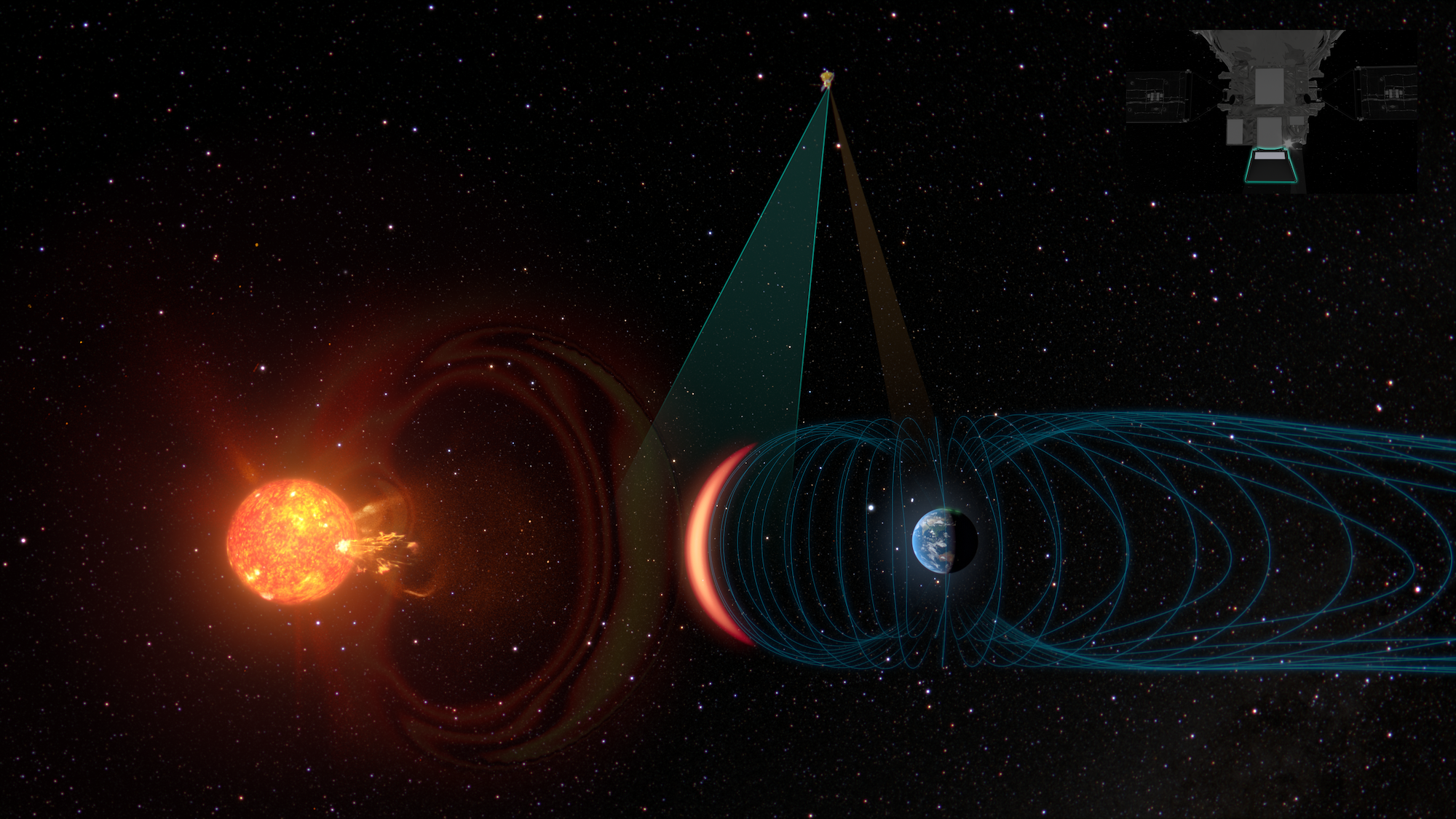
There’s a SMILE beaming down from high above Earth. On May 19, the European Space Agency (ESA) and the Chinese Academy of Sciences (CAS) launched a Vega-C rocket from Europe’s Spaceport in French Guiana with a payload representing years of international collaboration. Known as the Solar wind Magnetosphere Ionosphere Link Explorer (SMILE), the spacecraft will soon begin studying the sun’s immensely powerful solar winds and their relationship with Earth’s atmospheric safeguards.

You wouldn’t be reading this without our magnetosphere. The protective shield generated from deep inside Earth has protected the planet from the sun’s most destructive solar winds for billions of years. Without this barrier, life could never survive on what would be a barren, irradiated rock. But while it’s clear that the magnetosphere is Earth’s natural defense system against cosmic radiation and geomagnetic storms, astronomers still aren’t sure exactly how it works. 

“We are about to witness something we’ve never seen before—Earth’s invisible armor in action,” ESA director general Josef Aschbacher said in a statement.

Over the next month, SMILE will slowly increase its altitude with 11 engine burns before settling into a large elliptical orbit over the North and South Pole. Actual data collection will start in July using the spacecraft’s four tools, including a pair of X-ray and ultraviolet cameras. 

SMILE is the first mission to examine the magnetosphere with X-rays, and the UV equipment will capture the northern and southern lights for up to 45 hours at a time. By combining the two data sources, astronomers hope to gain a better understanding of how the planet is affected by the sun’s constant bombardment of solar winds and frequent coronal mass ejections. The project is planned to last three years.

“The evidence that Smile collects will help us better understand planet Earth and our Solar System as a whole,” explained ESA Smile project scientist Philippe Escoubet. “And the science it uncovers will improve our models of Earth’s magnetic environment, which could ultimately help keep our astronauts and space technologies safe for decades to come.”

The post SMILE spacecraft will use X-ray vision to study the northern lights and more appeared first on Popular Science.

❌
Subscriptions