
Normal view

  • ✇Popular Science
  • The world’s largest explosion lab is ready for big booms. And yes, it’s in Texas. Mack DeGeurin
    Everything is bigger in Texas, and that includes its controlled detonations. Texas A&M University recently revealed what they say is the world’s largest controlled explosion lab, where researchers can fill a nearly 500-foot metal tube with gas and ignite it in the name of science. They are calling it The Detonation Research Test Facility (DRTF). By precisely measuring what it takes to turn a simple flame into a massive, deadly detonation, researchers hope to make discoveries that could bette
     

The world’s largest explosion lab is ready for big booms. And yes, it’s in Texas.

6 May 2026 at 18:50

Everything is bigger in Texas, and that includes its controlled detonations. Texas A&M University recently revealed what they say is the world’s largest controlled explosion lab, where researchers can fill a nearly 500-foot metal tube with gas and ignite it in the name of science. They are calling it The Detonation Research Test Facility (DRTF). By precisely measuring what it takes to turn a simple flame into a massive, deadly detonation, researchers hope to make discoveries that could better prepare engineers to prevent gas leaks, and potentially inform ways to build explosion-resistant infrastructure. And all of that will require lots and lots of yeehaw inducing bangs.

Located in Southeast Central Texas, the detonation tunnel is about six feet in diameter and stretches nearly the length of two football fields. Its metal exterior consists of three-quarter-inch steel walls and is covered in earth to muffle the sound—or try to, at least. Inside, the tube holds various sensors that can measure the explosion as it intensifies. By containing all the power within the facility, researchers can study explosions strong enough to level entire buildings. The shockwaves that form in the tunnel can apparently reach speeds of Mach 5—or roughly 3,800 miles per hour.

“The facility enables us to observe, measure and understand one of nature’s most extreme forces in ways that haven’t been scaled before, or even been possible until now,” Texas A&M Engineering professor Dr. Elaine Oran said in a statement

Measuring a detonation, from flame to boom 

The idea for the massive detonation tunnel began as an inquiry from the coal mining industry. Industry leaders sought to scientifically determine whether natural gas trapped in a coal mine could explode and detonate. The short answer is yes. It quickly became clear, however, that a facility capable of measuring that would prove useful for a number of other explosion-related questions as well.

To measure an explosion, researchers start by sending an electrical current through a long wire leading into the chamber. Eventually, the current leads to a spark, which creates a flame, not unlike a gunslinger  in a Western striking a match and watching a flame trickle its way to a stick of dynamite. 

a long brown tube connected to a building
Texas A&M University’s Detonation Research Test Facility is a nearly 500-foot detonation tube more than 6 feet in diameter, built with three-quarter-inch-thick steel walls and paired with a 90-meter earth-covered muffler. Image: Texas A&M University College of Engineering.

When the flame enters the chamber, it begins a violent journey. The chamber is lined with what researchers refer to as an “obstacle course” of metal beams that generate turbulence. As the flame travels, more surface area is created, which in turn causes it to burn faster and stronger.

Eventually, all of that power creates a shockwave in front of the flame. Once the shockwave is strong enough, it pushes forward and creates a second, much larger explosion. That second, earth-shaking boom is the detonation.

Video footage of the process occurring in real time is dramatic, to say the least. Everything is quiet except for a voice in the control room counting down three, two, one. That’s followed by what sounds like a muffled gunshot as the flame enters the tube’s first segment. Visually, the tunnel’s thick metal exterior quivers and soil shakes off it as each succeeding segment ignites. That all leads up to the detonation, which is a significantly larger  boom that shakes the entire facility and sends earth soaring into the air. Seconds later, amid smoky air, the soil can be heard raining back down, like an artillery scene from a war film.

And even though the facility is designed to withstand massive explosion level forces safety, it still leads some to check their heart rates. 

“There’s a lot of nervousness, [and] jitters,” Texas A&M Aerospace engineering student Zachary Wideman said in a video. “Because something on this scale with this type of energy, you can’t help but be nervous.”  

Though the facility’s controlled explosions will likely prove most useful for industrial safety initially, engineers involved believe its scientific findings could have broader appeal. The shockwaves it creates could prove important for future testing of hypersonic plane and space shuttle propulsion. On the more conceptual side, scientists interested in the history of the cosmos could use the tube’s controlled explosions to help build models of supernovas, which undergo a similar physical process, albeit on a much, much larger scale.

The post The world’s largest explosion lab is ready for big booms. And yes, it’s in Texas. appeared first on Popular Science.

  • ✇Popular Science
  • Birds avoid wind turbines painted like venomous snakes Andrew Paul
    Wind turbines are a net positive for a sustainable society, but that doesn’t mean they don’t have an environmental impact. Apart from their material requirements, those giant, spinning blades can be lethal to unsuspecting winged animals like birds and bats. Although some reports dramatically overplay wind farms’ danger to flying species, there is no denying they can unintentionally kill anywhere from two-to-six birds and four-to-seven bats per megawatt every year. That may not seem like many fat
     

Birds avoid wind turbines painted like venomous snakes

13 May 2026 at 20:00

Wind turbines are a net positive for a sustainable society, but that doesn’t mean they don’t have an environmental impact. Apart from their material requirements, those giant, spinning blades can be lethal to unsuspecting winged animals like birds and bats. Although some reports dramatically overplay wind farms’ danger to flying species, there is no denying they can unintentionally kill anywhere from two-to-six birds and four-to-seven bats per megawatt every year. That may not seem like many fatalities, but every animal counts for an endangered species.

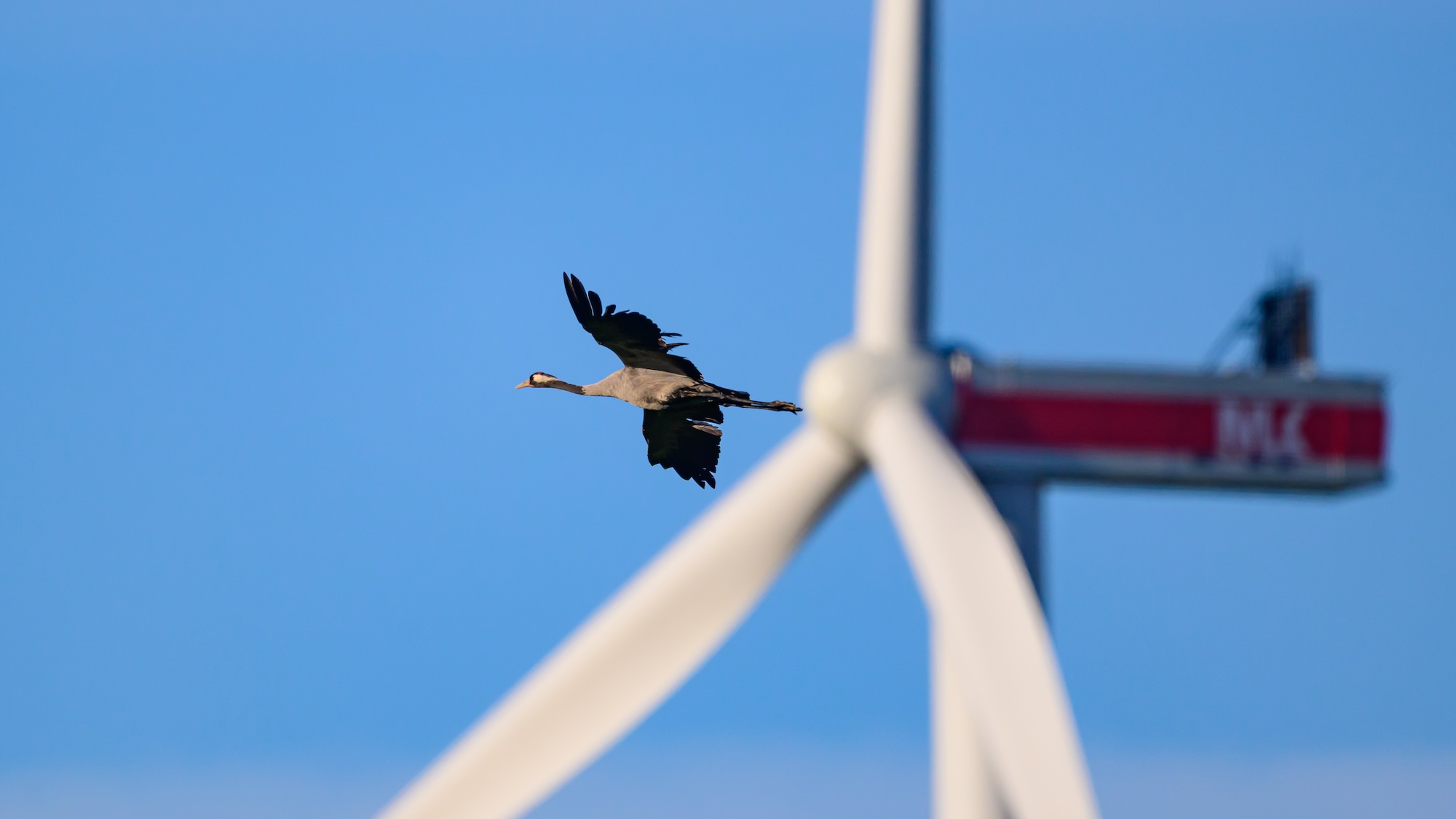
To lower these risks, engineers are devising new ways to make wind turbines more visible and avoidable. One potential solution may involve taking a cue from some of nature’s most dangerous creatures. According to a study published in the journal Behavioral Ecology, more bats and birds will steer clear of wind turbines when their blades are painted with colors similar to animals like venomous coral snakes and poison dart frogs.

A drone photograph of a wind turbine in southern Finland, digitally modified with a biologically inspired warning pattern under natural light conditions. Credit: Eric Lehtonen

“White blades, which are the most frequently used pattern around the world, turned out to be the worst option for birds,” Johanna Mappes, a University of Helsinki environmental scientist and study co-author, said in a statement. “This suggests that a relatively simple visual change could reduce bird mortality in connection with wind power.”

To test how birds respond to various turbine designs, Mappes and her colleagues placed test subjects in front of a video screen in a controlled laboratory environment. They then played clips of wind blades with multiple color palettes spinning at different speeds. These included turbines featuring classic white blades, one blade painted black, blades with red-and-white stripes, or blades with a newly designed, biomimetic red-black-yellow pattern.

“By using a touchscreen especially designed for birds, we can use games to explore their behavior and ecology by simulating real-world scenarios, without putting the birds at risk,” explained University of Exeter ecologist and study co-author George Hancock.

In nearly every trial, the birds were far more likely to approach white blades than any of the colored options. However, the test subjects were the most avoidant of the team’s novel, biomimetic striped blades.

“We’ve known for a long time that birds change how they respond to objects with warning colors, but to see such a large effect was remarkable,” Hancock added.

There is no way to completely prevent wind turbines from ever accidentally harming or killing animals. That said, the study’s authors believe a wider industry adoption of evolutionarily inspired color schemes could be an easy, cheap way to make the technology safer. They also suggest that similar approaches be developed for other human-made avian dangers like power lines and building windows.

“If the results are repeated in practical conditions in different countries and with different bird species, it could be a significant change for the entire wind power industry,” said Mappes.

The post Birds avoid wind turbines painted like venomous snakes appeared first on Popular Science.
  • ✇Popular Science
  • 7 ways toilets have killed people Andrew Coletti
    In 1076, a Dutch nobleman named Duke Godfrey “the Hunchback” of Lower Lorraine was murdered in a most unusual way. Some medieval historians tried to describe what happened in polite terms by saying that Godfrey was attacked after he had “withdrawn.” What they meant was that he sat down to use the bathroom and an assassin hiding in the toilet speared him from below. Ouch!  Of course, your chances of meeting a similar end are pretty slim. But that doesn’t mean that doing your business is always
     

7 ways toilets have killed people

21 May 2026 at 13:03

In 1076, a Dutch nobleman named Duke Godfrey “the Hunchback” of Lower Lorraine was murdered in a most unusual way. Some medieval historians tried to describe what happened in polite terms by saying that Godfrey was attacked after he had “withdrawn.” What they meant was that he sat down to use the bathroom and an assassin hiding in the toilet speared him from below. Ouch! 

Of course, your chances of meeting a similar end are pretty slim. But that doesn’t mean that doing your business is always safe. These are some of the strangest and most surprising ways that toilets have killed people.

Bathrooms have many hazards

The kitchen, with its sharp knives and hot stove, is often thought of as the most dangerous room in the home. But according to the CDC, up to 80 percent of home falls occur in the bathroom, due to the slippery, hard surfaces of tile floors and bathtubs. 

In the U.S. alone, about 40,000 injuries per year are specifically related to toilets. People can get pinched by the toilet seat while getting up or sitting down, and under rare circumstances, toilet bowls may collapse under a person’s weight. 

While statistics on toilet-related deaths are not specifically tracked, there are a number of ways that toilets can kill. Babies can drown in toilet bowls, and seniors can suffer serious falls after standing up from using the toilet, especially if they hit their head as they fall. Safeguards like bathroom handrails or locks on toilet lids can help reduce the risk of these incidents in homes.

At least some toilet-related deaths are from people trying to poop while constipated. Straining to poop puts strain on your heart, especially when you hold your breath while pushing (an action called the Valsalva maneuver). This can spike your blood pressure and even cut off oxygen flow to your brain. 

To minimize risk, doctors recommend that you take chronic constipation seriously, especially if you have a heart condition. Some doctors also advise squat toilets as the healthier option overall. When you use a squat toilet, poop can pass more easily out of your body and with less straining than when you use a seated toilet. 

Beware of pit toilets, especially if you’re meeting German nobility

Each toilet design comes with unique hazards. Before modern plumbing and sanitation, toilets were simply pits, dug as deep as possible and sometimes connected to underground water sources. 

Historically, these long shafts and dark waterways could prove deadly to people who accidentally tumbled in. In places where pit latrines are still used today, such as parts of rural Africa, they remain a safety concern and an occasional cause of death, especially for children.

Perhaps the most dramatic example of the literal pitfalls of this type of toilet design occurred in 1184 at the cathedral of Erfurt in Germany. A meeting of nobles called by King Henry VI to settle a land dispute dissolved into chaos when the cathedral’s wooden floorboards collapsed. 

Some 60 people plummeted through the floor into the latrine cesspit below, where they drowned in what became known as “the Erfurt Latrine Disaster.” The few survivors included the king and the local archbishop, who had been seated above floor level in a stone alcove.

Medieval illustration of a king with curly brownish hair and a beard.
King Henry VI, as depicted in the 14th century Codex Manesse, was present at the deadly Erfurt Latrine Disaster, where nearly 60 people died in a collapsed pit toilet. Image: Public Domain

A deadly WWII submarine toilet disaster

Aboard ships and submarines, faulty plumbing can easily cause water to leak into a vessel, and there have been subsequent cases of fatal drowning. 

In 1945, a German submarine called U-1206 was sent to the North Sea, fitted with state-of-the-art plumbing that expelled waste into the surrounding ocean through a series of valves

However, flushing the valve system was complex. After only eight days at sea, the young captain of U-1206 flushed incorrectly, causing the plumbing to backfire. Sewage flooded in and soaked the submarine’s batteries, releasing deadly chlorine gas that forced the crew to surface and evacuate. 

Three men drowned trying to escape the sinking vessel, and the rest were captured by Allied forces: All because of a toilet.

Metal toilets can pose real risks

On at least two occasions, U.S. prisoners have died from electrocution due to metal prison toilets. One of these prisoners was Michael Anderson Godwin of South Carolina, who was convicted of murder in 1983. 

In 1989, Godwin was fixing the TV in his cell while sitting on the toilet and placed a wire in his mouth, resulting in a fatal electric shock. In a bit of grim irony, Godwin had previously had his sentence reduced and avoided execution by electric chair

Similarly, in 1997, Laurence Baker of Pittsburgh died of electrocution on his cell toilet, due to the current from homemade earphones he had plugged into the TV

If you find yourself using a metal toilet, best to avoid electric devices altogether.

In 2016, a snake attacked from a toilet bowl

There’s probably not a human assassin lurking in your toilet bowl like the one who lay in wait for Godfrey. But what about a dangerous animal? 

Rats and snakes have been known to crawl out of toilet bowls, especially after flooding or heavy rain, as rising water levels can force animals to take shelter in sewer pipes

For instance, in 2016, a python bit a man using a toilet in Thailand. While such an attack might be painful and shocking, it’s still very rare, and very, very unlikely to be fatal.

Venomous spiders can lurk in outhouses

It’s best to exercise caution when using outdoor toilets because of a different kind of visitor. Attracted by the presence of flies, venomous widow spiders such as the black widow and its Australian cousin, the redback, are infamous for spinning webs under outdoor toilet seats. 

Before modern indoor plumbing, the phenomenon of these spiders biting people who disturbed them was so common that it formed the focus of the earliest medical study on black widow bites. Published in 1927, the study noted fifteen such cases treated at Los Angeles General Hospital “in recent years.” 

In 1971, Australian country singer Slim Newton even released a comedy song called “The Redback on the Toilet Seat,” with lyrics like “I didn’t see him in the dark, but boy, I felt his bite!” (Technically, only female widow spiders can bite people.) 

Outside Dunny toilet on a rural property in Queensland Australia. Made from wood scraps and corrugated iron and other recycled items.
Be sure to look for spiders if you ever use an outhouse toilet, like this one in Queensland, Australia. Image: Getty Images / Image by lesley mcewan

While widow spider bites may lead to pain and infection, they are rarely fatal thanks to modern antivenin. The last known death from a black widow bite was in 1983. In Australia, a death from severe infection following a redback bite made headlines in 2016 because it was the first such incident in more than 50 years

For the record, the 2016 redback victim was not bitten on the toilet. However, that same year, another man in Australia was bitten by a redback while using the toilet, on two separate occasions

So next time you use an outhouse, lift the seat and check before sitting down—just in case.

In That Time When, Popular Science tells the weirdest, surprising, and little-known stories that shaped science, engineering, and innovation.

The post 7 ways toilets have killed people appeared first on Popular Science.

  • ✇Popular Science
  • World’s largest solar-powered aircraft crashes after losing power Andrew Paul
    The groundbreaking experimental aircraft known as Solar Impulse 2 has met an untimely end. According to a National Transportation Safety Board report, the completely solar-powered plane crashed into the Gulf of Mexico during an autonomous test flight on May 4. While there were no injuries or fatalities, the wreck of the Solar Impulse marks an unfortunate end for one of the most impressive and inspirational planes in aviation history. Solar Impulse was first conceptualized in 2003 by Bertrand
     

World’s largest solar-powered aircraft crashes after losing power

11 May 2026 at 15:46

The groundbreaking experimental aircraft known as Solar Impulse 2 has met an untimely end. According to a National Transportation Safety Board report, the completely solar-powered plane crashed into the Gulf of Mexico during an autonomous test flight on May 4. While there were no injuries or fatalities, the wreck of the Solar Impulse marks an unfortunate end for one of the most impressive and inspirational planes in aviation history.

Solar Impulse was first conceptualized in 2003 by Bertrand Piccard, the grandson of Swiss deep sea pioneer Auguste Piccard and the son of Jacque Piccard, the first person to reach the Mariana Trench. Piccard never intended the vehicle for commercial use, but instead envisioned it as a way to raise awareness for sustainable energy by building the first solar-powered plane capable of circumnavigating the globe. The first iteration, Solar Impulse 1, completed its inaugural test flight in 2009 followed by multiple additional trips over the next few years.

Construction on Solar Impulse 2 began in 2011. Even with a 232-foot wingspan that made it wider than a Boeing 747, the completely carbon-fiber frame ensured the plane only weighed about 5,100 lbs, making it about as heavy as a standard SUV. The 130-cubic-foot, nonpressurized cockpit included oxygen reserves and additional environmental equipment to enable a pilot to travel long distances at a maximum altitude of 39,000 feet. According to sUAS News, a total of 17,248 photovoltaic solar cells offered a peak power output of 66 kW to four electric motors and four lithium-ion batteries weighing nearly 1,400 lbs. Basic autopilot technology also allowed its sole occupant to sleep in 20 minute intervals.

Solar Impulse 2 made history in 2016 as the first fixed-wing, entirely solar-powered plane to circumnavigate the Earth. The feat was accomplished over the course of 16.5 months, with Piccard alternating piloting duties with Foundation co-founder André Borschberg and making 17 stops along the route. Solar Impulse 2 cruised at a ground speed between 31 and 62 mph, relying on the slower pace during evening portions of the trip.

In 2019, the Solar Impulse Foundation announced the sale of Solar Impulse 2 to Skydweller Aero for an undisclosed sum. The Spanish–American company’s plans were very different from the plane’s initial purpose. Instead of focusing on its solar capabilities, Skydweller hoped to pursue its military-related surveillance potentials, which included “carrying radar, electronic optics, telecommunications devices, telephone listening, and interception systems.”

After supplying numerous modifications, Solar Impulse 2 completed its first autonomous flight in Spain in 2023. The first entirely uncrewed, autonomous flight took place at Stennis International Airport near Bay St. Louis, Mississippi, the following year. At the time, Skydweller also confirmed its larger goal was to develop and supply a fleet of uncrewed, solar-powered planes capable of nonstop flight at latitudes between Miami (26°N) to Rio de Janeiro (23°S). These near-continuous operations would involve military and commercial contracts, allegedly at a much lower cost than current satellite options. The overhauled flagship aircraft reportedly crashed after losing power while flying over the Gulf of Mexico on May 4.

“We learned through social media about the crash of the Skydweller solar drone,” Piccard and Borschberg wrote in a statement provided to Popular Science. “The Solar Impulse team is saddened by the loss of an important technological flagship.”

Skydweller representatives did not respond to Popular Science at the time of writing. According to the Swiss news outlet SWI, part of Solar Impulse Foundation’s original sales contract with Skydweller stipulated the aircraft would eventually return to Switzerland for installation in the Swiss Museum of Transport in Lucerne.

“Very often when we speak of protection of the environment, it’s boring,” Piccard told Popular Science in 2013. “The first airplane [had] the technology of 2007. The second airplane [had] the technology of tomorrow.”

The post World’s largest solar-powered aircraft crashes after losing power appeared first on Popular Science.

  • ✇Popular Science
  • Bobcat that survived being hit by a car gets a custom-built kennel Margherita Bassi
    In March, we reported on a wild bobcat that had been hit and dragged by a car, who also got her head stuck in the car’s grill. As if things could get any worse, the wild feline arrived at Raven Ridge Wildlife Center in Pennsylvania on a Sunday, and the nearby veterinary practice was closed. But thanks to two lucky acquaintances, a mobile x-ray machine was brought in, revealing that the bobcat had broken two legs.  Thanks in part to the fact that her bone fractures were clean breaks, her team
     

Bobcat that survived being hit by a car gets a custom-built kennel

25 May 2026 at 17:04

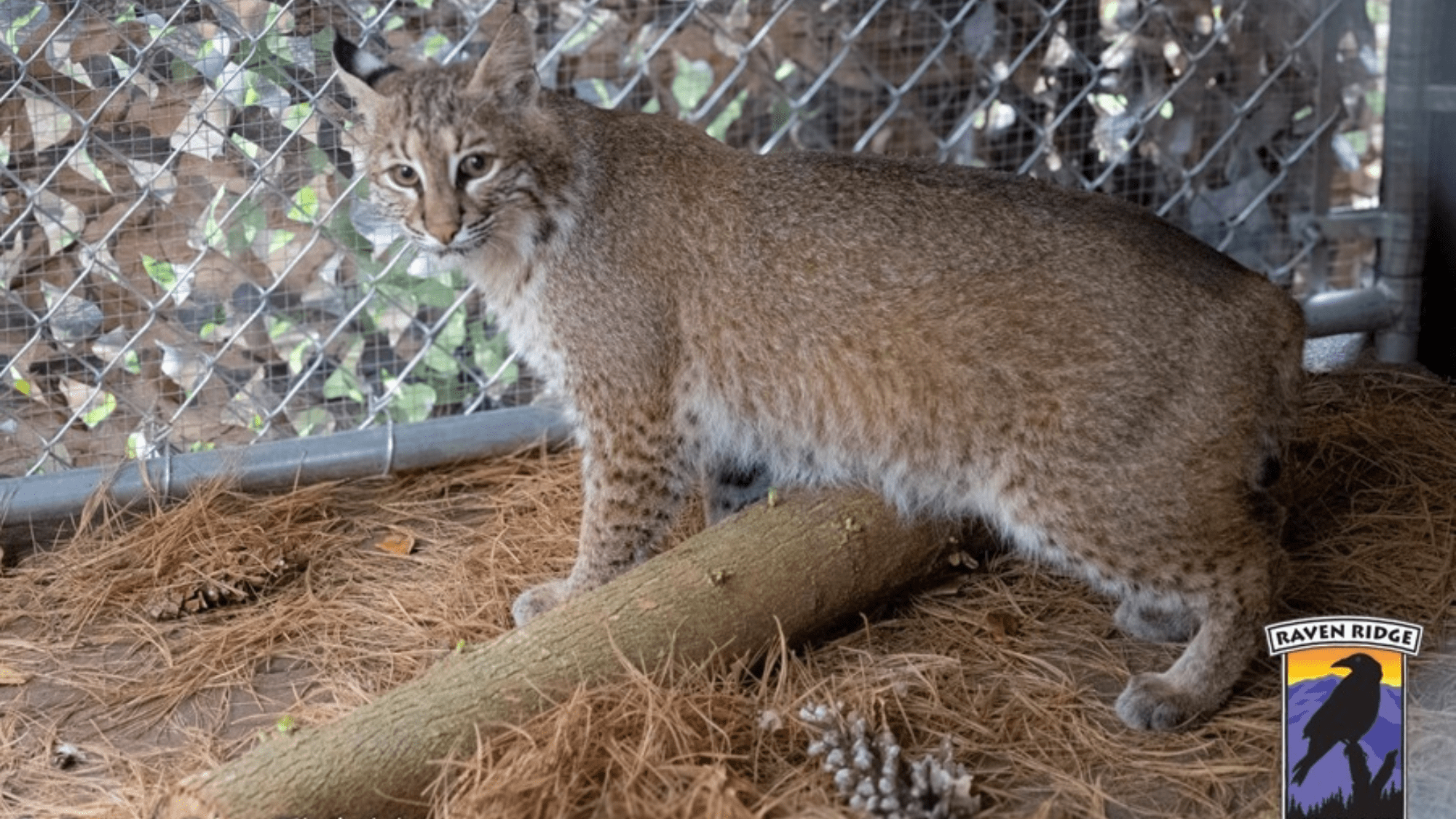
In March, we reported on a wild bobcat that had been hit and dragged by a car, who also got her head stuck in the car’s grill. As if things could get any worse, the wild feline arrived at Raven Ridge Wildlife Center in Pennsylvania on a Sunday, and the nearby veterinary practice was closed. But thanks to two lucky acquaintances, a mobile x-ray machine was brought in, revealing that the bobcat had broken two legs. 

Thanks in part to the fact that her bone fractures were clean breaks, her team decided to risk a surgery. The next morning, two surgeons operated on the bobcat contemporaneously. After the operation, Tracie Young, director of the Raven Ridge Wildlife Center, told Popular Science that she was doing “fantastic” and “starting to act like a bobcat.” 

a bobcat sits on some pine needles
The female feline has been healing at Raven Ridge Wildlife Center for two months. Image: Dawn Rise Ekdahl / Raven Ridge Wildlife Center.

In her great misfortune, the cat has been rather lucky—and it seems like the luck is holding. Two striking coincidences have now come together to get her a custom-made cage for her rehabilitation. 

“After two months of recovery, the bobcat now needs to be moved outside for exercise and to begin building muscle tone,” the wildlife center wrote on social media. “We had to devise a safe and creative way to get her outdoors, necessitating the construction of special caging. We determined that a custom dog kennel would be the only viable option.”

However, the problems were twofold: time and money. The dog kennel builders the wildlife center contacted needed at least eight months to build the rehab cage, and the project would cost thousands of dollars. But then Raven Ridge’s photographer Dawn called her neighbor Glen for suggestions, who turned out to be the owner of a kennel-building business and could build the kennel in two weeks. 

a man moves a kennel on a forklift
The custom-built kennel was made for the bobcat in only two weeks. Image: Dawn Rise Ekdahl / Raven Ridge Wildlife Center.

And if you think that’s enough of a coincidence, it gets even better. The very day construction commenced, Raven Ridge Wildlife Center received a letter with a generous donation. A woman named Raven Minervino has passed away, and her husband wrote that she had consistently supported the wildlife center. After she died, her husband had asked that rather than getting flowers, people make donations in her memory. The letter had a donation in her memory large enough to pay for the custom bobcat cage.

“Thanks to all this support, we successfully moved the bobcat to the new enclosure, where she is now exploring, exercising, and much happier,” reads the social media post. Raven Ridge plans to (or perhaps already has) put a plaque in Minervino’s memory on the cage. 

Both of the bobcat’s broken legs have healed, and since having the custom cage, she has put on ten pounds, bringing her to the much healthier total of 19 pounds. Adult female bobcats weigh approximately 15 to 20 pounds on average

The post Bobcat that survived being hit by a car gets a custom-built kennel appeared first on Popular Science.
  • ✇Popular Science
  • New Mars rover could swim through sand like a desert lizard Mack DeGeurin
    To effectively travel on Mars, rovers need to deal with a lot of sand. German engineers have created a new kind of ground rover that uses swimming motions to push through sand that may otherwise cause the  wheels to get stuck. Its inspiration: the African sandfish (Scincus scincus), a lizard known for burrowing into the Sahara Desert and literally swimming through its sand like a fish. It’s one of the animal kingdom’s strangest methods of propulsion, but it may help shape the future of Mars expl
     

New Mars rover could swim through sand like a desert lizard

25 May 2026 at 15:15

To effectively travel on Mars, rovers need to deal with a lot of sand. German engineers have created a new kind of ground rover that uses swimming motions to push through sand that may otherwise cause the  wheels to get stuck. Its inspiration: the African sandfish (Scincus scincus), a lizard known for burrowing into the Sahara Desert and literally swimming through its sand like a fish. It’s one of the animal kingdom’s strangest methods of propulsion, but it may help shape the future of Mars exploration.

A video of the rover, released this week by the University of Würzburg, shows a mini-fridge-sized, silver rover making its way through a sandy, Martian-mimicking test floor. Rather than rolling forward, each of its four wheels cuts through the sand in what looks like a figure-eight motion. The rover pushes on several yards and then cuts a corner and returns to where it started.

“The wheels mimic the animal’s [sandfish’s]characteristic interaction with the ground, generating both longitudinal and lateral forces,” University of Würzburg researcher Amenosis Lopez said in a statement. “The rover leaves sinusoidal tracks in the sand.” 

The sandfish: nature’s cute solution to slippery sand 

Though most people likely associate space rovers with round wheels or tracks reminiscent of those on WALL-E, neither design is ideal for dealing with Mars’s uniquely harsh and sandy environment. Sand is unique because it’s a material with both solid and liquid-like qualities. On top of sand’s mixed texture, rovers roaming on the Red Planet have to deal with steep slopes and uneven terrain, where varying levels of slipperiness can cause imbalance. Patches of softer sand are also a nightmare for wheels, making the prospect of a rover getting stuck never far from mind

But nature figured out a solution to this issue millions of years ago, and it’s called the sandfish. Contrary to its name, the Sahara Desert native is a lizard in the skink family. Above ground, the sandfish uses its tiny legs to scrabble around much the same as any lizard. Things get more interesting when it burrows down into the sand. X-ray imaging shows  the sandfish propelling itself forward under the sand, using a powerful waving motion to generate thrust and overcome drag. The result looks like an animal swimming through the sand, remarkably similarly to how a fish would oscillate its body to move through water

Engineers at Georgia Tech took those observations and used them to create their own sandfish robot in 2011. Testing with their robots showed that the little lizard’s oddly wedged shaped head may also help it generate lift forces and more easily swim through sand. 

Sink or swim: new rover did both 

Researchers working on the sandfish-inspired robot said it outperformed a wheeled version when navigating through a sandy test track. Where the round wheels would wobble and weave, the oscillating wheels stayed relatively stable. That’s not to say the new approach worked right out of the gate. Early models of the design were reportedly so heavy that the  rover literally sank into the sand. The team went back to the drawing board and made a second version, this time increasing each wheel’s width and reducing overall mass

It’s unlikely these oddball new wheels will become the main chassis system for NASA rovers, at least not in the immediate future. More work still needs to be done to increase their overall controllability and account for slippage that can occur in complicated, real-world environments. There are also the added variables of accounting for scientific instruments and other cargo a rover might have to carry. 

More than anything, the wheel design is a testament to the sandfish’s innate ingenuity and evolutionary gifts. Many scientists only recently began to truly appreciate these traits and what other technology they could inspire. 

The post New Mars rover could swim through sand like a desert lizard appeared first on Popular Science.

  • ✇Antiques and Vintage - flickr
  • 20260322-MECCANO 001-NB003-2K Manuel Gual
    Manuel Gual posted a photo: Vintage Meccano Workshop: Mechanical Dreams in Brass and Steel Description: A detailed visual collection inspired by classic Meccano engineering, captured inside a warm vintage workshop filled with metal strips, brass gears, pulleys, axles, wheels, tools, blueprints, cranes, bridges, clockwork mechanisms, model vehicles and carefully organized construction parts. The series celebrates the beauty of mechanical imagination, precision assembly, old workshop craftsma
     

20260322-MECCANO 001-NB003-2K

Manuel Gual posted a photo:

20260322-MECCANO 001-NB003-2K

Vintage Meccano Workshop: Mechanical Dreams in Brass and Steel

Description:
A detailed visual collection inspired by classic Meccano engineering, captured inside a warm vintage workshop filled with metal strips, brass gears, pulleys, axles, wheels, tools, blueprints, cranes, bridges, clockwork mechanisms, model vehicles and carefully organized construction parts. The series celebrates the beauty of mechanical imagination, precision assembly, old workshop craftsmanship and the nostalgic charm of hands-on model engineering. Each scene evokes the atmosphere of an inventor’s bench, where miniature machines, structural frames and experimental mechanisms come together like a tribute to industrial design, educational toys and timeless creative tinkering. These images have been generated by Artificial Intelligence.

  • ✇Popular Science
  • Vet constructs ingenious contraption to help a tortoise hit by a car Margherita Bassi
    Complex problems require creative solutions, and wildlife veterinarian Nielsen Donato is no stranger to what might seem like out-of-the-box problem solving. Last month, Donato and his team at Vets in Practice in the Philippines fixed temporary wheels onto an Aldabra giant tortoise (Aldabrachelys gigantea) that was struggling to walk.  More recently, they built a contraption to care for a four-year-old African spurred tortoise (Geochelone sulcata) that had been run over by a car not once but t
     

Vet constructs ingenious contraption to help a tortoise hit by a car

8 May 2026 at 12:03

Complex problems require creative solutions, and wildlife veterinarian Nielsen Donato is no stranger to what might seem like out-of-the-box problem solving. Last month, Donato and his team at Vets in Practice in the Philippines fixed temporary wheels onto an Aldabra giant tortoise (Aldabrachelys gigantea) that was struggling to walk. 

More recently, they built a contraption to care for a four-year-old African spurred tortoise (Geochelone sulcata) that had been run over by a car not once but twice. When the unfortunate reptile was first brought to the clinic, Donato—who is the clinic’s chief surgeon and exotic animal medicine specialist—wasn’t there. 

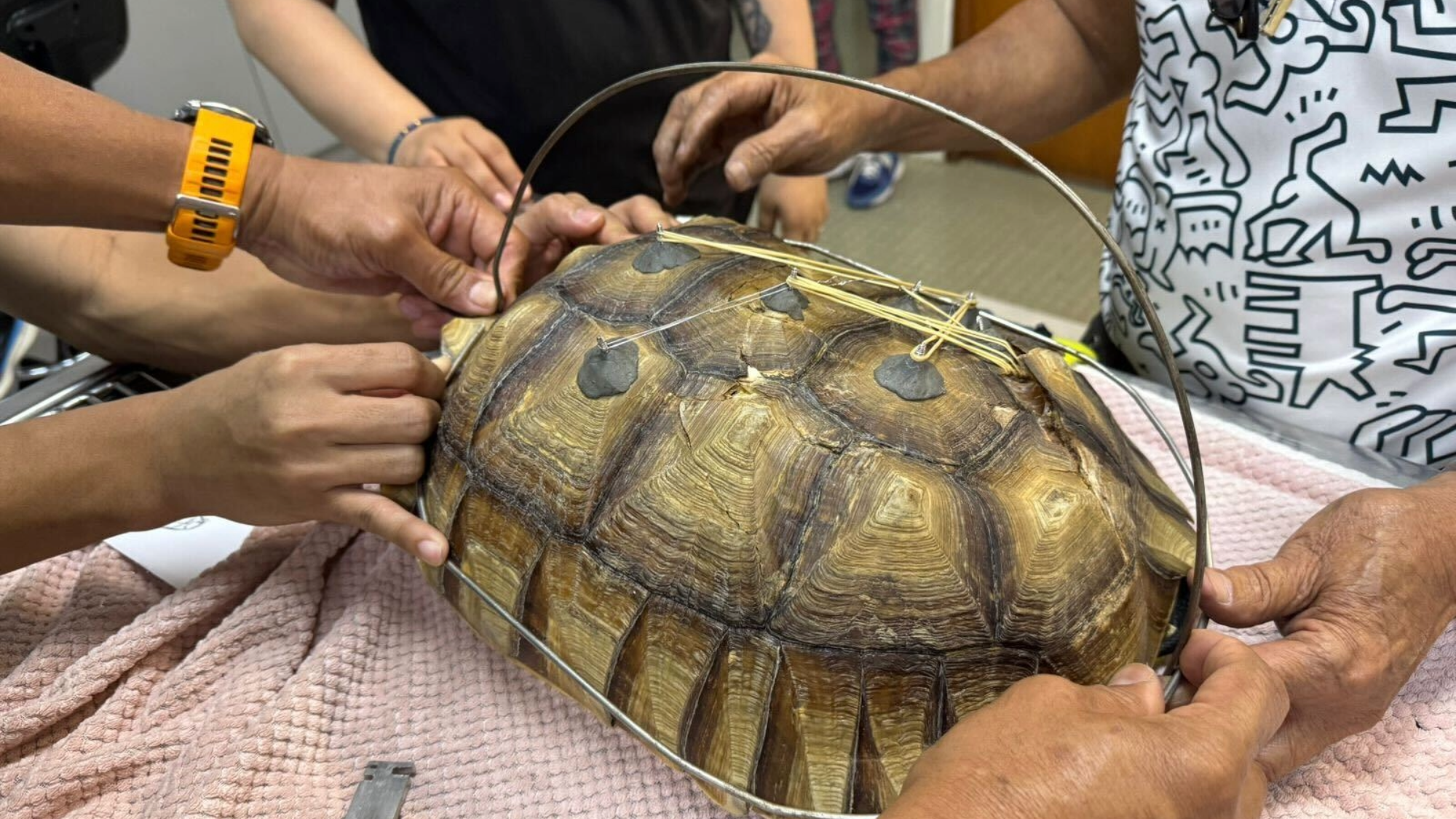
Over the phone, Donato instructed the team to keep the tortoise’s exposed soft tissue damp by rinsing the shell with saline (salt water). They also tried to stabilize the cracks, by fixing inverted screws onto various parts of the shell with epoxy putty, and then tying rubber bands around the screws.

a diagram of how to fix a turtle's shell
The team sketched out their plan of action to save the tortoise’s shell. Image: Nielsen Donato.

“At this point, our main concern is to stabilize the condition of the turtle from shock, from the injury. So for the first three weeks, we made sure that there were no flies that laid eggs and turned into maggots,” Donato tells Popular Science

They kept the tortoise hydrated, tube-fed it, kept its wound clean, basked it in the sun, and gave it antibiotics and pain medication. 

black wires over a large turtle shell keeping it together
The wires help keep the shell together. Image: Nielsen Donato.

“And once the tortoise, the sulcata, was more mobile and showing interest in eating on its own, we planned to repair the shell,” he says

According to Donato, the most difficult part for him was lifting the crushed parts of the shell. So he designed a frame for the shell that, with the help of wires, would pull up these shell parts. And the contraption worked.

a tortoise with black wires over it shell
The tortoise was hit by a car twice, but is on the road to recovery. Image: Nielsen Donato.

“When we were twisting the wire, we noticed that we were starting to align the shell and the cracks were becoming more opposed to each other,” he explains. The team sealed the cracks with dental acrylic and asked the turtle’s owner to bring it back after three weeks. By the time the tortoise was back in their clinic, the shell had become more stable. The team removed the brace, wires, screws, and putty, and sent it back home again before its next appointment.

“When it visited us lately, it started moving around more actively and the owners were not worried about its appetite because it was eating again,” Donato reports. 

One thing is for certain—this tortoise went to shell and back again. 

The post Vet constructs ingenious contraption to help a tortoise hit by a car appeared first on Popular Science.

  • ✇Popular Science
  • This guy crammed a laptop into an Altoids tin Andrew Paul
    Leftover Altoid tins are staple components in all types of handy, DIY projects. Once you eat the mints, the aluminum containers routinely house basic first aid kits, miniature speakers, sewing accessories, and even watercolor paints. But for the YouTuber Exercising Ingenuity, one specific use came to mind. “Have you ever looked at a tin of Altoids and thought, ‘That looks like a tiny computer?’” he asked in a video on May 9. Of course, whether or not you imagined the same endeavor is besid
     

This guy crammed a laptop into an Altoids tin

11 May 2026 at 19:33

Leftover Altoid tins are staple components in all types of handy, DIY projects. Once you eat the mints, the aluminum containers routinely house basic first aid kits, miniature speakers, sewing accessories, and even watercolor paints. But for the YouTuber Exercising Ingenuity, one specific use came to mind.

“Have you ever looked at a tin of Altoids and thought, ‘That looks like a tiny computer?’” he asked in a video on May 9.

Of course, whether or not you imagined the same endeavor is beside the point—because the creator went ahead and did it. The final result may not be the most versatile pocket computer ever designed, but it definitely is one of the most portable.

Exercising Ingenuity was particularly inspired by cyberdecks, which first rose to prominence among hackers during the 1980s. The term originated in William Gibson’s landmark 1984 science fiction novel Neuromancer, and basically boils down to a rugged standalone laptop (with a little bit of punk flare thrown in for good measure). Most actual cyberdeck projects are built with an emphasis on utility and resilience, but Exercising Ingenuity’s chief goal was to make his variant as small as possible.

The problem wasn’t finding an appropriately tiny CPU and LCD screen—a Raspberry Pi Zero and an old, two-inch display both did the trick. Instead, the more difficult challenge was cramming a mechanical keyboard into the pocket-sized tin. That required learning how to construct a diode matrix configuration typing input, then individually assembling and soldering each key on his keyboard. Although the time-lapse video makes the job look incredibly frustrating and hard on the fingers, the YouTuber swears it was a “really enjoyable part of the project.” To each their own.

Hands typing on miniature keyboard connected to computer components and small LCD screen
Typing will remain a challenge unless you have very small fingers. Credit: YouTube

From there, it was a matter of designing a flexible 3D-printed interior frame and cramming everything into the tin. This was easier said than done, and required the hobbyist to trim down as much wiring as possible while also soldering parts like the UPS board and LCD display directly onto the Raspberry Pi. Despite literally and figuratively cutting every possible corner to make room for all of the components, the final result still required swapping out the tin’s hinges with slightly larger replacements to ensure the case could close shut.

With every hurdle cleared, it was simply a matter of booting up the contraption to give it a test run. Exercising Ingenuity says the final product worked flawlessly, and he was even able to program a small motor to run using his Altoid cyberdeck. Actually typing on the keyboard still looks like a labor of love, but the overall result remains very cool. Its inventor even made all of the designs available online for free, in case any aspiring cyberpunks are looking to recycle an old mint tin.

​​In The Workshop, Popular Science highlights the ingenious, delightful, and often surprising projects people build in their spare time. If you or someone you know is working on a hobbyist project that fits the bill, we’d love to hear about it—fill out this form to tell us more.

The post This guy crammed a laptop into an Altoids tin appeared first on Popular Science.

  • ✇Popular Science
  • Cybertruck recall warns that its wheels may fly off Andrew Paul
    The wheels may be falling off the Tesla Cybertruck. No, seriously. According to a recent National Highway Traffic Safety Administration (NHTSA) recall alert, an estimated 173 of the stainless steel electric vehicles (EV) may be at risk of cracks forming in the brake rotor studs. These cracks could separate from their wheel hubs. “Wheel hub separation can cause a loss of vehicle control, increasing the risk of crash,” the NHTSA explained in its recall. Such emergencies may even include an enti
     

Cybertruck recall warns that its wheels may fly off

8 May 2026 at 15:17

The wheels may be falling off the Tesla Cybertruck. No, seriously. According to a recent National Highway Traffic Safety Administration (NHTSA) recall alert, an estimated 173 of the stainless steel electric vehicles (EV) may be at risk of cracks forming in the brake rotor studs. These cracks could separate from their wheel hubs.

“Wheel hub separation can cause a loss of vehicle control, increasing the risk of crash,” the NHTSA explained in its recall. Such emergencies may even include an entire wheel falling off the EV.

The 173 EVs span the Cybertruck’s 2024-2026 models, specifically those equipped with the optional 18-inch steel wheels. According to Kelley Blue Book, the EVs may start vibrating or issuing a noise before the wheel stud separates. Tesla is now offering affected vehicles free wheel hub and rotor replacements, as required by U.S. law.

The latest NHTSA alert is the latest in a string of recalls to affect the Tesla Cybertruck. Although the regulatory body awarded the EV a five-star overall safety rating, the vehicle line has received 11 recalls, four investigations, and 124 complaints since its debut in 2023. Previous recalls have involved faulty accelerator pedals from misapplied soap, malfunctioning windshields, and more.

Elon Musk once hyped the Cybertruck as the “finest in apocalypse technology” and “what Bladerunner [sic] would have driven,” but Tesla’s stainless steel EV simply hasn’t gained much traction. After over four years of production delay, the Cybertruck arrived about $20,000 more expensive than its original estimated base price. Tesla hoped to sell around 250,000 vehicles in 2024, but ended the year with less than 20 percent of their goal. Those numbers have continued to plummet, with barely 3,500 Cybertrucks sold within the last few months.

The post Cybertruck recall warns that its wheels may fly off appeared first on Popular Science.

  • ✇Popular Science
  • Inventor plays homemade electromagnetic bagpipes in rock band Andrew Paul
    Bagpipes: You either love ‘em or you hate ‘em. But even among the instrument’s diehard defenders, most wouldn’t spend years designing, building, and perfecting an electromagnetic variant. But that’s exactly what one intrepid hobbyist in the United Kingdom has accomplished—although he first began toying with the idea 30 years ago. “This project started back in 1996 when I hacked an Irish Uilleann bagpipe chanter by replacing the cane reed with a homemade reed made from carbon steel,” he explai
     

Inventor plays homemade electromagnetic bagpipes in rock band

20 May 2026 at 18:57

Bagpipes: You either love ‘em or you hate ‘em. But even among the instrument’s diehard defenders, most wouldn’t spend years designing, building, and perfecting an electromagnetic variant. But that’s exactly what one intrepid hobbyist in the United Kingdom has accomplished—although he first began toying with the idea 30 years ago.

“This project started back in 1996 when I hacked an Irish Uilleann bagpipe chanter by replacing the cane reed with a homemade reed made from carbon steel,” he explained on his Hackaday project page.

Although most famously associated with Scotland, various iterations of bagpipe instruments are documented in regions around the world like North Africa, East Asia, and the Persian Gulf. The Uilleann or Irish pipes date back to the 18th century and operate similarly to their Scottish relatives. To play them, a wearer operates small bellows strapped around the waist to blow relatively dry air through pipe reeds while using them like flutes. Uilleann pipes typically encompass two full octaves and produce a sound that many consider more melodic and mild than Scottish bagpipes.

Carbon steel reed inside electric bagpipes setup
The electric bagpipes utilize a carbon steel reed that connects to an amplifier. Credit: Goat Industries / Hackaday

This doesn’t mean they’re quiet, of course. In fact, their earliest versions could often be found on the battlefield as morale boosters. Although, the invention of electric instruments meant that even the most robust pipes couldn’t overshadow an amplifier cranked to its maximum. This posed a problem to the modernized version’s inventor.

“I desperately wanted to play the pipes in a rock band and I knew that I would only be able to sonically compete with an electric guitar by fitting an electromagnetic pickup next to a steel reed,” he explained.

Wielding a workaround may sound like a lot of work, especially when a musician could hypothetically just place a microphone near their traditional bagpipes. While certainly possible, it’s still difficult for the performer to actually hear themselves on stage compared to the electric instruments and drums. On top of that, standard microphones pick up a lot of background noise and produce feedback in stage monitors. Constructing a steel reed bypasses these issues entirely.

“Jimi Hendrix-type feedback can still be created but only by turning up the monitor amp really high and physically shoving the instrument into the speaker,” the creator wrote, adding that he can also employ the same effects used by guitarists, including distortion, pitch shifters, and delays.

The modern updates don’t end there, either. While the bellows bag is crafted from goat skin, it’s basically an exterior cosmetic accessory that houses another bag made from the same vinyl used in car seat covers. That’s all well and good—but how does it play?

“Playing gigs with this instrument, people would crowd around to watch and guitarists at the back would be scratching their heads thinking ‘That sounds like an electric guitar, but it definitely is not an electric guitar and you definitely can’t get an electric guitar to sound like that!’” he wrote.

While the full plans aren’t available online, fans of the sound can check out the inventor’s website to hear multiple original songs featuring the electro-bagpipes.

In The Workshop, Popular Science highlights the ingenious, delightful, and often surprising projects people build in their spare time. If you or someone you know is working on a hobbyist project that fits the bill, we’d love to hear about it—fill out this form to tell us more.

Related 'The Workshop' Stories

The post Inventor plays homemade electromagnetic bagpipes in rock band appeared first on Popular Science.

❌
Subscriptions