Login
Login

saltycotton posted a photo:

AL Stainless Steel ad
1955



You know a good ending when you see one. The Good, the Bad and the Ugly does not have a bad ending, nor an ugly one. It doesn’t actually have a good ending, either. It has a great ending, because calling it good would be an understatement. See also classics like Casablanca, Cinema Paradiso, The Godfather Part II, and The Shawshank Redemption, for reasons that are probably obvious if you’ve seen them.

Manuel Gual posted a photo:

Vintage Meccano Workshop: Mechanical Dreams in Brass and Steel
Description:
A detailed visual collection inspired by classic Meccano engineering, captured inside a warm vintage workshop filled with metal strips, brass gears, pulleys, axles, wheels, tools, blueprints, cranes, bridges, clockwork mechanisms, model vehicles and carefully organized construction parts. The series celebrates the beauty of mechanical imagination, precision assembly, old workshop craftsmanship and the nostalgic charm of hands-on model engineering. Each scene evokes the atmosphere of an inventor’s bench, where miniature machines, structural frames and experimental mechanisms come together like a tribute to industrial design, educational toys and timeless creative tinkering. These images have been generated by Artificial Intelligence.


In the late 12th century, a nobleman named Count Gerard van Loon commissioned an abbey to serve as his final resting place. Over the next few decades, amid plenty of political tumult, Herkenrode Abbey in Hasselt, Belgium, was converted to the first Cistercian convent for women. It was a site of pilgrimage from the 13th to the 15th centuries, and despite regional wars and economic uncertainty, it stayed the course. During the 16th century, it experienced its heyday thanks to the patronage of a figure named Prince Bishop Evrard van der Marck, seeing the addition of a Gothic church that brimmed with beautiful stained glass windows, textiles, paintings, and more.
The Eighty Years’ War paused Herkenrode’s prosperity, and once things stabilized again politically, the abbey experienced several decades of good fortune, although much of this wealth was spent on the abbesses’ own acquisitions of property and art in a show of their prestige. But the paradigm-shifting Liège Revolution, which coincided with the French Revolution, brought all of this crashing to a halt by 1796. The abbey complex was promptly sold and dismantled.

Throughout the 19th and 20th centuries, Heckenrode went through many other uses, including factories and even a series of private homes, before it was again acquired by a religious organization in the 1970s. While the original 16th-century abbey church no longer exists due to a devastating fire in 1826, the site remains one of the region’s most culturally significant. And Herita has been working to restore it. As part of a phased regeneration of the landmark and its park, an ethereal, life-size sculpture of the abbey titled CLAUSURA by Gijs Van Vaerenbergh has risen from the building’s original footprint.
The studio, founded by Belgian designers Pieterjan Gijs and Arnout Van Vaerenbergh, conceived of CLAUSURA as “an artistic vision for the vanished heart of Herkenrode.” True to scale, the structure is made of slender steel rods that rise from the ground in an airy framework. The installation revolves around the idea of memory and sensation: rather than rebuilding the abbey to try to mirror what it may have looked like hundreds of years ago, the work nods to its past with an airy elegance.
“The new volumes are transparent, allowing their silhouettes to blend seamlessly with the landscape in the background,” says a statement. “The intervention balances between reconstruction and abstraction, as the original structures are evoked through a refined play of suggestion. Iconic details such as windows, vaults, and towers enhance the sense of recognisability, although at times, these elements dissolve back into a chaos of lines.”

Gijs Van Vaerenbergh is known for its architectural interventions, often utilizing steel, stone, wood, and a wide range of other building materials to re-envision spaces as structural sculptures. “What unites their diverse output is a sustained focus on how space is experienced—visually, bodily and temporally,” a statement says.
CLAUSURA is being constructed in three phases. The first, which is also the most ambitious, is slated to open to the public on June 18. Visitors will be able to walk and reflect amid the installation. See more on Gijs Van Vaerenbergh’s Instagram, and learn about the restoration progress and how to visit on Herita’s website.


Do stories and artists like this matter to you? Become a Colossal Member today and support independent arts publishing for as little as $7 per month. The article Gijs Van Vaerenbergh Gracefully Reimagines a 16th-Century Belgian Abbey Church in Steel appeared first on Colossal.
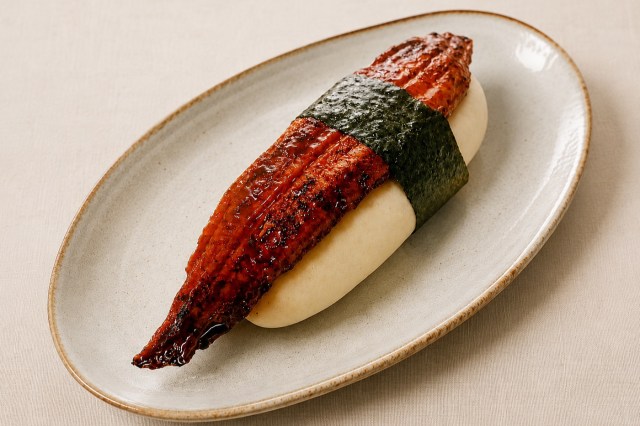
Honouring a centuries-old tradition with a modern twist.
Every summer, people around Japan eat eel to regain energy from the tiring heat. It’s a tradition that’s been around for centuries, with people commonly consuming eel on the Midsummer Day of the Ox, or “Doyo no Ushi no Hi” as it’s known in Japanese, which this year falls on 26 July.
With so many retailers offering eel on this day, many look for ways to stand out, and one bakery in Kochi Prefecture has everyone’s attention with a new product called “Super! Eel Bread“.
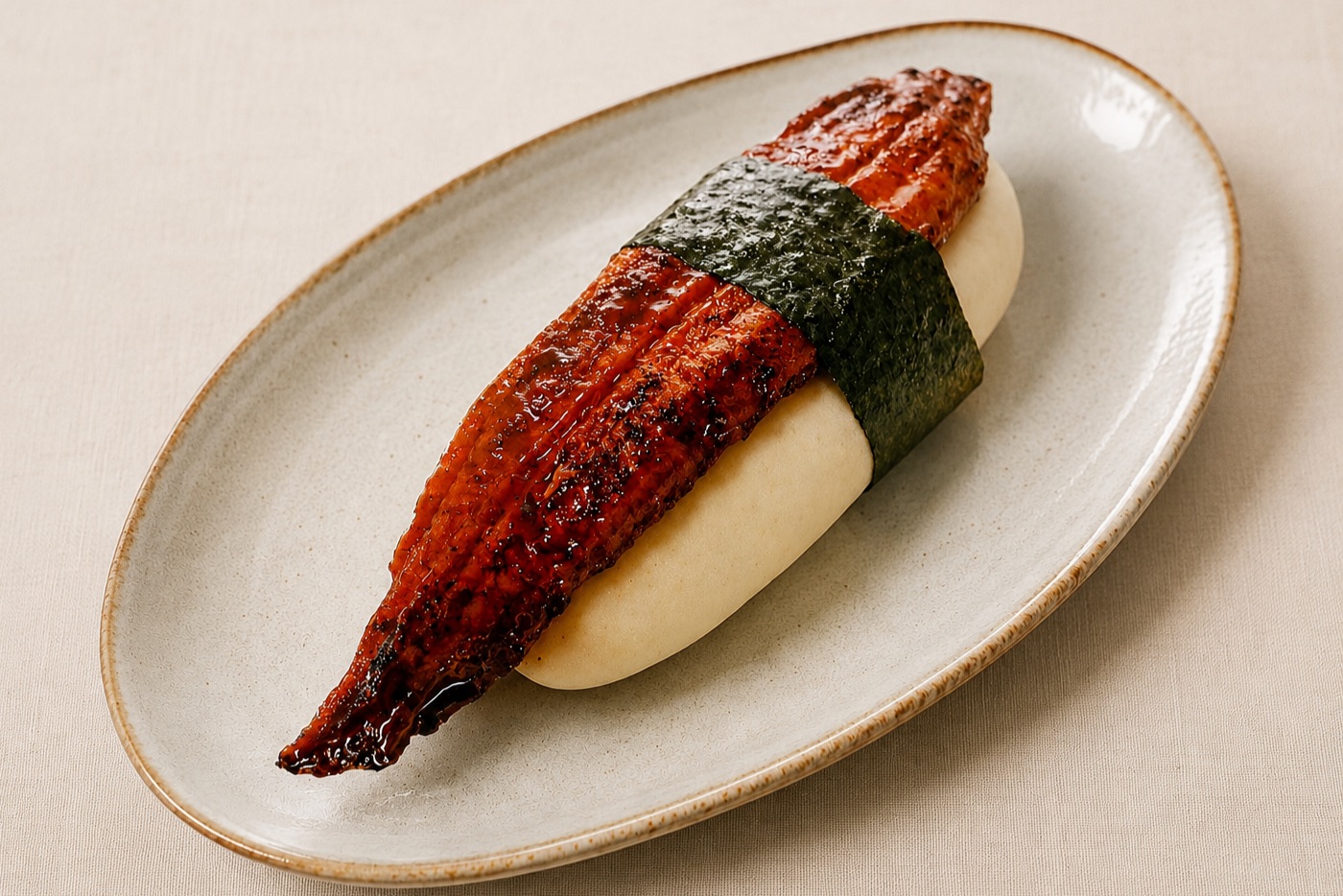
At first glance, the new product looks like sushi, but look closer and you’ll see it’s actually a whole eel, wrapped in a strip of nori seaweed around a super soft bread roll.
The eel is the star of the show, grilled over charcoal in the traditional kabayaki (sweet soy-glazed) style by Kitahama Shoten, an eel specialty shop with over 85 years of history. The new bread, which uses locally-sourced eel, is said to combine the appeal of Kochi’s regional ingredients with the playful spirit unique to Komi Bakery.
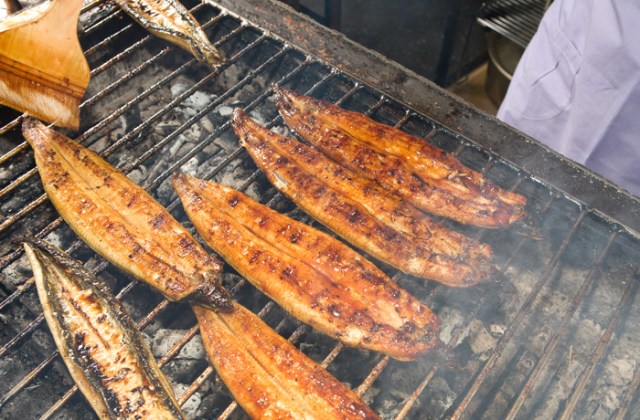
According to the bakery, the Super! Eel Bread has been three years in the making, born from an idea by the store’s head of bread and sandwich production, with the aim of contributing to the culture of Doyo no Ushi no Hi as a bakery.
▼ Kazuto Nishiyama, Head of Bread and Sandwich Production and creator of bold ideas.

Nishiyama and his team have certainly succeeded in creating an eye-catching product that honours the tradition of Doyo no Ushi no Hi while adding a unique twist that appeals to modern tastes. Komi Bakery says it plans to continue developing new releases tailored to seasonal events while also supporting local industries.
The longstanding bakery is getting ahead of peak eel season by releasing the new bread in store from 21-23 May, with reservations required three days ahead thereafter, and sales on 26 July are limited to reservations only. Given that it includes a whole eel, the bread is larger than it seems, and is priced at 2,500 yen (US$15.73), or 3,500 yen for online sales, including delivery.
Related: Komi Bakery
Source, images: Press release
● Want to hear about SoraNews24’s latest articles as soon as they’re published? Follow us on Facebook and Twitter!


KUALA LUMPUR, June 6 — More than 1,500 sick and abandoned private housing projects nationwide have been successfully revived by the Ministry of Housing and Local Government’s (KPKT) special task force from 2023 to May this year.
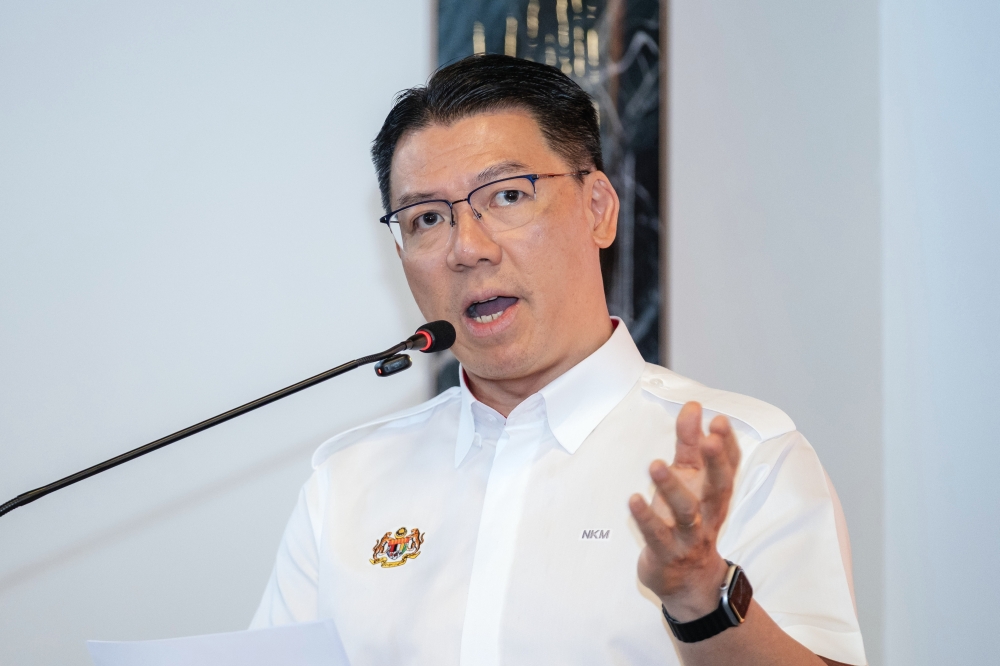
Housing and Local Government Minister Nga Kor Ming said the recovery efforts involved 1,576 projects comprising 188,525 housing units, with a total estimated gross development value (GDV) of RM148.21 billion.
He said the achievement reflected KPKT’s continued commitment to strengthening the nation’s housing sector through the Task Force on Sick and Abandoned Private Housing Projects (TFST), which was established in 2023.
According to Nga, the effectiveness of the task force can be seen through the revival of the landmark M101 Skywheel development project, which was previously stalled due to the impact of the Covid-19 pandemic and financial constraints but has since been successfully rescued.
“The revival of this project reflects broader national efforts led by KPKT to address the issue of abandoned housing developments and safeguard the interests of homebuyers,” he said when officiating the groundbreaking ceremony for KL360 here today.
On the M101 Skywheel project, Nga said its earlier suspension had affected 337 purchasers, involving Sale and Purchase Agreements (SPAs) with a combined value exceeding RM306 million.
He said GD Properties subsequently stepped in as the white knight developer to revive the project, which has since been rebranded as KL360 @ Menara GD, after taking into account both the development’s potential and its responsibility towards affected buyers.
According to him, with the support of KPKT and the cooperation of various stakeholders, a comprehensive recovery scheme was successfully formulated, securing the approval of a majority of purchasers before being endorsed by the High Court in 2024.
“I would like to call on more property developers to come forward and play an active role in helping to revive projects facing similar challenges, while working together to strengthen the nation’s housing agenda.
“Our objective is clear — to ensure that every sen paid by homebuyers is used solely for the development of the projects promised, and that every home purchased is completed and delivered to buyers on schedule,” he said.
The 61-storey KL360 @ Menara GD is a mixed development project with a gross development value of RM1.37 billion, located within Kuala Lumpur’s central business district (CBD) and adjacent to the Raja Uda Mass Rapid Transit (MRT) station along Jalan Tun Razak.
The project, which stalled after its launch in 2017, has been given a new lease of life and will comprise 785 serviced apartment units, 221 office suites and 20 retail lots. It will also feature 40 health, fitness and lifestyle amenities, with full completion targeted by 2030. — Bernama