Reading view

NASA satellite images show how a massive tsunami in Alaska changed the landscape forever

New satellite images are helping scientists understand a major tsunami that changed the landscape of a popular tourist destination in Alaska forever. 

On August 10, 2025, a tsunami larger than the Eiffel Tower ripped through Tracy Arm fjord in southeast Alaska. The rapid retreat of the South Sawyer Glacier triggered a landslide that swept huge rocks down the picturesque waterway visited by millions aboard Alaskan cruises every summer. At least 64 million cubic meters of rock slid down the slope of the glacier. The rocks created an enormous tsunami that stripped trees and other vegetation from the opposing fjord wall up to 1,578 feet above sea level. 

The NASA-USGS Landsat satellite images show the dramatic changes to the landscape. In one photo taken on July 26, 2025, the fjord is surrounded by green vegetation. 

a satellite image showing green vegetation on a fjord
The shores of Tracy Arm on July 26, 2025. Image: NASA Earth Observatory images by Michala Garrison, using Landsat data from the U.S. Geological Survey.

In the second image, taken nine days after the landslide on August 19, the fjord is dominated by a gray scar made by the cascading rock. 

a satellite image of a landslide
The shores of Tracy Arm on August 19, 2025. This image was taken after the tsunami and landslide. Image: NASA Earth Observatory images by Michala Garrison, using Landsat data from the U.S. Geological Survey.Image: NASA Earth Observatory images by Michala Garrison, using Landsat data from the U.S. Geological Survey.

“The bright landslide scar on the north side of the fjord is striking, as is the ‘bathtub’ ring around the fjord showing the areas where the forest was leveled by the tsunami,” said Dan Shugar, a geomorphologist at the University of Calgary.

Sawyer Island, located about 6 miles away from the landslide, also turned from green to brown. Only a few trees still stood at the island’s higher elevations.

Over the past several months, Shugar and his colleagues combined satellite, airborne, and ground-based observations with eyewitness accounts and simulations to build a complete story with how this historic event transformed. Their analysis was published May 6 in the journal Science.

Their analysis found that water continued to slosh around the fjord for more than one day. Geologists call this water-sloshing phenomenon a seiche. Both the landslide and resulting seiche produced seismic signals that were detected around the world and equivalent to a magnitude 5.4 earthquake.
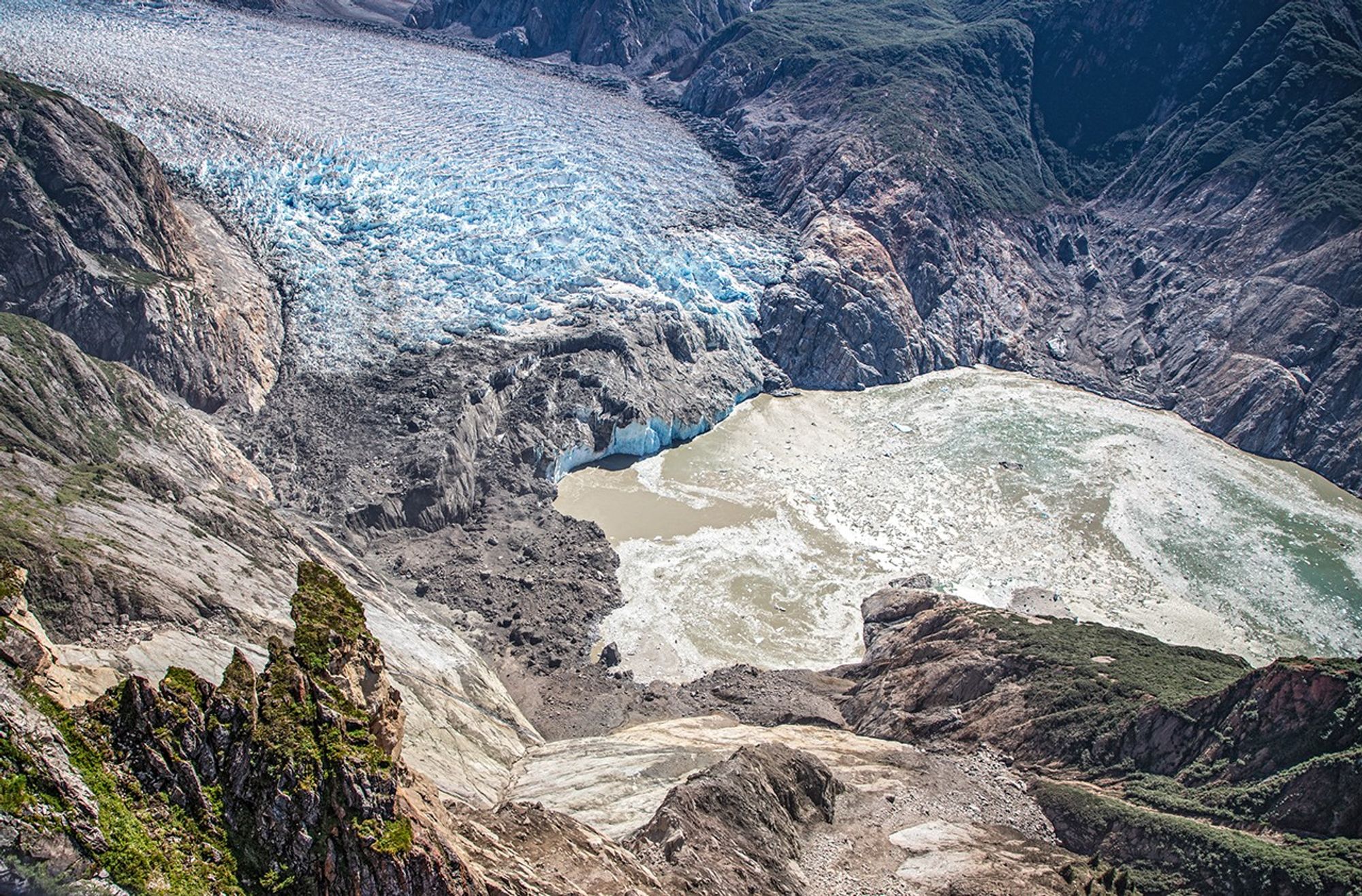
a landslide scar
The landslide scar and the zone where vegetation was stripped by the resulting tsunami are both visible in this aerial photo of Tracy Arm and South Sawyer Glacier, captured on August 13, 2025. Image: U.S. Geological Survey/John Lyons

The Landsat images also show that the South Sawyer Glacier retreated significantly in less than a month. Typically, glacial retreat takes much longer. 

“Part of that occurred between the date of the first image and the date of the landslide,” Shugar said. “But part of it is from the landslide itself, which broke off a big chunk of the terminus of South Sawyer Glacier, resulting in a slurry of icebergs in the fjord.”

Fortunately, no one was injured in the event, largely because it occurred around 5:30 a.m. local time. The wave did sweep away some gear from a group of kayakers camping on Harbor Island near the fjord’s mouth. Passengers aboard a small cruise ship in neighboring Endicott Arm also reported swings in water levels and a strong current associated with the tsunami

In response to the event, at least six cruise lines have eliminated the Tracy Arm fjord from their itineraries for 2026 due to the hazards. The United States Geological Survey also warns that steep, mountainous landslide areas are “inherently unstable” and that the Tracy Arm fjord tsunami will likely continue to change the landscape.

The post NASA satellite images show how a massive tsunami in Alaska changed the landscape forever appeared first on Popular Science.


  •  

Extremely rare 1924 Olympic gold medal up for auction

An extremely rare piece of Olympics history hits the auction block this week. Sports enthusiasts with deep pockets have the chance to own an original gold medal from the 1924 Paris Summer Olympics

a gold medal from 1924. the text reads VIII EME OLYMPIADE PARIS 1924. symbols etched on the medal include a rugby ball, discus, and harp
The harp on this side of the medal represents the Cultural Olympiad, an artistic and cultural program that ran alongside the athletic competition. Image: Nate D. Sanders Auctions.

The 1924 Paris Games were a hallmark of Olympics and sports history. More than 3,000 athletes from 44 countries competed in the first Olympics to include a Closing Ceremony. American swimmer Johnny Weissmuller won three gold medals and later went on to play Tarzan in 12 films. Swiss tennis player Richard Norris Williams won gold, after surviving the sinking of the RMS Titanic in 1912. He almost lost both his legs after jumping into the freezing water, but made a full recovery. The Paris Games were also featured in the award-winning film Chariots of Fire.

The 1924 Paris Games were also the first to officially feature the iconic five-ring Olympic symbol. The rings were designed by Baron Pierre de Coubertin, the founder of the modern Olympics and symbolize five continents and athletic unity. 

a gold medal from 1924. a winner is seen reaching out to lift up a fallen competitor. the five interlocking Olympic rings are below
This symbol of sportsmanship set the standard for future medals. Image: Nate D. Sanders Auctions. 

The medals were designed by sculptor André Rivaud. The obverse side shows a winning athlete reaching out to help a fallen competitor, an image of sportsmanship that set the standard for future Olympic medal design. The five Olympic rings are beneath this scene. The reverse side features sports equipment alongside a harp, a nod to the Cultural Olympiad. This artistic and cultural program ran alongside the athletic competition to explore the links between art and sport and the values they both share.

The medal is about 2 inches in diameter and weighs 2.7 ounces. It is listed as “near fine condition,” is made from gold-plated gilt silver and has the “2ARGENT” stamp on the rim as a mark of authenticity. Only 304 gold medals were originally produced, making them one of the   rarest and most coveted pieces of Olympic history in existence. The auction will take place on May 28 with a minimum bid of $14,000.

Only 780 days to go until the 2028 Summer Olympic Games in Los Angeles, California. 

The post Extremely rare 1924 Olympic gold medal up for auction appeared first on Popular Science.
  •  

Eaglets Sandy and Luna spend their first night alone on the nest

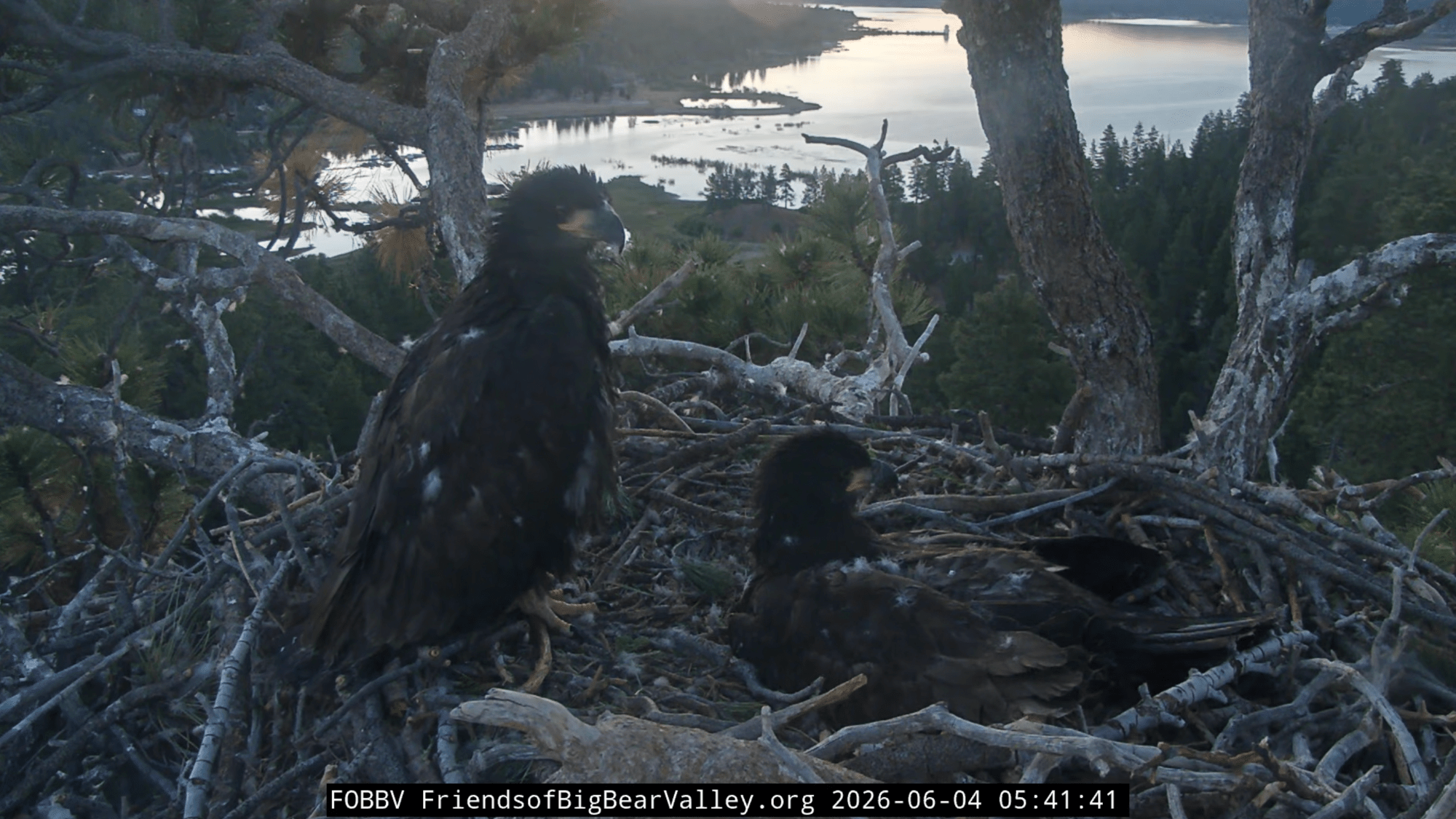
In another sign of their growing independence, eaglets Sandy and Luna appear to have spent their first night alone in the nest. According to Friends of Big Bear Valley (FOBBV), parents Jackie and Shadow slept not too far away last night. The pair spent the night in the nearby roost tree. The chicks reportedly also told Fiona the squirrel to scram—just like mom

The eaglets are growing rapidly, so room in the roughly six-foot-wide nest in southern California is becoming a premium. Both chicks also need room for activities, as they practice their flapping and stomping.

On June 2, Sandy also branched for the first time. Branching is when an eaglet perches on the limb of a tree, and is an important developmental stage that usually occurs when chicks hit 9 weeks old. Once on the tree limb, the young birds can flap their wings, jump, and then land on a lower branch or back in their nest. Branching helps strengthen their flight muscles and helps them become more agile and better at landing ahead of fledging. 

Sandy and Luna are expected to fledged sometime in early July. All of their antics are available 24/7 with the FOBBV live cam.


Jackie and Shadow’s 2026 babies: Everything you need to know

It’s been another roller coaster nesting season for Jackie and Shadow, a pair of internet-famous bald eagle parents living in San Bernardino National Forest in Southern California. After two of their eggs were destroyed by ravens in January, Jackie and Shadow laid two new eggs that have successfully hatched.

Chick 1 hatched on April 4 at 9:33 p.m. PDT, while Chick 2 followed on April 5 at 8:30 a.m. Their large nest in Big Bear Valley east of Los Angeles is livestreamed 24 hours a day by nonprofit Friends of Big Bear Valley (FOBBV) and has captivated millions. 

On May 1, FOBBV announced the chicks’ names: Sandy and Luna.

How long will the chicks stay in the nest? 

Chicks usually stay in the nest until 10 to 14 weeks of age.

What challenges do the eaglets face?

Before leaving the nest, the chicks face threats from other birds of prey, including hawks, ravens, other eagles, and owls. Inclement weather can also present challenges for the chicks. In 2025, a March snowstorm resulted in the death of one of Jackie and Shadow’s three chicks.

During fledging, only 70 percent of eaglets survive. One of the greatest threats is from cars that can injure or kill the birds while they scavenge for food on roadkill. 

Who are Jackie and Shadow? 

The pair first got together in 2018 and successfully raised chicks in 2019 and 2022. However, their eggs failed to hatch in 2023 and 2024. Only 50 percent of eagle eggs successfully hatch, so this pair has already beaten the odds.

What happened to Jackie and Shadow’s 2025 eaglets?

In 2025, Jackie laid three eggs that all hatched in early March. On March 13, a strong snowstorm dumped up to two feet of snow and battered the nest with strong winds. Only two of the chicks were visible on the live cam when the storm passed by the next morning. FOBBV later confirmed the passing of one of the chicks. The two surviving chicks were later named Sunny and Gizmo after 54,000 names were submitted by fans.

What happens after chicks fledge? 

Young eagles usually fledge–or leave the nest and fly–when they can flatten their wings and have feathers capable of flight. This typically occurs when the birds hit 10 to 14 weeks of age. Males also tend to take their first flight a little sooner than females. 

According to FOBBV, fledglings from Southern California have been spotted as far south as Baja California, as far north as British Columbia, and as far east as Yellowstone National Park.

About 70 percent of bald eagles survive the fledgling stage. FOBBV does not tag their eagles, so it’s not possible to follow the chicks’ journeys after they flee the nest.

Can I help Jackie and Shadow?

Yes. Environmental groups are currently fundraising $10 million to protect Jackie and Shadow’s foraging area from development. Learn more at SaveMoonCamp.org.

The post Eaglets Sandy and Luna spend their first night alone on the nest appeared first on Popular Science.
  •  

12 endangered piping plover chicks hatch in Michigan and Wisconsin

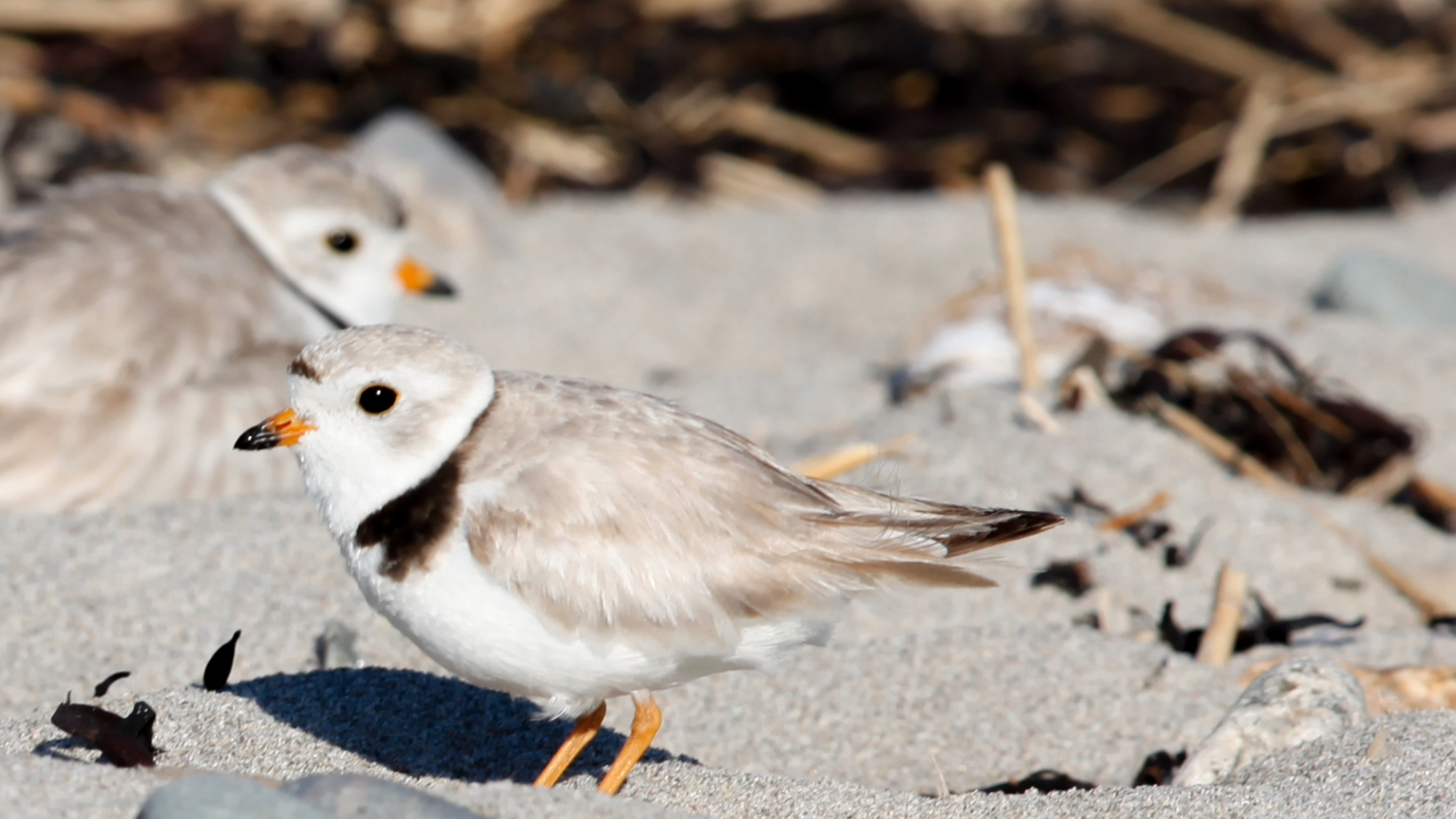
Following a record-breaking nesting season in 2025, the Great Lakes’ first piping plovers (Charadrius melodus) of the season have hatched. The nonprofit Great Lakes Piping Plover Recovery Effort reported that 12 chicks hatched in Wisconsin and Michigan in late May, with more expected to hatch.

Piping plovers are small migratory shorebirds. The United States is home to three piping plover populations. One lives along the rivers and lakes of the northern Great Plains, another along the East Coast, and one in the Great Lakes. They weigh about 1.5 to 2.25 ounces and are only 5.5- to 7-inches long, and can be nearly invisible until they sprint short distance, stop, and then tilt forward to pull an insect or worm up from the sand. 

The chicks are also considered precocial birds like turkeys. Within hours of hatching, piping plowers chicks can run around and forage for themselves. 

Despite this independence at a young age, the species has struggled. The International Union for the Conservation of Nature (IUCN) lists them as Near Threatened, and the Great Lakes population is listed as endangered under the Endangered Species Act. Nearly 800 nesting pairs once lived along the shores of the Great Lakes, but that number plummeted to 13 in 1990. According to the Great Lakes Piping Plover Recovery Effort, the population decline is partially due to nest disturbance and predation as well as habitat deterioration. 

The population has grown to over 80 nesting pairs thanks to their federal protection and conservation efforts. Last year was the fourth consecutive year of growth, with 88 unique nesting pairs recorded in the Great Lakes. 

“It is a joy to observe them racing around in all directions, foraging as soon as they are hatched,” Mary Lundeberg, a photographer, volunteer and co-author of Raised to Be Wild: The Tale of a Great Lakes Piping Plover, told MLive. “Being in the wild with these tiny creatures ignites a piece of the wild in me and brings a smile to my face.”

When observing piping plovers, it’s important to stay a safe distance away for the sake of the birds. Michigan’s Friends of Sleeping Bear Dunes recommends using the Rule of Thumb—if you can’t cover-up a bird with your thumb when held at arm’s length, you are too close.

The Great Lakes Piping Plover Recovery Effort also likes to remind birdwatchers to watch their step. Chicks don’t observe closed areas, so they could be anywhere on the beach. 

Since the mere presence of a dog can cause them to abandon their nests, keeping dogs on a leash and out of nesting sights is important for the bird’s wellbeing. The plovers often perceive pets as predators, so that heightened danger awareness can make the adults abandon eggs and chicks.

Many Great Lakes beaches will have areas marked off with orange rope or fencing to protect plover nests, with eggs hidden in rocks and sand. Visitors can still walk the shoreline, but are advised to steer clear of the roped off areas. 

The post 12 endangered piping plover chicks hatch in Michigan and Wisconsin appeared first on Popular Science.

  •  

Worker bees have power to pick their queen

While every bumble bee colony has a queen, the process for becoming that queen bee may be a bit more democratic than monarchical. The worker bees appear to select which baby will be queen one day, according to a new study published in the journal Insect Biochemistry and Molecular Biology.

The key to this selection process lies in the juvenile hormone. This hormone in insects is responsible for their development, molting, and eventual reproduction. When the team gave the juvenile hormone to worker bees, they passed it along to all of the larvae in the colony through feeding. The more juvenile hormone the larvae received, the more likely they were to become queen. 

According to the team, this is the first study to show that bumble bee caste is determined by the workers and shifts our understanding of bee colony dynamics. Instead of a top-down hierarchy, the colony appears to be a more decentralized system, where the caregivers and workers can alter the future of baby bees. 

Less like Mean Girls?

Understanding the fate of the bee larvae is key to understanding their social behavior. Their whole system relies on a division of reproductive labor—some females will reproduce, while the others help. 

“Since all these females share the same DNA, it’s a striking example of how the same genotype can produce very different forms,” Etya Amsalem, a study co-author and entomologist at Penn State, said in a statement. “It’s also a practical question since bumble bees are important for pollination, so knowing how to produce queens could improve commercial breeding and management.”

In addition to their different social roles, queen bees and worker bees are also very different physically. Bumblebee queens are larger, live longer lives, and will reproduce. Worker bees are smaller in stature and do not reproduce or live as long.

While it was clear that hormones were involved in how workers determine the queen, the exact mechanisms behind it were more vague. 

“A single female egg in bumblebees holds the blueprint for two completely different life paths: the giant, reproductive queen or the small, sterile worker,” added study co-author and postdoctoral researcher Seyed Ali Modarres Hasani. “We wanted to understand what triggers the change in the female life trajectory, when does it happen and who controls the process.”

A matter of hormones

In the study, the team used three worker bees and a cluster of larvae. They applied juvenile hormone at different doses and times, and administered it either to workers or directly to larvae. They then traced the hormone’s movement, measuring  larval mass and recording which individuals became queens or workers.

“Every colony will produce many new queens at the end of the season,” Amsalem said. “These queens will leave the colony, mate and go into winter diapause, and then each queen will start a new colony in the next spring. In that sense, producing as many queens—and males—at the end of the season is the ultimate purpose of the colony.”

When the juvenile hormone was applied directly to the larvae, not only did they not turn into queens, but the worker bees ended up eliminating most of these larvae.

When the workers were treated with the juvenile hormone, they put it into the food that they make for the larvae. These larvae then ingested the hormone, and were heavier and much more likely to become queens.

“We also determined that larvae are only sensitive to this hormone on days seven and eight of their development,” Hasani said. “By tracing the juvenile hormone, we saw that the workers pass the hormone into the food they make from nectar and pollen.”

Queen development and the colony’s future

These results suggest that queen production is linked to how the colony progresses through the summer’s warmer months until it eventually collapses in the fall.

“Bumblebee workers do not reproduce when the colony is young, but they can activate their ovaries and produce males as the colony ages, which causes an increase in juvenile hormone levels,” Amsalem said. “As a result, over time, they feed larvae more of the hormone. When enough workers do this simultaneously, usually towards the end of the season, larvae receive doses that are high enough during the critical window to develop into queens.”

These results could help improve bee colony management at a hormonal level, explain how complex insect societies evolve, and how hormonal signals interact to shape colony structure.

The post Worker bees have power to pick their queen appeared first on Popular Science.
  •  

Big wings and sweet songs: The mating lives of Panama’s katydids

When it comes to reproduction, animals will pull out all the stops to attract a mate. Sending out noisy mating calls, showing off colorful wings, inflating a throat pouch, and shaking a literal tailfeather all ensure that the next generation of a species happens. Some insects will go as far as making themselves look like an entirely different living thing—leaves. 

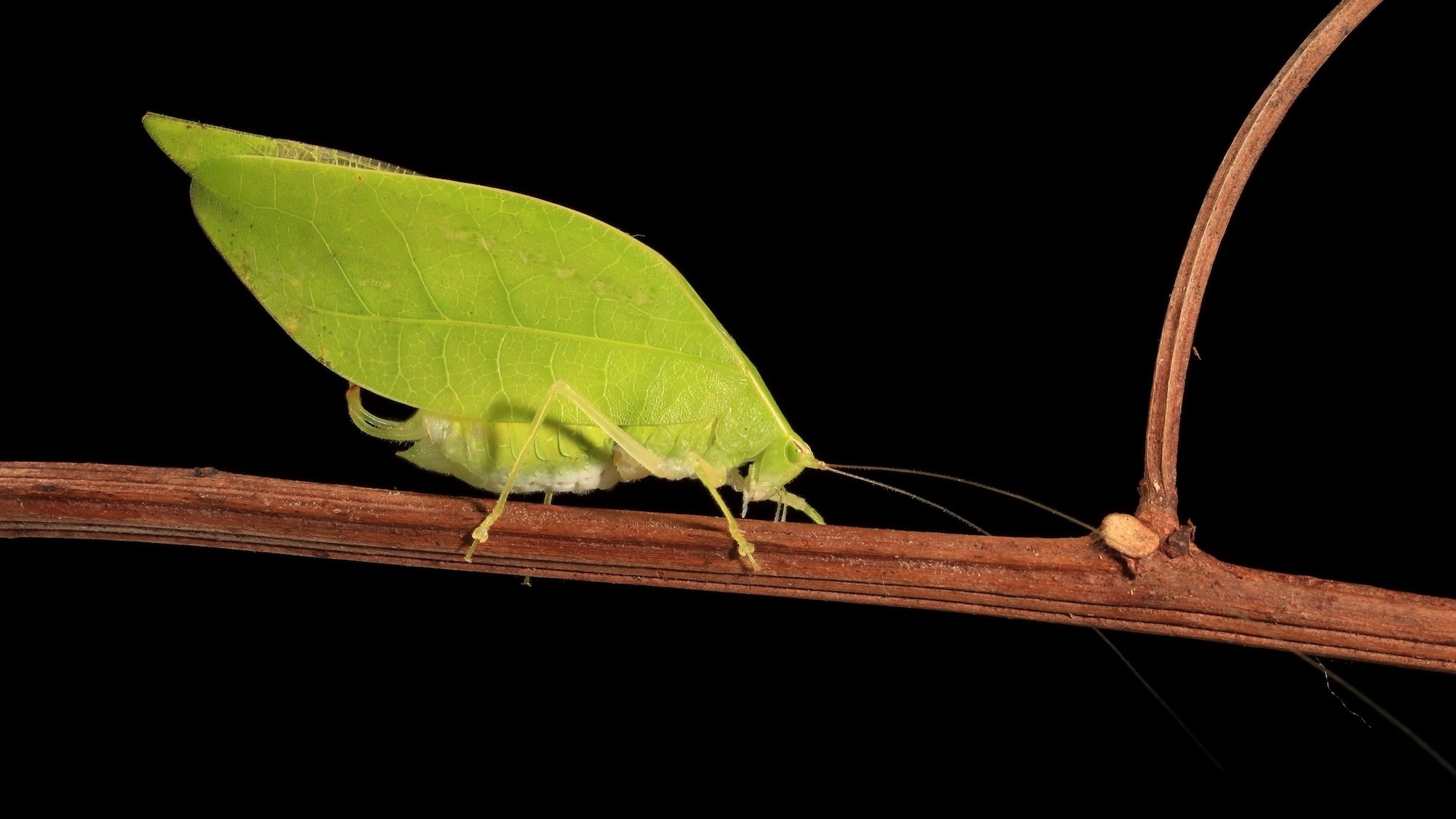
Usually used as a means of camouflage, male katydids appear to use their leafy disguise to amplify mating calls and make themselves more attractive to the opposite sex. The findings are detailed in a study published today in the journal Proceedings of the Royal Society B, and offer one of the first demonstrations of how leaf mimicry enhances a male katydids’ sexual signals. 

To shield themselves from predators, various species of katydids have evolved wings with structures that look like leaves. Panama’s leaf-masquerading katydids (Arota festae) will even change from green to hot pink in order to better mimic leaves. What’s been less clear to entomologists is whether or not these leaf-mimicking structures play a role in katydid mating. 

This new study looked at a species called Viadana brunneri from Barro Colorado Island, Panama. To attract mates, katydids create songs by rubbing together specialized structures on their wings. In many tropical species like V. brunneri, the portion that mimics leaves makes up the majority of their wing’s surface area.  

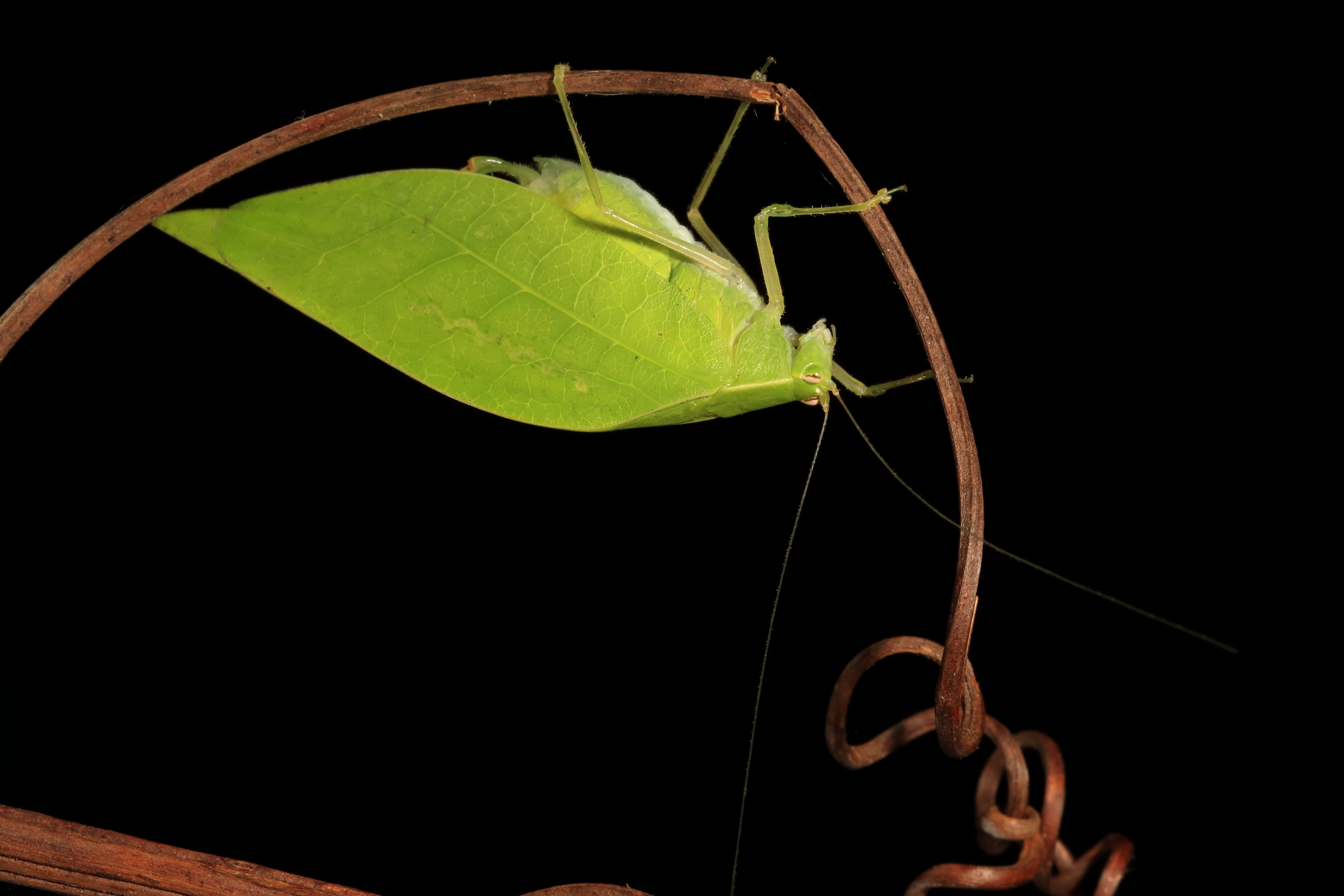
a green insect with a large, green wing that looks like a leaf hands upside down on a stick
Most of the wing structure is devoted to helping male katydids look more like a leaf. Image: Christian Ziegler.

Previously, scientists believed physical adaptations for survival and for attracting mates can function in conflict with one another, particularly if they are physically connected. A male peacock’s flashy tail feathers may help it attract a female, but it also makes it easier for predators to find them. Male katydids, on the other hand, are able to use the acoustic properties of the structures that they use for defense to their reproductive advantage. They are a rare example of how an adaptation for self-defence and reproduction can work together without necessarily putting the animal in jeopardy. 

The team performed a series of bioacoustic, behavioral, and biophysical experiments, showing that these leafy structures on their wings make them more attractive to females, while also helping conceal them. After removing the leafy portions of a male V. brunneri’s wings, the pitch became higher and the volume of their songs also changed. The team then played these calls for females who preferred the lower pitch calls from males with their leafy wing sections still intact. 

While male katydids do all the singing, females indicate their interest by replying to the song with clicks. The insects produce short, sporadic and infrequent calls, possibly for only two seconds in a single night. They perform these calls in ultrasounds, which our ears can’t pick up. They also found that the leafy portions of the male katydid wing will vibrate to amplify their songs, making them more detectable to females. 

“Our study provides a rare example of natural and sexual selection acting in harmony, producing traits that simultaneously improve survival and mating success,” Dr. Benito Wainwright, a study co-author and evolutionary biologist at the University of St Andrews, said in a statement. “We are now extremely excited to start exploring how such an interesting interaction evolved in katydids.” 

The post Big wings and sweet songs: The mating lives of Panama’s katydids appeared first on Popular Science.
  •  

A new dinosaur dubbed the ‘Last Titan of Thailand’ weighed more than 9 elephants

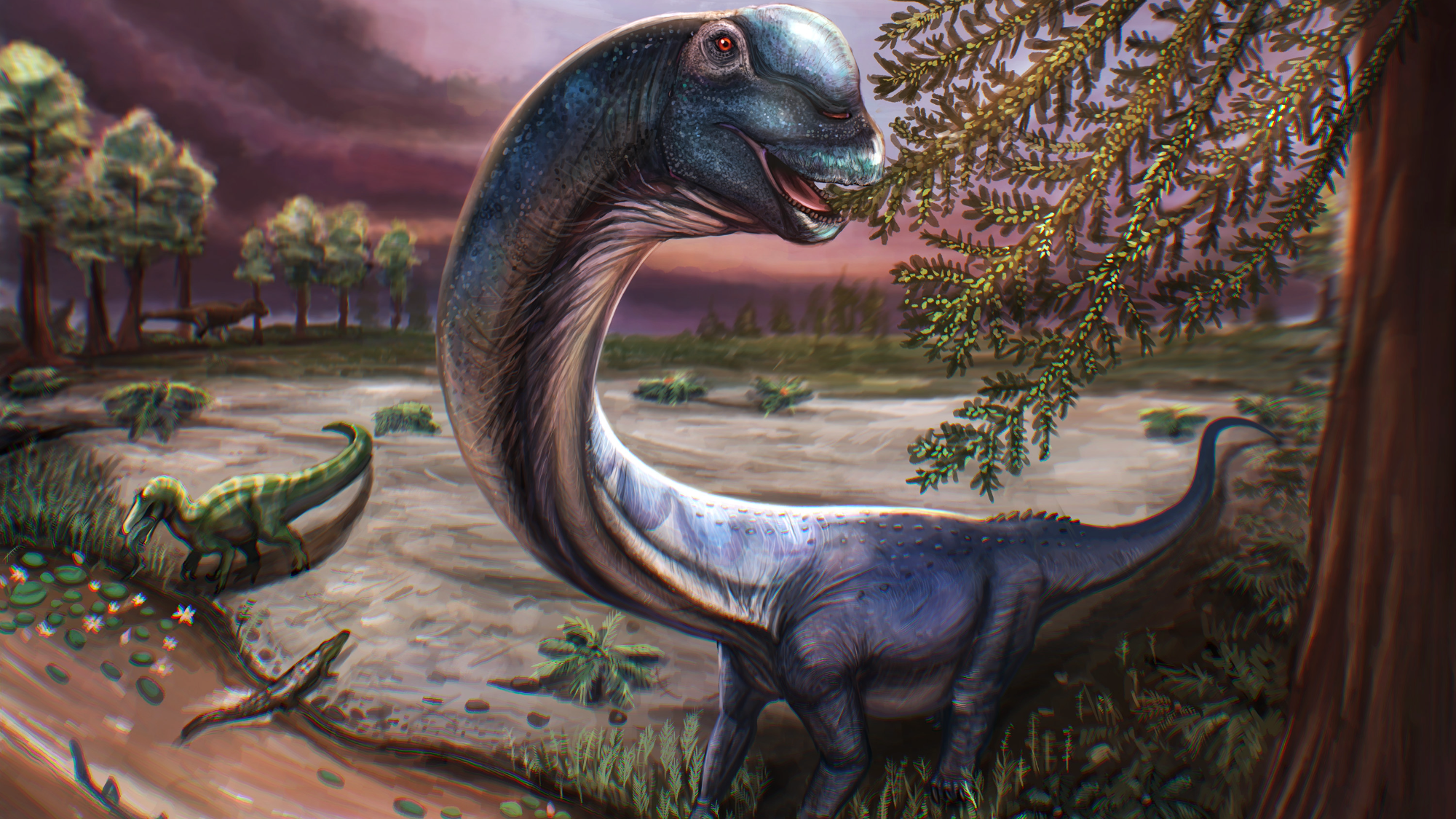
Not long before an asteroid crashed into Earth and wiped out most of the dinosaurs, a long-necked dinosaur the size of nine adult Asian elephants may have been near a windy river peacefully eating plants. The bones of the Nagatitan chaiyaphumensis (aka Nagatitan) would rest there for millions of years, until paleontologists digging near a pond in northeastern Thailand found them. This newly discovered herbivore is the largest ever found in Southeast Asia and is described in a study published today in the journal Scientific Reports.

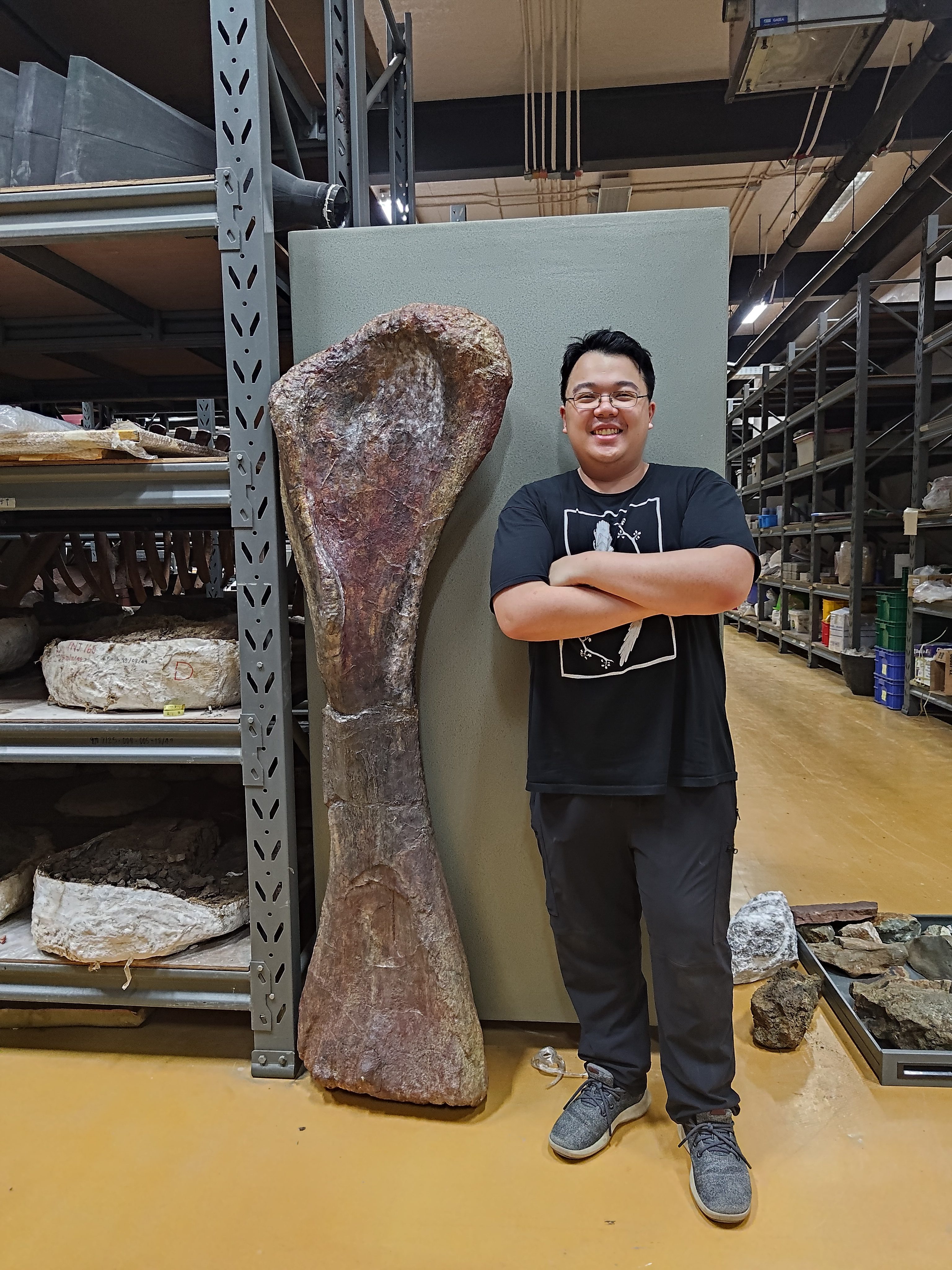
Paleontologists found Nagatitan’s spine, rib, pelvis, and leg bones about 10 years ago. Its front leg bone alone was about as long as a human and the team believes that Nagatitan weighed 27 tonnes (or about 5,950 pounds) and was 88.5-feet long. It was a member of the sauropod family of dinosaurs, the long-necked, long-tailed plant-eaters that includes Brontosaurus

“Our dinosaur is big by most people’s standards—it likely weighed at least 10 tonnes more than Dippy the Diplodocus (Diplodocus carnegii),” Thitiwoot (Perth) Sethapanichsakul, a study co-author and PhD student originally from Thailand and studying at University College London, said in a statement. “However, it is still dwarfed by sauropods like Patagotitan (60 tonnes) or Ruyangosaurus (50 tonnes).”

The first part of its genus name “Naga” refers to a mythological aquatic serpent in Thai and Southeast Asian folklore, while “Titan” is a reference to the giants of Greek mythology. Its species name chaiyaphumensis means “from Chaiyaphum,” the Thai province where the fossils were first discovered.

a man stands in front of a long dinosaur leg bone
Study co-author Thitiwoot Sethapanichsakul standing with the Nagatitan’s front leg bone (humerus). Image: Thitiwoot Sethapanichsakul.

“We refer to Nagatitan as ‘the last titan’ of Thailand. That is because it was discovered in Thailand’s youngest dinosaur-bearing rock formation,” Sethapanichsakul said. “Younger rocks laid down towards the end of the time of the dinosaurs are unlikely to contain dinosaur remains because the region by then had become a shallow sea. So this may be the last or most recent large sauropod we will find in Southeast Asia.”

Nagatitan lived between 100 and 120 million years ago during the Early Cretaceous period. At this time, northeastern Thailand would have been arid to semi-arid—perfect for sauropods. These gentle giants used the surface area of their long necks and tails to shed heat and regulate their body temperature.

The bones were also found in what may have been a meandering river system, which would have been home to fish, crocodiles, and even freshwater sharks. Nagatitan would have lived with smaller plant-eating dinosaurs, including iguanodontians, some cousins of the Triceratops called ceratopsians, as well as large carnivores, and flying pterosaurs.  

Interestingly, the team found that Nagatitan belongs to a narrower group of sauropods called Euhelopodidae, which have only been found in Asia. It is distinct from the other species within this group due to a combination of unique features on its spine, pelvis, and legs. Nagatitan is also the 14th dinosaur to be named in Thailand and a life-size reconstruction is now on display at the Thainosaur Museum at Asiatique in Bangkok.

“I’ve always been a dinosaur kid,” said Sethapanichsakul. “This study doesn’t just establish a new species but also fulfils a childhood promise of naming a dinosaur.”

The post A new dinosaur dubbed the ‘Last Titan of Thailand’ weighed more than 9 elephants appeared first on Popular Science.
  •  

Look up for a blue moon on May 31

This weekend, Earth will be treated to a nice blue moon. Our planet’s only natural satellite won’t put on a pleasant azure hue (indeed, blue moons have nothing to do with color). Instead, it will be the second full moon for the month of May, following the full Flower Moon on May 1. The blue moon will reach peak illumination at 4:46 a.m. EDT on Sunday May 31. 

Seasonal vs. calendrical

According to the Farmer’s Almanac, there are two definitions of a blue moon—a seasonal blue moon and a calendrical blue moon.

A seasonal blue moon is one extra full moon within an astronomical season, or the dates between solstices and equinoxes. A typical astronomical season has three full moons within it. If it has four full moons instead, then the third may be called a blue moon. 

A calendrical (or monthly) blue moon is the one most of us are familiar with. It is the second full moon to fall in one calendar month—like in May 2026. It takes the moon roughly 29.5 days to complete one cycle of phases (new moon to new moon). So if a full moon falls on the first of the month on the calendar, there will be a second full moon at the end of the month. The only month in which a calendrical blue moon cannot fall is February. 

How rare are blue moons?

Blue moons are not quite as rare as the phrase “once in a blue moon” makes it sound. Calendrical blue moons happen every 2.5 years (or 30 months) on average, and seasonal blue moons fall about once every two to three years. 

The last calendrical blue moon was on August 31, 2023 and the next calendrical blue moon will rise just in time to ring in the new year on December 31, 2028. 

Two blue moons can also occur in one year. In 2018, January and March both had two full moons, with no full moon in February. The next time two blue moons will fall in one calendar year won’t be until 2037.

Why is it a micromoon?

May’s blue moon will also be a micromoon and the smallest micromoon of the year. Micromoons have nothing to do with size and everything to do with distance. Typically, the moon is about 238,855 miles away from Earth. Micromoons are further away, and this month’s micromoon will be 252,360 miles away. With the further distance, a micromoon may appear a bit smaller and dimmer than usual. 

On the opposite end of the spectrum are supermoons, which are closer to Earth at only 225,130 miles away.

How to watch and photograph a blue moon

If you want to see the blue moon rise over a historic city, the Virtual Telescope Project will broadcast the event live from Italy

NASA has also put together a handy lunar photography guide if you want to snap that perfect moon pic. If using a smartphone, NASA recommends stabilizing the device, turning off the flash, and tapping the moon on screen to focus the camera directly on it instead of the sky. Your brightness also needs to come down and taking pictures at twilight or as the moon clears the horizon will give the sensor less contrast. 

The post Look up for a blue moon on May 31 appeared first on Popular Science.
  •  

77 headless skeletons found in a field date back 7,000 years

It sounds like a scene out of a horror movie. Dozens of headless human skeletons resting in a single grave. First discovered in 2022, this Neolithic burial site near the present-day town of Vráble, Slovakia, raises significantly more questions than it answers. Was this the site of a grisly massacre 7,000 years ago? Were the individuals sacrificed? Is it the result of some kind of plague?

A new study published in the journal Proceedings of the Prehistoric Society points to a more skillful removal of skulls as part of an unknown ritual, instead of a violent decapitation by an enemy. 

The large Neolithic settlement at Vráble is one of the most important excavation sites of the Linear Pottery culture (LBK) in Central Europe. The LBK first arose around 5500 BCE and lasted until roughly 4500 BCE. Archaeologists consider the LBK one of Europe’s earliest farming cultures that moved along the transition from a hunter-gatherer lifestyle to more settled agricultural communities.

Researchers from Kiel University in Germany and the Slovakian Academy of Sciences in Nitra have been investigating the region since 2012. The site is made up of the outlines of over 300 former houses in three neighborhoods. The settlement existed for several centuries between roughly 5250 and 4950 BCE. One of the neighborhoods was surrounded by a ditch that archaeologists believe served as a border. 

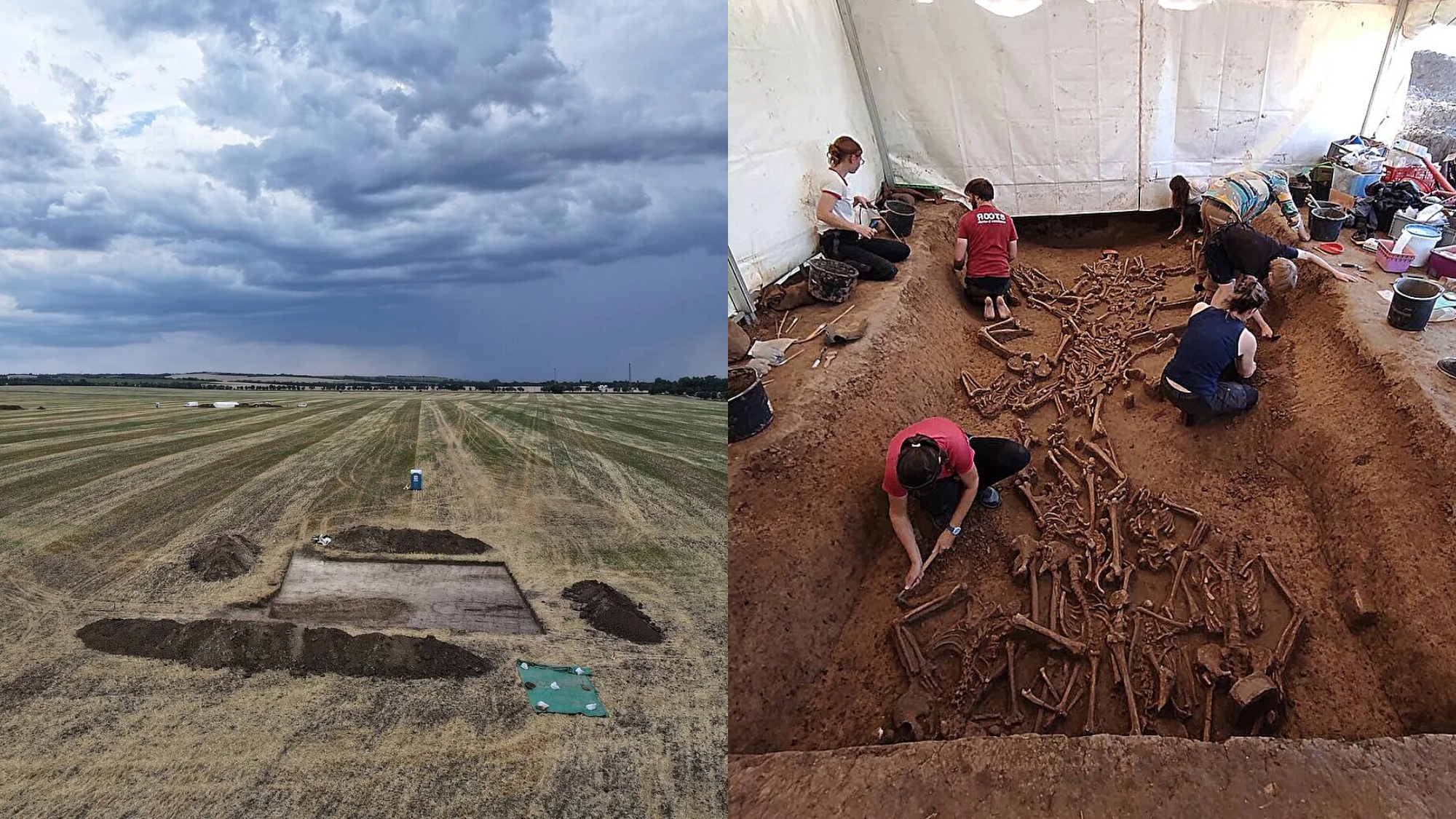
After finding sporadic human remains in early digs, the team found the remains of at least 78 individuals at the entrance to the settlement. The skeletons were not in any discernible order and 77 of them lacked a head. The team only found one skeleton of a child with a preserved skull. The initial evidence suggests that not a lot of time passed between death and interment. 

a diagram showing a ditch with several human skeletons
The mass deposition at the ditch. Below: photos; above: a tracing of the skeletons in various colours. Most of the individuals are found to the far left, where the ditch ends and the entrance to the settlement was located. Image: Katharina Fuchs, Agnes Heitmann, Nils Müller-Scheeßel, Till Kühl.

“The features clearly exhibit an intentional manipulation of the bodies,” Dr. Katharina Fuchs, a study co-author and biological anthropologist at Kiel University, said in a statement. “First analyses suggest, above all, that violent ‘decapitations’ were not conducted here, but rather skilful removals of the skulls.”

The meaning behind this skull-removing practice is still up for debate. One thought is that the heads may have been stored separately. This burial practice has not been verified at Vráble, but did occur in other cultures. However, the details of the practices differ greatly between peoples. 

The team believes that this arrangement of body parts may have been one part of a more complex and meaningful practice.

“We must assume that these practices were embedded in completely different contexts of meaning than those of modern societies,” added study co-author and archeologist Martin Furholt. “This is what makes an interpretation of them so challenging.”

Multiple researchers are currently sorting the recovered bones to determine the age at the time of death and biological sexes, and analyzing the cutting marks in more detail. Future studies on the possible impacts of violence and forensic investigations into the decomposition processes are also underway. Additional isotope and DNA analyses should also open a window into the origins, diet, and kinship ties of the Neolithic individuals buried at Vráble.

“But the first results already show that Vráble is an exceptional excavation site,” said Furholt. “It provides us with the keys for the discussion of fundamental questions, for example, how were death and the body understood in the Neolithic and what role did the associated practices play in the social fabric of early farming societies?”

The post 77 headless skeletons found in a field date back 7,000 years appeared first on Popular Science.

  •  

Lost WWII submarine discovered off the coast of Japan

The wreck of an American submarine from World War II has been found off the coast of Matsua Island, Japan. The USS Herring (SS-233) currently rests over 300 feet down in the Pacific Ocean, where it is sitting upright and “maintains a high degree of integrity,” according to United States Naval History and Heritage Command (NHHC). The discovery was announced exactly 82 years after the vessel sank, based on evidence collected from an international team of researchers. 

Herring’s final mission

The Herring was first launched from Portsmouth Naval Shipyard in Maine on January 15, 1942, and officially commissioned on May 4, 1942. The vessel completed eight war patrols in both the Atlantic and Pacific Oceans during the war. Herring sank seven enemy ships, including four Japanese cargo ships during what would be the submarine’s final patrol. 

Herring was last seen by the crew of the USS Barb during the evening of May 31, 1944. The submarines met to determine who would patrol areas off the Kurile Islands, an archipelago east of Japan. Early on June 1, 1944, Barb’s crew recorded hearing the sound of weapons designed to attack a submarine from a ship or aircraft called depth charges exploding in the distance. 

Japanese historical records also confirm that Herring was struck in two direct hits during a counterattack by a shore battery. The strikes ultimately sank Herring and the vessel was presumed lost when Herring failed to report to Midway on July 13, 1944. The sinking killed all 83 crewmembers.

USS Herring Memorial statue at the Battleship Memorial Park in Mobile, Alabama. (Photo by: Ron Buskirk/UCG/Universal Images Group via Getty Images)
USS Herring Memorial statue at the Battleship Memorial Park in Mobile, Alabama. Image: Ron Buskirk/UCG/Universal Images Group via Getty Images Ron Buskirk

A protected final resting place

In 2017, a joint expedition between Russian Geographic Society (RGS) and the Russian Military reported a submarine wreck in the area. Based on its location and appearance, the RGS reported that the wreckage was Herring. A subsequent joint expedition returned to the wreck in 2022 to document its status and honor the lost crew. The expedition team also placed a plaque on site. The data collected and shared by the RGS was analyzed by two U.S. volunteer researchers and one researcher in Japan. NHCC confirmed the wreckage on June 1, 2026–82 years to the day after Herring is believed to have sunk.

Importantly, the wreckage shows battle damage around the submarine’s conning tower. This tower is a raised platform from which an officer can conn (conduct or control) a vessel. This damage, along with evidence of grounding at the submarine’s bow, correlates with the historical record of the Herring’s sinking.

The wreckage is currently protected by U.S. law and under the jurisdiction of the Department of the Navy. The Navy allows some non-intrusive activities on sunken military craft, but any activity that may disturb the sunken vessel must be coordinated with NHHC.

“Most importantly, the wreck represents the final resting place of Sailors who gave their lives in defense of the nation and should be respected by all parties as a war grave,” the NHHC wrote in a press release.”

The post Lost WWII submarine discovered off the coast of Japan appeared first on Popular Science.

  •  

World’s biggest scorpions were the size of baseball bats

Giant scorpions the size of a baseball bat with pincers the size of a pencil once stalked what is now England and Wales. Praearcturus gigas is believed to be the largest scorpion to ever roam the Earth, and was discovered from fossils that have been tucked away in London’s Natural History Museum for more than 150 years. The findings are detailed in a study published in the journal Palaeontology.

Praearcturus gigas stalked the region’s floodplains about 415 million years ago, during the Early Devonian. Small plants and fungi had only recently begun to spread, and more complex land ecosystems like forests did not exist yet.

“When we think of giant arthropods, people often picture Carboniferous rainforests with giant millipedes or dragonfly-like insects from later in Earth’s history,” Dr. Richard J. Howard, a study co-author and the Curator of Fossil Arthropods at the Natural History Museum, said in a statement. “But Praearcturus lived at least 50 million years earlier, well before the evolution of trees, when life on land was only just getting started.”

Howard and the team believe that Praearcturus’ enormous size indicates that they had very little competition from other large predators roaming around. Praearcturus might have grown to three-feet-long with six-inch pincers simply because there weren’t any other large animals nearby, so it could dominate its environment in a way that wouldn’t be possible years down the road. 

Praearcturus gigas was first scientifically decided in 1871. Scientists originally thought it was some kind of giant crustacean, similar to a woodlouse. The fossils were very fragmented, and lacked key features (such as a tail) that help classify it. To get a better picture, the team compared their fossils with some more well-preserved specimens found in 1972 and 2010.

“Praearcturus has puzzled us palaeontologists for more than a century,” added Dr. Russell Garwood, a study co-author and palaeontologist at The University of Manchester. “By bringing together material from several collections and using cutting edge imaging techniques, we’ve been able to build a clearer picture of the animal than was previously possible, which is really exciting.”

The fossils hint that this giant scorpion may have lived in the water some of the time. Some specimens have flap-like structures on the abdomen that are similar to those found in modern crustaceans like lobsters. These flaps suggest Praearcturus may have been capable of moving between water and land. Their place in the wider arachnid fossil record shows that most scorpions are unusually abundant in rocks dating back to this time period, compared with other arachnid species. This supports the idea that Praearcturus may have lived in freshwater environments, where they are more likely to survive as fossils. Excitingly, it shows that Praearcturus lived at a pivotal moment in our planet’s history, when animals were first experimenting with living life outside the oceans.

a scorpion pincer fossil
Pincer of scorpion (about the size of today’s largest scorpion). Image: Natural History Museum.

“The boundary between land and sea was much less defined at this time,” said Dr. Greg Edgecombe, a study co-author and Natural History Museum researcher. “Praearcturus gives us a fascinating glimpse into how early animals adapted to these changing environments. It may even represent a lineage that returned to the water after earlier ancestors had already begun living on land.”

According to the team, a breakthrough like this shows how important discoveries are still being made from museum collections. It also challenges assumptions about why prehistoric arthropods reached such enormous sizes. Instead of being driven solely by environmental factors like oxygen levels, a lack of competition, and other ecological opportunities may have played a crucial role.

“Confirming that this animal is a scorpion fundamentally changes our understanding of how and when these creatures evolved to such extraordinary sizes,” said Howard. 

The post World’s biggest scorpions were the size of baseball bats appeared first on Popular Science.
  •  

It’s National Paper Airplane Day: How to make a NASA-approved plane

While a holiday weekend has come and gone, May 26 is not without a cause for celebration. It’s National Paper Airplane Day! 

The annual day commemorates the homemade aeronautical toy that has fascinated (and frustrated the less crafty) children and adults for generations. According to National Day, the practice of constructing paper planes is sometimes called aerogami, after origami, the Japanese art of folding paper. Building paper planes that can soar through the air like a bird is believed to have originated in ancient China, where paper was invented around 105 CE. However, the art of folding it into an airplane may have been perfected in Japan, as it is similar to origami.

Here in the United States, instructions for folding the Basic Dart were included in a children’s book published in 1859, so it is safe to say kids and adults alike have been making them for over 167 years. The term paper airplane was then coined in 1907 and replaced paper dart as the dominant term by the 1950s. In 2022, Kim Kyu Tae nabbed the Guinness World Record for the Longest Paper Airplane Throw Ever with a flight of 252.6 feet. According to Guiness World Records, the longest time flying a paper aircraft is 31.2 seconds and was achieved by Rao Chongyi and a team in China in February.  

If you’re inspired to create the world’s best paper airplane, we have you covered. You can also look to the great minds at NASA for inspiration. After all, the first letter “A” in NASA stands for aeronautics. Their step-by-step NASA Space Crafts tutorial will not only help you make a colorful paper airplane, but also NASA’s X-57 Maxwell and the X-59 Quiet SuperSonic Technology.

May your National Paper Airplane Day be free of paper cuts.

The post It’s National Paper Airplane Day: How to make a NASA-approved plane appeared first on Popular Science.

  •  
❌