Normal view

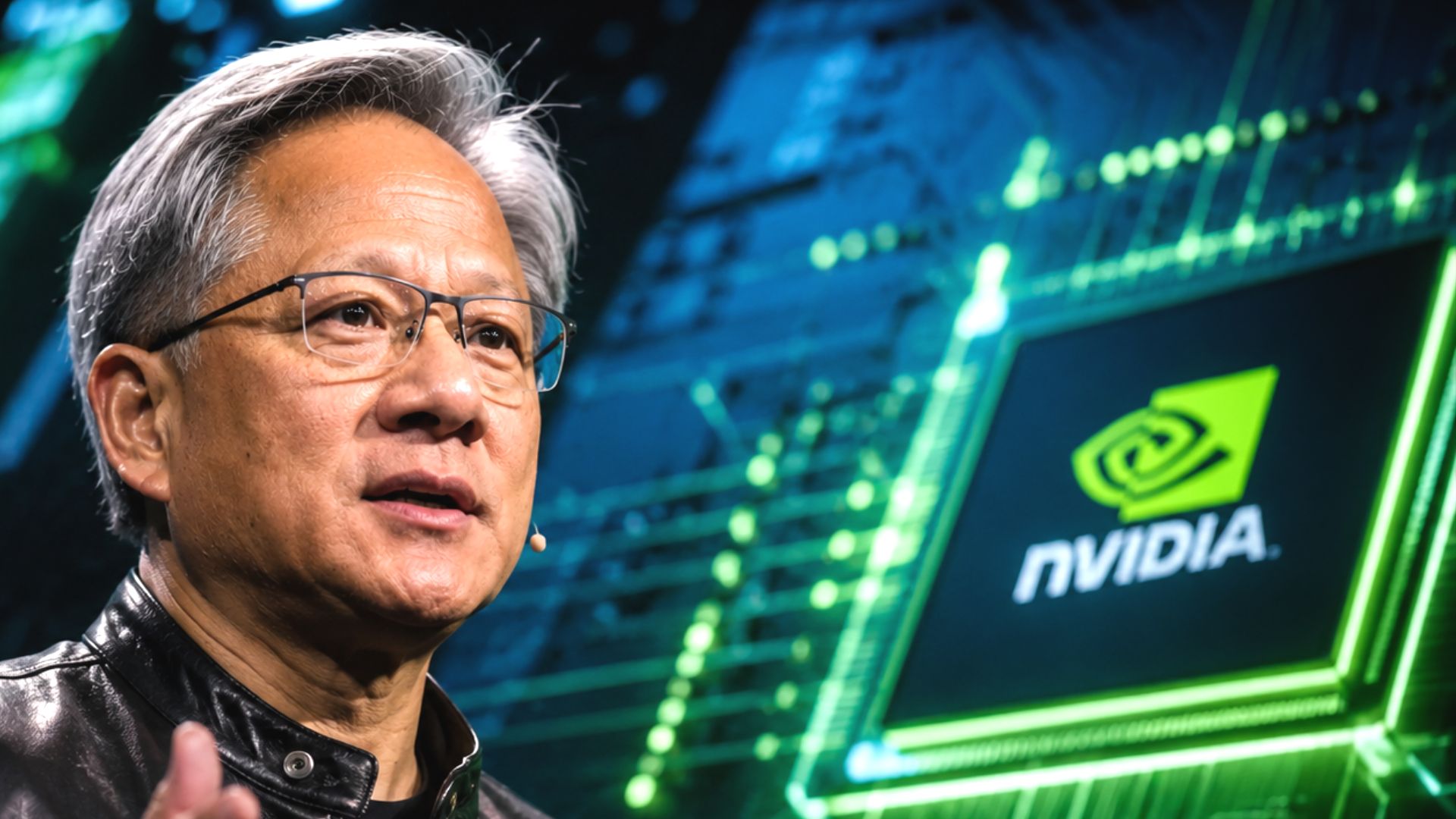
Faker, fried chicken and AI: Jensen Huang enters his K-Variety era on ‘You Quiz on the Block’

12 June 2026 at 02:37

Malay Mail

SEOUL, June 12 — Nvidia chief executive Jensen Huang used his first-ever appearance on a variety talk show to deliver what amounted to a love letter to South Korea, crediting the country’s gamers, companies and decades-long partnerships with helping transform Nvidia into a global powerhouse.

“Our lives, our history are very close, and Korea has always been a very close part of my heart,” Huang said on tvN’s You Quiz on the Block, which aired on Wednesday night.

Filmed during his recent visit to Seoul, the appearance marked the first time the Nvidia founder had sat down for a variety programme anywhere in the world. 

Huang traced Nvidia’s ties with South Korea back some 25 years, arguing that the country’s gaming culture played a critical role in the company’s rise.

“Without all of the amazing gamers here, like Faker and so many others, Nvidia’s technology would not be a global phenomenon,” he said.

He was equally enthusiastic about Nvidia’s Korean partners.

“When I’m here in Korea, I want my partners to succeed. I want SK to succeed, I want Samsung to succeed, I want LG, I want Hyundai, I want Naver to succeed, and they know that,” Huang said. 

“I will do my best work I can and I will give you 100 per cent.”

The television appearance capped a whirlwind visit that had turned Huang into an unlikely celebrity. 

During his five-day stay in South Korea, the Nvidia chief drew crowds wherever he went, from a stop at a Hongdae internet cafe to meetings with leaders of some of the country’s biggest technology groups.

Even host Yu Jae-seok could not resist revisiting last year’s so-called “Kkanbu summit” — the fried chicken gathering involving Samsung Electronics chairman Lee Jae-yong, Hyundai Motor Group executive chair Chung Euisun and SK Group chairman Chey Tae-won.

Asked which of the three executives he was closest to, Huang diplomatically sidestepped the question.

“They’re all incredible, world-class leaders,” he said. “All three companies are very fortunate to have them.”

Beyond the corporate diplomacy, Huang reflected on the experiences that shaped him. 

He recalled immigrating to the United States from Taiwan at the age of nine and taking on restaurant jobs that included washing dishes and cleaning bathrooms.

“The job didn’t matter,” he said. “When you finished, it represented you.”

Resilience emerged as a recurring theme. Huang revisited the mid-1990s period when Nvidia came within weeks of collapse.

“When you have nothing, you also have nothing left to lose, and that’s a very powerful person,” he said.

The conversation eventually turned to artificial intelligence and its potential impact on everyday life.

“AI is easy, computer is hard,” Huang said.

He argued that AI could lower barriers that have traditionally kept many people at arm’s length from technology, allowing users to communicate with computers in plain language rather than code.

To illustrate the point, Huang recalled meeting the owners of a barbecue restaurant he had visited the previous evening.

“They were so nice, they could be programmers,” he said. 

“If they would like to create a new website, if they would like to create a new application, it’s easy — tell the AI to help you do that.”

The episode ended on a lighter note. One of the programme’s trademark “balance games” forced Huang to choose between a lifetime of samgyeopsal (grilled pork belly) or Korean fried chicken.

“Until last night, it was easy to decide,” he said, referring to a recent pork belly meal in Seoul. 

“This is a choice I cannot make.”

  • ✇Hong Kong Free Press HKFP
  • Xi warns Trump Taiwan issue could lead to ‘conflict’ as US-China summit kicks off AFP
    By Danny Kemp Chinese President Xi Jinping warned his US counterpart Donald Trump that missteps on Taiwan could push their two countries into “conflict”, a stark opening salvo as they met in Beijing on Thursday at a superpower summit. China’s President Xi Jinping (right) and US President Donald Trump inspect the honour guard in Beijing on May 14, 2026. Photo: Mao Ning Chinese Foreign Ministry Spokesperson, via Facebook. Trump had arrived in China with accolades for his host, calling Xi
     

Xi warns Trump Taiwan issue could lead to ‘conflict’ as US-China summit kicks off

By: AFP
14 May 2026 at 06:16
Xi Trump featured image

By Danny Kemp

Chinese President Xi Jinping warned his US counterpart Donald Trump that missteps on Taiwan could push their two countries into “conflict”, a stark opening salvo as they met in Beijing on Thursday at a superpower summit.

China's President Xi Jinping (right) and US President Donald Trump inspect the honour guard in Beijing on May 14, 2026. Photo: Mao Ning Chinese Foreign Ministry Spokesperson, via Facebook.
China’s President Xi Jinping (right) and US President Donald Trump inspect the honour guard in Beijing on May 14, 2026. Photo: Mao Ning Chinese Foreign Ministry Spokesperson, via Facebook.

Trump had arrived in China with accolades for his host, calling Xi a “great leader” and “friend”, as he predicted that their countries would have “a fantastic future together”.

But beyond the pomp as he welcomed Trump, Xi in less effusive tones said the two sides “should be partners and not rivals”, while highlighting the issue of self-ruled democratic Taiwan — which Beijing claims as its territory — straight off the bat.

“The Taiwan question is the most important issue in China-US relations,” Xi said, according to remarks published by Chinese state media shortly after talks began.

“If mishandled, the two nations could collide or even come into conflict, pushing the entire China-US relationship into a highly perilous situation,” he added at the opening talks that lasted around two hours and 15 minutes.

Trump’s trip to Beijing is the first by a US president in nearly a decade, with the grand reception belying a host of unresolved trade and geopolitical tensions between the two countries.

Xi greeted Trump with a red-carpet welcome at the opulent Great Hall of the People, with military band fanfare, a gun salute and a host of schoolchildren jumping and chanting “welcome!”.

Schoolchildren greet China's President Xi Jinping and US President Donald Trump at the Great Hall of the People in Beijing on May 14, 2026. Photo: Mao Ning Chinese Foreign Ministry Spokesperson, via Facebook.
Schoolchildren greet China’s President Xi Jinping and US President Donald Trump at the Great Hall of the People in Beijing on May 14, 2026. Photo: Mao Ning Chinese Foreign Ministry Spokesperson, via Facebook.

Seemingly enjoying the ceremony, Trump said “the relationship between China and the USA is going to be better than ever before”.

Xi instead referenced an ancient Greek political theory about the risks of war when a rising power rivals a ruling power.

“Can China and the United States transcend the so-called ‘Thucydides Trap’ and forge a new paradigm for major-power relations,” Xi asked, adding that “cooperation benefits both sides, while confrontation harms both”.

There has been plenty of the latter since Trump’s last visit in 2017, with the two countries having spent much of 2025 embroiled in a dizzying trade war and at odds on many major global issues.

‘Blunt language’

Taiwan is a longstanding sore point.

The United States recognises only Beijing but under domestic law is required to provide weapons to Taiwan so that it can defend itself.

China has sworn to take the self-ruled democracy and has not ruled out using force, ramping up military pressure in recent years.

Following Xi’s comments on Thursday, Taipei called China the “sole risk” to regional peace, and insisted that “the US side has repeatedly reaffirmed its clear and firm support”.

But Trump said Monday he would speak to Xi about US arms sales to Taiwan, a departure from historic US insistence that it will not consult Beijing on the matter.

China's President Xi Jinping (right) and US President Donald Trump at the Great Hall of the People in Beijing on May 14, 2026. Photo: Mao Ning Chinese Foreign Ministry Spokesperson, via Facebook.
China’s President Xi Jinping (right) and US President Donald Trump at the Great Hall of the People in Beijing on May 14, 2026. Photo: Mao Ning Chinese Foreign Ministry Spokesperson, via Facebook.

Adam Ni, editor of newsletter China Neican, told AFP that while such “blunt language” was not uncommon in Chinese foreign policy, it was unusual coming from Xi himself.

“Xi wants to make it very clear… he thinks the Taiwan issue is the potential powder keg between the two superpowers,” Ni added.

China has been “signalling a desire for US compromise on Taiwan in the lead up to the summit,” the National University of Singapore’s Chong Ja Ian told AFP.

Xi’s demand could suggest “they see some opportunity to convince Trump”, he said.

Iran overshadows

A new addition to the list of contentious issues to be discussed, the Iran war, threatens to weaken Trump’s position, having already forced him to postpone his trip from March.

The US president said he expected a “long talk” with Xi about Iran, which sells most of its US-sanctioned oil to China, but insisted that “I don’t think we need any help” from Beijing.

China's President Xi Jinping (right) and US President Donald Trump visit the Temple of Heaven in Beijing on May 14, 2026. Photo: Brendan Smialowski/Pool/AFP.
China’s President Xi Jinping (right) and US President Donald Trump visit the Temple of Heaven in Beijing on May 14, 2026. Photo: Brendan Smialowski/Pool/AFP.

However, his secretary of state Marco Rubio, historically a fierce opponent of Beijing, said the US side was hoping “to convince (China) to play a more active role”.

Trump is also hoping for business deals on agriculture, aircraft and other sectors.

Elite businessmen in his delegation, including Nvidia’s Jensen Huang and Tesla’s Elon Musk, were on the stairs of the Great Hall of the People on Thursday for the welcome ceremony.

Musk told reporters afterwards the meeting had been “wonderful”, while Huang said the two presidents “were incredible”.

Xi later told the delegation that his country’s “doors to the outside world will open wider and wider” and that US companies would enjoy “even brighter prospects in China”.

On the eve of the summit, US Treasury Secretary Scott Bessent and Chinese Vice Premier He Lifeng met in South Korea to seek progress in ending a long-simmering trade war between the two.

Xi said the talks “reached results that were generally balanced and positive”, and urged both sides to “safeguard the current hard-won positive momentum”.

Trump and Xi are set to discuss extending a one-year tariff truce reached during their last meeting in South Korea in October.

China’s controls on rare earth exports and AI rivalry are among other topics expected to be taken up.

After their morning meeting, the two men took a break from negotiations, heading to the Temple of Heaven, a World Heritage site where China’s emperors once prayed for good harvests.

The two will return to the Great Hall of the People this evening for a state banquet.

‘Complete nonsense’ — Jensen Huang rejects the need for global workers to fear AI-driven job losses, says more software engineers will be needed

5 June 2026 at 10:34

TAIWAN: Artificial intelligence (AI) may be portrayed as a threat to jobs for many workers around the globe at present times, but NVIDIA Chief Executive Officer (CEO) Jensen Huang believes that fear is simply overblown.

Speaking at Computex 2026 in Taipei, Huang pushed back against claims that AI will lead to widespread unemployment among software engineers. He described the idea that AI is reducing jobs as “complete nonsense” and argued that the technology is having the opposite effect. Instead of shrinking workforces, companies are hiring more engineers to take advantage of AI’s growing capabilities.


Huang’s remarks coincide with a growing effort by businesses across the globe to integrate AI into products, services and daily operations, raising ongoing questions about how the technology will restructure the workforce.

AI’s profitability is making engineers more productive

Huang’s argument centres on productivity. He said software engineers who use AI effectively can now produce far more work than before. Rather than making engineers obsolete, that increase in output makes them more valuable to employers.

Huang estimated that the world’s 30 to 40 million software developers, who collectively earn around US$3 trillion (S$3.85 trillion) in annual salaries, are now generating roughly three times as much productive output with the help of AI tools.

From his perspective, higher productivity creates more business opportunities. As companies discover new products and services they can build, they need more engineers to develop and maintain them.

He suggested that employers would only reduce hiring if overall output remained unchanged. Instead, businesses are expanding because AI is allowing them to do much more.

AI has become a business tool, not just an experiment

Huang also argued that AI has reached a turning point. He pointed to the rise of “agentic AI,” systems that can perform tasks using tools such as web browsers, spreadsheets and coding platforms with limited human input. Unlike traditional chatbots that mainly answer questions, these systems can plan and carry out actions.

Such upgrades are helping companies generate revenue from AI products and services. To support his view, Huang cited data from GitHub showing that software development activity continues to rise despite rapid advances in AI.

Developers made nearly one billion software updates in 2025, while more than 36 million new developers joined the platform during the year. The figures suggest that interest in software development remains strong even as AI tools become more capable.

NVIDIA’s vision for the next generation of computing

Beyond the jobs debate, Huang used the event to unveil Nvidia’s RTX Spark AI superchip, developed with Microsoft and MediaTek.

The chip is designed to run powerful AI models directly on personal computers without requiring an internet connection. Huang described it as one of the biggest changes to personal computing in decades.

He also outlined a future where dedicated AI systems operate in homes, offices, factories and robots, helping people manage everyday tasks and work more efficiently.

The long-term impact of AI on jobs remains a subject of debate. However, Huang’s message was that workers who learn to work alongside AI may find themselves in greater demand, not less.

As companies continue to invest heavily in technology, the challenge may be adapting skills fast enough to keep pace with the changes ahead.


Read related: NVIDIA to launch its new research hub in Singapore, marking latest boost to city-state’s artificial intelligence drive

This article (‘Complete nonsense’ — Jensen Huang rejects the need for global workers to fear AI-driven job losses, says more software engineers will be needed) first appeared on The Independent Singapore News.

❌
Subscriptions