

Normal view

  • ✇Eos
  • NSF Eliminates Geoscience Postdocs Emily Gardner
    Research & Developments is a blog for brief updates that provide context for the flurry of news regarding law and policy changes that impact science and scientists today. The National Science Foundation (NSF) has eliminated its postdoctoral fellowship funding for Earth scientists. On the NSF website, the opportunity is listed as “archived.” This first came to the attention of Eos this week, although a Redditor had posted about the opportunity being archived as far back as March.
     

NSF Eliminates Geoscience Postdocs

14 May 2026 at 19:14
A row of microscopes sit on a lab bench.

Research & Developments is a blog for brief updates that provide context for the flurry of news regarding law and policy changes that impact science and scientists today.

The National Science Foundation (NSF) has eliminated its postdoctoral fellowship funding for Earth scientists.

On the NSF website, the opportunity is listed as “archived.” This first came to the attention of Eos this week, although a Redditor had posted about the opportunity being archived as far back as March.

“What do you do when the most powerful people in the country just decide that your field shouldn’t exist anymore?” asked one Earth scientist on Bluesky.

“So, what are we doing now that we’re just not going to have new grants in GEO?” asked another.

According to the last program solicitation, posted in October 2024, the program generally awarded about $2.78 million each year, funding 8 to 10 postdoctoral fellowships. Proposals could be related to any of the disciplines within the scope of NSF’s Division of Earth Sciences (EAR), part of the NSF Directorate for Geosciences (NSF GEO).

The NSF announced an “organizational realignment” in December 2025. As part of the agencywide reorganization, GEO gained new leadership in February 2026. Joydip Kundu, the new NSF GEO Directorate Head, first joined NSF GEO in July 2025 as the agency’s deputy assistance director, coming from the NSF Directorate for Computer and Information Science and Engineering. He previously worked for the White House Office of Management and Budget (under President Obama) and the University of Maryland. Like Kundu, NSF’s new deputy directorate heads also came from within the agency.

When contacted about the archived opportunity, an NSF spokesperson confirmed to Eos that “The EAR postdoc fellowship solicitation has been archived and will not have a competition this fall. NSF regularly evaluates its portfolio of funding opportunities and will continue to explore funding opportunities for early career geoscientists.”

NSF continues to offer fellowship opportunities to postdoctoral researchers in the fields of engineering, entrepreneurial research, mathematics and physical sciences. Fellowships to postdocs in biology are available only if they involve the use of artificial intelligence.

—Emily Gardner (@emfurd.bsky.social), Associate Editor

These updates are made possible through information from the scientific community. Do you have a story about how changes in law or policy are affecting scientists or research? Send us a tip at eos@agu.org.


A photo of a hand holding a copy of an issue of Eos appears in a circle over a field of blue along with the Eos logo and the following text: Support Eos’s mission to broadly share science news and research. Below the text is a darker blue button that reads “donate today.”
Text © 2026. AGU. CC BY-NC-ND 3.0
Except where otherwise noted, images are subject to copyright. Any reuse without express permission from the copyright owner is prohibited.
  • ✇Antiques and Vintage - flickr
  • Echoes of the Northland Jeff Carlson Kansas...ish
    Jeff Carlson Kansas...ish posted a photo: Looking every bit like a scene along US 10 in western Minnesota, or US 52 in eastern North Dakoka, I went out this morning to photograph the Southwest Chief as it rolled into Topeka. This scene in reality is along US 75 in Pauline, KS on Topeka's south side, and the two beautiful Northern Pacific dome cars are owned and operated by Webb Rail. The 313 and 549 were both built by Budd in 1954 for the North Coast Limited, and served stints on the BN an
     

Echoes of the Northland

Jeff Carlson Kansas...ish posted a photo:

Echoes of the Northland

Looking every bit like a scene along US 10 in western Minnesota, or US 52 in eastern North Dakoka, I went out this morning to photograph the Southwest Chief as it rolled into Topeka.

This scene in reality is along US 75 in Pauline, KS on Topeka's south side, and the two beautiful Northern Pacific dome cars are owned and operated by Webb Rail. The 313 and 549 were both built by Budd in 1954 for the North Coast Limited, and served stints on the BN and Amtrak before being sold into private hands.

  • ✇Eos
  • Trump Terminates Entire National Science Board Grace van Deelen
    Research & Developments is a blog for brief updates that provide context for the flurry of news regarding law and policy changes that impact science and scientists today. The Trump Administration has terminated the positions of every member of an independent board meant to govern the National Science Foundation (NSF). The National Science Board directs and approves large funding decisions for NSF’s approximately $9 billion basic science research budget. It is meant to function ind
     

Trump Terminates Entire National Science Board

27 April 2026 at 14:44
Silhouettes of people in lavender and periwinkle stand, some overlapping, on a aubergine-colored background. Overlying the image at the bottom is the text “R&D Research and Developments.”

Research & Developments is a blog for brief updates that provide context for the flurry of news regarding law and policy changes that impact science and scientists today.

The Trump Administration has terminated the positions of every member of an independent board meant to govern the National Science Foundation (NSF).

The National Science Board directs and approves large funding decisions for NSF’s approximately $9 billion basic science research budget. It is meant to function independently from the federal administration to keep science funding insulated from political pressure and budget cycles.

“I have watched the systematic dismantling of the scientific advisory infrastructure of this government with growing alarm, and the National Science Board is simply the latest casualty.”

In a 24 April notice from the Presidential Personnel Office, all the scientists serving on the board were informed their positions had been eliminated. The emails dismissing board members provided no reason for the termination.

“I am deeply disappointed, though I cannot say I am entirely surprised,” Willie E. May, one of the terminated board members and vice president of research and economic development at Morgan State University in Maryland, told The New York Times

“I have watched the systematic dismantling of the scientific advisory infrastructure of this government with growing alarm, and the National Science Board is simply the latest casualty,” he said. 

Ranking member of the House Committee on Science, Space, and Technology Zoe Lofgren (D-CA) called the terminations “the latest stupid move made by a president who continues to harm science and American innovation.”  

The terminations come after a year that shocked higher education and research budgets. Last year, NSF granted 51% less funding to scientists than the 2015-2024 average and terminated hundreds of active grants. Last May, the Trump administration proposed cutting $5 billion from NSF’s budget, though the proposal was rejected. The president’s budget request for fiscal year 2027 once again proposes to reduce the foundation’s budget by more than half. In a February 2026 meeting of the National Science Board, NSF leadership said the foundation was seeking to reduce grant solicitations.

The Trump administration has also restructured scientific advisory groups elsewhere in the federal government, eliminating 152 federal advisory committees at science agencies, merging all of the Department of Energy’s advisory committees into one and dismantling the Environmental Protection Agency’s research office.

“Without a functional National Science Board in the near term, the agency is left without the guidance and oversight of independent experts, and the public is left without information on how NSF is carrying out its mission,” Gretchen Goldman, president and CEO of the Union of Concerned Scientists, wrote in a blog post about the terminations. 

—Grace van Deelen (@gvd.bsky.social), Staff Writer

These updates are made possible through information from the scientific community. Do you have a story about how changes in law or policy are affecting scientists or research? Send us a tip at eos@agu.org.
A photo of a hand holding a copy of an issue of Eos appears in a circle over a field of blue along with the Eos logo and the following text: Support Eos’s mission to broadly share science news and research. Below the text is a darker blue button that reads “donate today.”
Text © 2026. AGU. CC BY-NC-ND 3.0
Except where otherwise noted, images are subject to copyright. Any reuse without express permission from the copyright owner is prohibited.

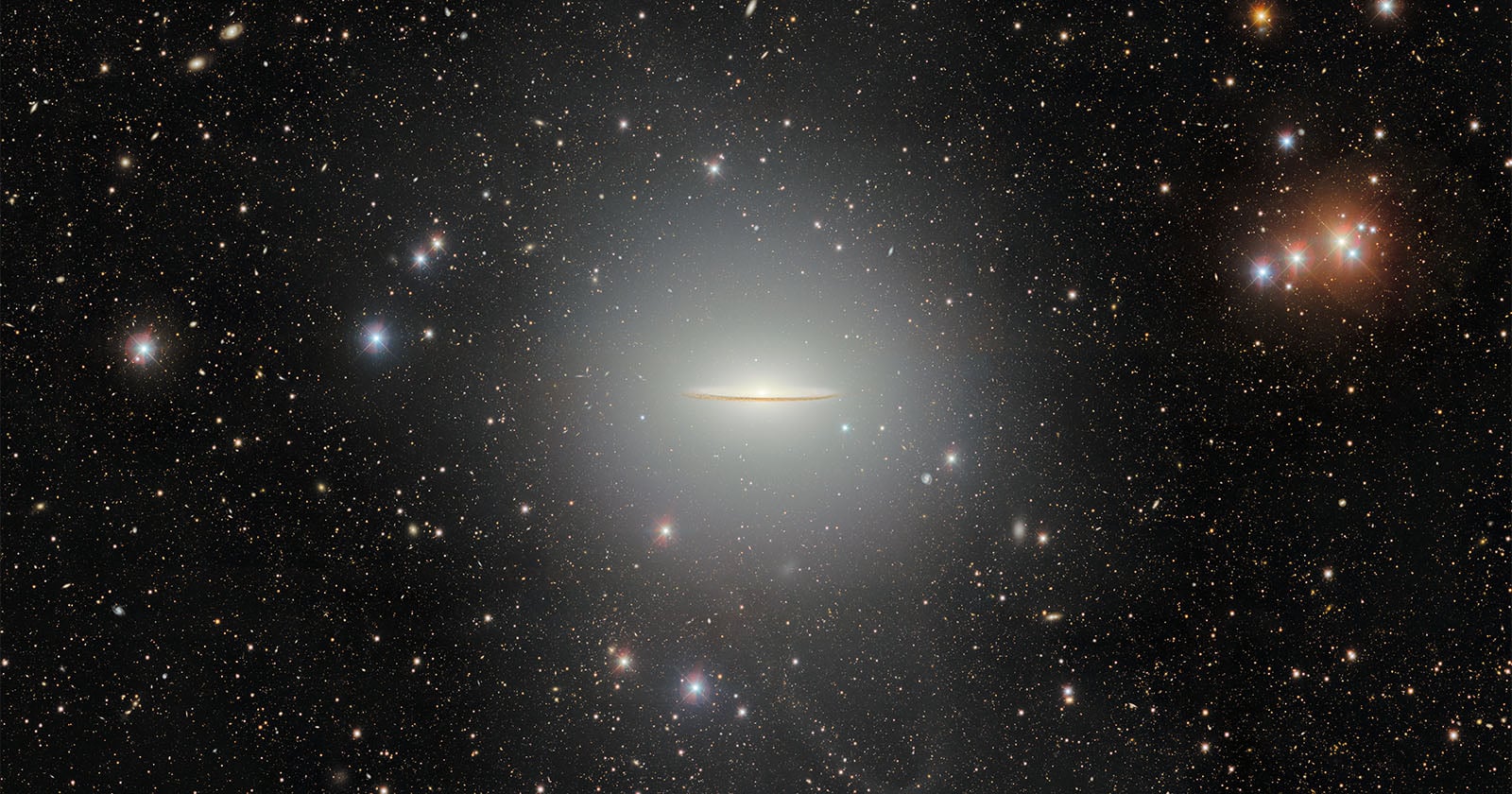
570-Megapixel Dark Energy Camera Captures the Sombrero Galaxy

24 April 2026 at 17:20

A bright, flat galaxy resembling a glowing disk is centered in a star-filled space, surrounded by numerous stars and distant galaxies against a dark sky.

The 570-megapixel Dark Energy Camera turned its 4-meter telescope toward Messier 104, better known as the Sombrero Galaxy, and captured an exceptional side-on view of the galaxy, sometimes called "the Universe's dusty brimmed hat."

[Read More]

❌
Subscriptions