Normal view

  • ✇Eos
  • Germany to Return Contested Dinosaur Fossil to Brazil Sofia Moutinho
    For many years a source of irritation, a fossil of the Brazilian spinosaurid Irritator challengeri is now bringing some joy to paleontologists in its homeland. Following a successful public campaign for restitution, the piece is returning to Brazil from the collection of Germany’s State Museum of Natural History Stuttgart (SMNS), where it has been kept for the past 30 years—a situation that Brazilian paleontologists and lawmakers deemed illegal. Representatives of both countries made the
     

Germany to Return Contested Dinosaur Fossil to Brazil

22 May 2026 at 11:18
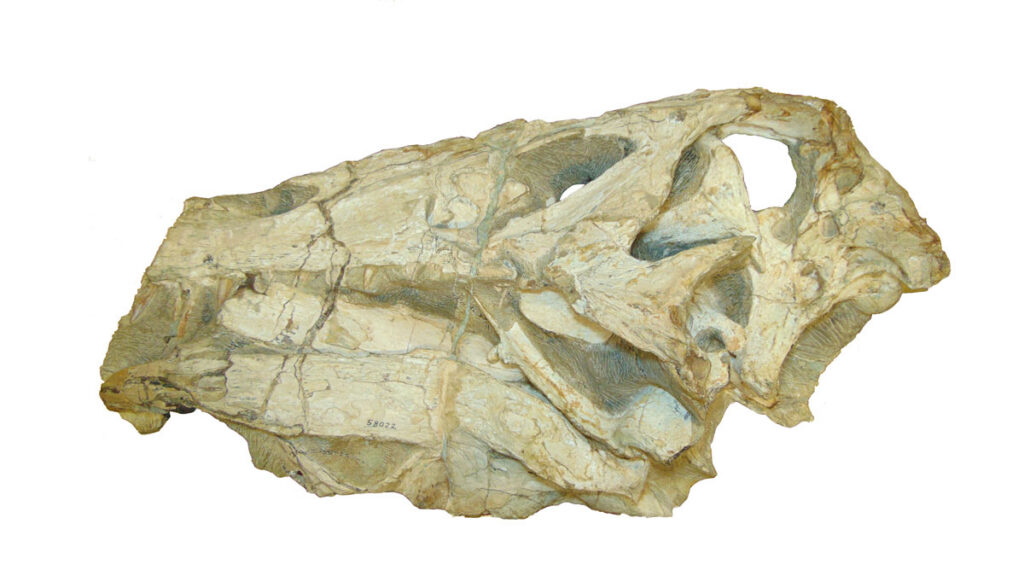
Fossil of the skull of the dinosaur Irritator challengeri

For many years a source of irritation, a fossil of the Brazilian spinosaurid Irritator challengeri is now bringing some joy to paleontologists in its homeland.

Following a successful public campaign for restitution, the piece is returning to Brazil from the collection of Germany’s State Museum of Natural History Stuttgart (SMNS), where it has been kept for the past 30 years—a situation that Brazilian paleontologists and lawmakers deemed illegal.

Representatives of both countries made the announcement last month during Brazilian President Luiz Inácio Lula da Silva’s visit to Germany. In a joint statement, they announced the German museum’s “willingness” to “hand over” the fossil to Brazil and start a new, more transparent era of international collaboration.

“It is a very expected and cherished move because it represents a huge scientific and social victory for the Global South and for Brazil.”

“Finally, the Irritator will be back to its original place,” said paleontologist Allysson Pontes Pinheiro, director of the Plácido Cidade Nuvens Paleontology Museum.

The museum, located in northeastern Brazil where the fossil was discovered in the 1990s, will host the Irritator when it returns to Brazil. “It is a very expected and cherished move because it represents a huge scientific and social victory for the Global South and for Brazil,” Pinheiro said, highlighting that the return will allow local scientists and the population to have access to a heritage that would be difficult and expensive to access abroad.

The Irritator challengeri fossil is one of many that have been illegally obtained from South America by researchers from the Global North. Considered the most complete spinosaurid skull ever described, the 110-million-year-old specimen was taken from the Araripe Basin in northeastern Brazil and described in 1995 by British paleontologist David Martill and his German colleague Eberhard “Dino” Frey. Martill and Frey worked on at least one other fossil smuggled from Brazil to Germany, an Ubirajara jubatus specimen, which was repatriated in 2023 and is currently housed at Plácido Cidade Nuvens.

Martill and Frey named the newly discovered species in reference to their irritation upon learning that the skull had been manipulated by fossil dealers to get a better price. Little did the researchers know that the fossil would irritate many other scientists, especially those from the animal’s homeland.

Revisiting a Fossil with “Problematic Status”

In 2023, triggered by the publication of a paper that acknowledged the fossil’s “problematic status,” paleontologists in South America published an open letter to the Ministry of Science, Research and Arts of Baden-Württemberg State demanding its return. The document received about 300 signatures from scientists and lawyers and was followed by a viral social media campaign involving influencers and a more recent public petition on Change.org that gathered more than 34,000 signatures.

“This campaign showed us that it is worth continuing to fight for our fossils.”

The restitution request is based on Brazilian legislation passed in 1942 that determined that fossils found in the country are the state’s property and cannot be traded or exported without explicit authorization. In addition, a more recent Brazilian ordinance (dating to 1990) mandates that any holotype (a fossil used to describe a new species, such as the contested Irritator specimen) must remain in the country. Regardless, SMNS maintained the fossil had been legally purchased from a private dealer in Germany in 1991.

“We are very happy the Brazilian law is now being respected,” said Aline Ghilardi, a paleontologist at the Federal University of Rio Grande do Norte who was at the forefront of the repatriation campaign. “This campaign showed us that it is worth continuing to fight for our fossils.”

At the time of publication, SMNS had not responded to requests for comment.

A Long Process of Decolonization

But Ghilardi is not entirely satisfied. She didn’t like the wording of the announcement, which used the expression “hand over” rather than return, repatriate, or restitute.

“The statement was a missed opportunity to demonstrate the German government’s willingness to decide in favor of a restitution process,” she explained. “It seems there is resistance to making these restitutions as actual restitutions. It appears as if it is theirs by right and that they will hand over the fossil to Brazil as part of scientific cooperation.”

Ghilardi expressed that she will believe the repatriation will actually happen only when a specific return date is announced. (As of publication, it has not.) She also hopes that the Irritator case is not an isolated incident, but part of an ongoing trend of restitutions intended to break the pattern of neocolonialism in science.

A 2025 study published by Ghilardi and colleagues in the journal Palaeontologia Electronica showed that of nearly 500 invertebrate species described from fossils found in the Araripe Basin—one of Brazil’s richest and most threatened regions of geodiversity—about half have holotypes stored in institutions across Europe, Asia, and North America, violating Brazilian law.

Most of these smuggled fossils are hosted in Germany. “Some foreign colleagues complained about our campaign, saying that it looked like we were persecuting Germany,” Ghilardi said. “But that is not the case. It is just the numbers.”

It is possible, she noted, that other countries hold even more specimens that were not described in the scientific literature and therefore could not be counted.

The same study also found that more than 200 species were described in publications that did not include any Brazilian scientists as coauthors, despite Brazilian legislation requiring foreign research on Brazilian fossil material to be conducted in partnership with local institutions.

Wave of Repatriation

Paleontologist Serjoscha Evers at the Universität Freiburg, who authored the 2023 study on the Irritator fossil, wrote in an email to Eos that he welcomed the news of the dinosaur’s return.

However, he also wondered whether the decision is just “a diplomatic favor that resulted from the public pressure, or foreshadowing a broader wave of repatriations based on a legal conclusion that the fossils are unlawfully in German custody.”

Paleontologists involved in the Irritator restitution efforts said that since the campaign began, they have been receiving emails from museums and institutions worldwide seeking information on the procedures for returning fossils to Brazil.

Reconstruction of the Irritator challenger dinosaur.
Germany recently said it would “hand over” the Irritator challengeri fossil to Brazil. This illustration suggests what the dinosaur would have looked like before it was a fossil, about 110 million years ago. Credit: PaleoGeekSquared/Wikimedia Commons, CC BY-SA 4.0

The Plácido Cidade Nuvens Paleontology Museum, the final destination of the Irritator, has received several restitutions itself, including 45 fossils originally collected from the Araripe Basin and previously held by the University of Zurich in Switzerland, the fossil of a crustacean that was in the possession of the Universidad Nacional del Nordeste in Argentina, and a fish fossil seized in Italy.

According to Pinheiro, the museum’s director, paleontologists and the Brazilian government have listed at least 90 Brazilian holotypes still held in Germany. And the Brazilian Ministry of Foreign Affairs confirmed to Eos that it is currently negotiating the return of nine fossils held in undisclosed countries.

“We have been talking with colleagues from the museums where these materials are hosted, and they seem very favorable to returning them,” Pinheiro observed. “It is a huge advancement and a great change of behavior from important museums that have been holding heritage from the Global South.”

—Sofia Moutinho (@sofiamoutinho.bsky.social), Science Writer
Citation: Moutinho, S. (2026), Germany to return contested dinosaur fossil to Brazil, Eos, 107, https://doi.org/10.1029/2026EO260167. Published on 22 May 2026.
Text © 2026. The authors. CC BY-NC-ND 3.0
Except where otherwise noted, images are subject to copyright. Any reuse without express permission from the copyright owner is prohibited.

New Film Will Chronicle the Life and Work of Brazilian Photographer Claudia Andujar

27 May 2026 at 15:32

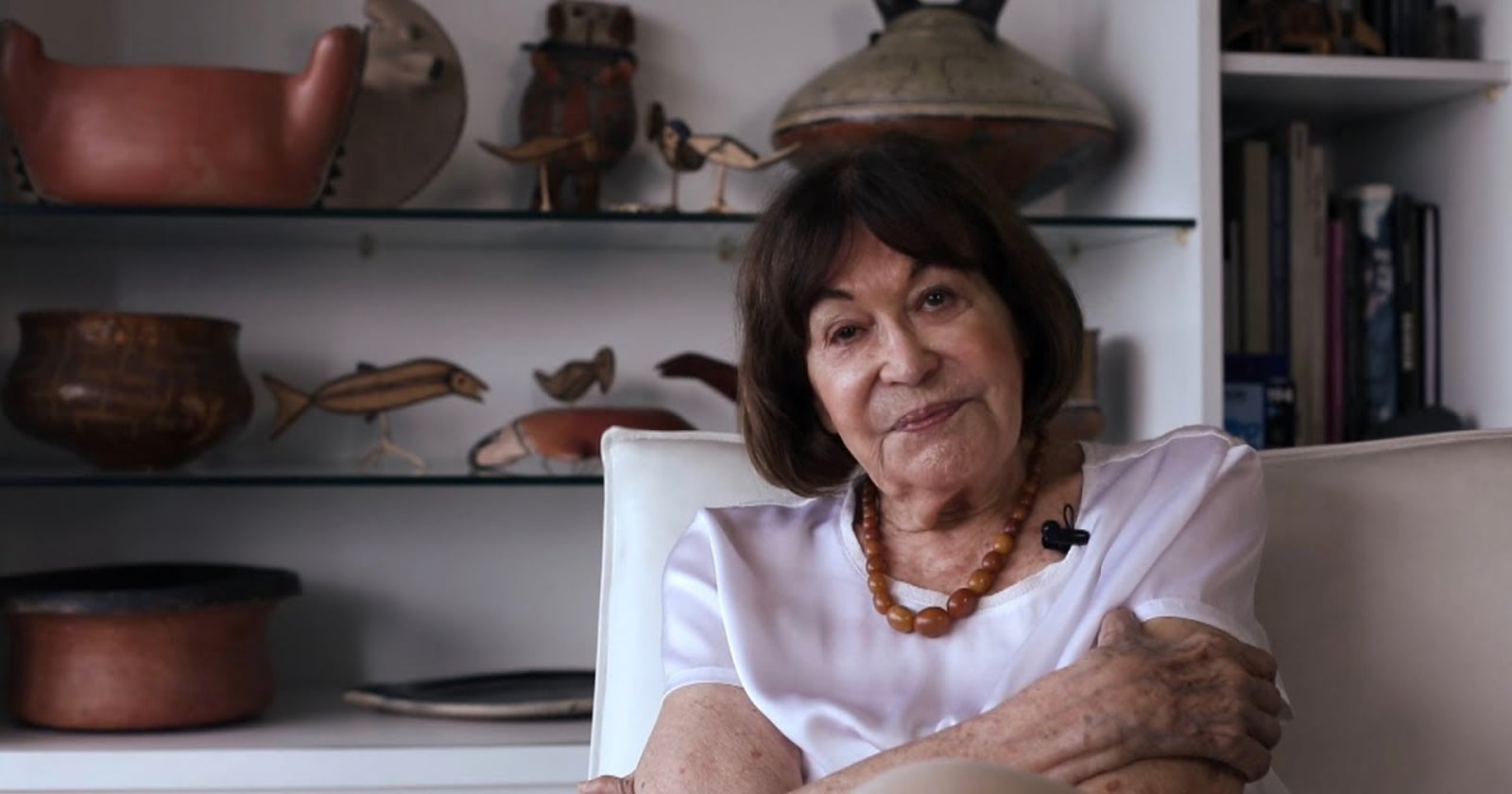
An older woman with short brown hair sits on a white chair, wearing a white shirt and a necklace. Behind her are shelves displaying various ceramic pots and animal figurines. She is looking at the camera with a gentle smile.

A new biopic will focus on the life and work of photographer Claudia Andujar, best known for documenting the Yanomami people, one of Brazil’s largest indigenous peoples.

[Read More]

Brazil unveils first supersonic fighter jet manufactured on its soil, a milestone for Latin America

28 March 2026 at 10:21

President Luiz Inácio Lula da Silva led the ceremony and christened the aircraft by spraying a champagne bottle over the fuselage Brazilian aircraft manufacturer Embraer unveiled on Wednesday the first F-39E Gripen fighter jet manufactured in Brazil, a milestone the country's presidency called "unprecedented in Latin America." It is the first of 15 supersonic combat aircraft Embraer will produce at its facility in Gavião Peixoto, São Paulo state, under a total contract for 36 jets ordered from Swedish firm Saab.

  • ✇MercoPress
  • Lula arrives at the White House to mend fences with Trump after a year of tariffs and disputes
    Brazilian President Luiz Inácio Lula da Silva was received on Thursday by his American counterpart Donald Trump at the White House, in his first official visit to Washington since his return to power in 2023 and the second face-to-face meeting between the two leaders, following a brief 45-minute encounter on the sidelines of the ASEAN summit in Kuala Lumpur last October. The meeting, formalized as a working session rather than a state visit, seeks to consolidate the frag
     

Lula arrives at the White House to mend fences with Trump after a year of tariffs and disputes

7 May 2026 at 15:08

The Trump administration imposed in August 2025 a 50% tariff on Brazilian products that it explicitly linked to the Bolsonaro trial, a chapter that Lula handled with diplomatic firmness Brazilian President Luiz Inácio Lula da Silva was received on Thursday by his American counterpart Donald Trump at the White House, in his first official visit to Washington since his return to power in 2023 and the second face-to-face meeting between the two leaders, following a brief 45-minute encounter on the sidelines of the ASEAN summit in Kuala Lumpur last October. The meeting, formalized as a working session rather than a state visit, seeks to consolidate the fragile bilateral truce reached after one of the most severe diplomatic crises in two centuries of relations between the two most populous democracies in the Americas.

  • ✇MercoPress
  • Brazil promulgates Mercosur-EU deal, completing domestic ratification of trade pact
    Brazil’s Congress on Tuesday promulgated the trade agreement between Mercosur and the European Union, completing the final domestic step required for the treaty to take effect on the Brazilian side. The ceremony was led by Senate and Congress President Davi Alcolumbre, who framed the pact as a sign in favor of trade, stability and integration at a time of wars and commercial tensions.
     

Brazil promulgates Mercosur-EU deal, completing domestic ratification of trade pact

18 March 2026 at 23:10

During the formal session, Alcolumbre said trade “is the key to world peace” and argued that countries that do business with one another tend to have more to lose from war than to gain from it Brazil’s Congress on Tuesday promulgated the trade agreement between Mercosur and the European Union, completing the final domestic step required for the treaty to take effect on the Brazilian side. The ceremony was led by Senate and Congress President Davi Alcolumbre, who framed the pact as a sign in favor of trade, stability and integration at a time of wars and commercial tensions.

Brazil's inflation rises to 4.14% in March driven by higher fuel and food costs

10 April 2026 at 15:26

The main driver of the acceleration was higher fuel costs, directly linked to international oil market volatility caused by the war between the United States, Israel and Iran Annual inflation in Brazil accelerated to 4.14% in March, pushed higher by rising fuel and food prices, the Brazilian Institute of Geography and Statistics (IBGE) reported on Friday. The figure reverses the slowdown recorded in February, when the index had eased to 3.81%.

  • ✇MercoPress
  • Trump labels PCC and Comando Vermelho as terrorist organizations and Brazil fears intervention
    Brazil's government on Friday issued an official note rejecting the decision adopted by the administration of US President Donald Trump to designate Brazil's two main organized crime groups, the Primeiro Comando da Capital (PCC) and the Comando Vermelho, as terrorist organizations. "We will not accept the use of arbitrary measures from abroad as a pretext to attack our sovereignty and our economy," the statement warned, while avoiding explicit reference to the US adminis
     

Trump labels PCC and Comando Vermelho as terrorist organizations and Brazil fears intervention

29 May 2026 at 23:32

Lula da Silva accused Flávio Bolsonaro, his most likely rival in October's presidential elections, of having “betrayed the homeland by going to the United States to ask for an intervention in Brazil” Brazil's government on Friday issued an official note rejecting the decision adopted by the administration of US President Donald Trump to designate Brazil's two main organized crime groups, the Primeiro Comando da Capital (PCC) and the Comando Vermelho, as terrorist organizations. "We will not accept the use of arbitrary measures from abroad as a pretext to attack our sovereignty and our economy," the statement warned, while avoiding explicit reference to the US administration. The measure, announced on Thursday, adds both organizations to a list that includes Al Qaeda, the Islamic State, the main Mexican cartels, and the Venezuelan Tren de Aragua.

Lula pushes back on US tariffs, says Brazil is the one running a trade deficit

4 June 2026 at 10:55

“The US surplus over the past 15 years was 415 billion dollars. So we were the ones who should have raised taxes, not them,” Lula said Brazilian President Luiz Inácio Lula da Silva on Tuesday rejected the US government's argument that Brazil engages in “unreasonable” practices in the bilateral relationship, arguing that it is Washington that runs a trade surplus with his country. If anyone should impose tariffs, he said, it would be Brazil.º

  • ✇Latin America Reports
  • U.S. pressure mounts on Brazil to designate criminal groups as terrorists Brazil Reports
    Brazil is facing heightened pressure both internally and from the United States to designate criminal gangs operating in the country as foreign terrorist organizations (FTOs).  Foreign Minister Mauro Vieira spoke to U.S. Secretary of State Marco Rubio on March 8 and pushed back against the designation, arguing it could create precedents for military intervention similar to the recent American operations against Venezuela’s alleged drug trafficking networks. The dispute intersects with Brazil’s
     

U.S. pressure mounts on Brazil to designate criminal groups as terrorists

19 March 2026 at 02:35

Brazil is facing heightened pressure both internally and from the United States to designate criminal gangs operating in the country as foreign terrorist organizations (FTOs). 

Foreign Minister Mauro Vieira spoke to U.S. Secretary of State Marco Rubio on March 8 and pushed back against the designation, arguing it could create precedents for military intervention similar to the recent American operations against Venezuela’s alleged drug trafficking networks.

The dispute intersects with Brazil’s own election year, where the designation could hand ammunition to right-wing candidates calling for harder security measures.

As of late, the country has managed to withstand U.S. pressure via legislative action. Brazil’s Anti-Terrorism Law defines terrorism as acts intended to provoke “social or generalized terror” on the basis of race, color, ethnicity or religion. Notably, it explicitly excludes profit-driven drug trafficking. 

Deadly Rio de Janeiro raids: A precedent for U.S. pressure?

The October 28, 2025 raids in the northern Rio de Janeiro favelas resulted in 132 casualties, and were labeled as the deadliest in recent years. Meanwhile, they have also cast a long shadow over Brazil’s security capacity. 

What was intended to be an operation against the leaders of the Comando Vermelho (CV) drug trafficking group ended in the slaughter of over 120 people including four police officers.

Governor Cláudio Castro of the Liberal Party, who instructed the police on the raid, argued that this form of hard-handed policy is needed to uproot organized crime in the city: 

“This is how the Rio police are treated by criminals: with bombs dropped by drones. This is the scale of the challenge we face. This is not ordinary crime, but narco-terrorism,” said Castro

While many agree that more can be done in the country to prevent the expansion of these groups, some challenge any theoretical benefit that FTO designations could prompt. 

For one, Justice Minister Ricardo Lewandowski stood beside Rio’s governor a day following the strike: “Terrorism always involves an ideological element,” the minister said. 

Criminal gangs, on the other hand, “commit offenses already defined in the Penal Code,” he told Agencia Brasil.

The real crisis of organized crime

Roberto Uchôa de Oliveira Santos, public security specialist and former employee of the civil and federal police forces in Brazil, highlighted that Brazilian President Luiz Inácio Lula da Silva and U.S. President Donald Trump have had talks about collaborating over the issues of illicit firearm flows and money laundering, which Lula reiterated on X on March 18. 

Uchôa de Oliveira Santos told Brazil Reports that while it is important for “governments to work together across the region, [the designation is] not understood as an act of partnership” on the part of the Brazilian government. Rather, it is interpreted as a form of “geopolitical pressure” with dubious benefits.

He added that “it is not the objective of President Trump to fight criminal organizations” in Brazil. In fact, he believes this narrative conceals the U.S.’s hidden agenda. Conceding to his pressure, he added, would be a “huge mistake”; the extent of criminal governance, whereby criminal groups can control the police, judiciary, prosecutor’s office and political actors is “a virus”. 

Curbing the power of transnational crime groups such as the Primeiro Comando da Capital (PCC) and CV requires more than Trump’s designation and military-led strategy which tends to follow, the expert added. 

While outlining that “improved communications and intelligence” would upgrade security operations like Rio’s raids, Uchôa de Oliveira Santos wrote in The Conversation that there is no evidence that U.S. methods work.

Labelling organizations driven by illicit market profits as terrorists overlooks the fundamental networking nature of groups like the PCC and CV, according to Dr. Guadalupe Correa-Cabrera, professor at the Schar School of Policy and Government; in the end, these groups adapt to market opportunities. 

Uchôa de Oliveira Santos highlighted how, contrary to contemporary organizations which utilize spectacles of power to incite fear, the PCC uses forms of pragmatic violence – which often fall under the radar. 

“Instead of fighting the State, [the groups are allowed] to penetrate violence within the mechanism of the State,” Uchôa de Oliveira Santos added. The PCC, for example, bribed and co-opted policemen to murder of businessman Antonio Vinicius Gritzbach on their behalf in November 2024. 

Others decry the FTO designation could serve as a pretext for the U.S.’s CIA or FBI to enter Brazil, which would be an affront to their national sovereignty. 

Brazil remains resistant to following the example of Ecuador, where President Daniel Noboa recently invited the establishment of an FBI office on their sovereign territory. 

Read more: Colombia’s Petro accuses Ecuador of bombing near border

Mario Sarrubbo, former São Paulo prosecutor-general, explained to Valor International: “The move to declare them terrorists would only make the country vulnerable internationally to economic embargoes and even territorial violations, which would be unreasonable under any circumstances.”

FTO designations and Brazil’s upcoming elections

Geopolitical conditions have compounded on the Rio raids, creating a more partisan landscape of opinion on Brazil’s security – which is already a concern to emotive voters. 

Governor Castro called the raid a “success”, and has since aligned with the hard-handed policy of the Trump administration. Greater support from the Armed Forces, he said, is needed to protect Rio. 

Meanwhile, Tarcísio de Freitas, Republicanos Party member and Governor of São Paulo, stated that a potential FTO designation is an “opportunity” for Brazil on March 11.

“From the moment that a government like the U.S. sees the PCC as a terrorist organization – which is in fact what they are – it is easier to open the way for cooperation, integrate intelligence, access financial resources and structure an even more effective fight,” said Freitas

Uchôa de Oliveira Santos, however, challenged how effective security policy aligned with the FTO designation could be. The expert sees the designation as a form of geopolitical pressure under Trump’s so-called “Donroe Doctrine.”

With Brazilian general elections approaching on October 4, 2026, there is concern that the designation could become a domestic political weapon in a country which is already deeply polarized: right-wing candidates may embrace it as validation for harder security policies, while the Lula government faces the dilemma of appearing either soft on crime or subservient to Washington.

Amidst the clamour, dealing with the potential threats posed by the PCC and CV fades into the background of political debate. As Uchôa de Oliveira Santos suggests, the profit-driven, entrepreneurial, and resilient nature of these criminal groups would be overlooked if they were to be designated as FTOs.

Featured image: Civil police officers from the Robbery and Theft of Cargo Division during Operation Containment
Source: Wikimedia Commons
Author: CanalGov
Creative Commons Licenses

The post U.S. pressure mounts on Brazil to designate criminal groups as terrorists appeared first on Brazil Reports.

The post U.S. pressure mounts on Brazil to designate criminal groups as terrorists appeared first on Latin America Reports.

  • ✇MercoPress
  • Chilean executive detained in Brazil for racist and homophobic insults to Latam flight attendant
    Chilean executive Germán Naranjo Maldini has been held since Friday 15 May at the Guarulhos prison on the outskirts of São Paulo, charged with racial slur after directing racist and homophobic insults at a flight attendant of the airline Latam during a flight between São Paulo and Frankfurt on 10 May. The Chilean fishing company Landes, where he served as commercial manager, formally and preventively removed the executive from his position following the circulation over
     

Chilean executive detained in Brazil for racist and homophobic insults to Latam flight attendant

19 May 2026 at 01:42

The executive refers to the cabin crew member as “mono” (monkey) and makes gestures imitating a primate Chilean executive Germán Naranjo Maldini has been held since Friday 15 May at the Guarulhos prison on the outskirts of São Paulo, charged with racial slur after directing racist and homophobic insults at a flight attendant of the airline Latam during a flight between São Paulo and Frankfurt on 10 May. The Chilean fishing company Landes, where he served as commercial manager, formally and preventively removed the executive from his position following the circulation over the weekend of a video showing the verbal attacks.

❌
Subscriptions