Normal view

  • ✇Business Matters
  • Britain’s billionaires are voting with their feet – and the rich list proves it Jamie Young
    For nearly four decades, The Sunday Times Rich List has been the closest thing Britain has to a national league table of money. This year’s edition reads less like a celebration of enterprise and more like a departures board. Revolut chief executive Nik Storonsky and the publicity-shy quant trader Alex Gerko have broken into the top 10 for the first time. But the headline story, according to the list’s compiler Robert Watts, is not who has arrived, it is who has gone. As many as one in six of th
     

Britain’s billionaires are voting with their feet – and the rich list proves it

18 May 2026 at 06:23
monaco port

For nearly four decades, The Sunday Times Rich List has been the closest thing Britain has to a national league table of money. This year’s edition reads less like a celebration of enterprise and more like a departures board.

Revolut chief executive Nik Storonsky and the publicity-shy quant trader Alex Gerko have broken into the top 10 for the first time. But the headline story, according to the list’s compiler Robert Watts, is not who has arrived, it is who has gone.

As many as one in six of the individuals and families who appeared on the 2024 ranking are missing from this year’s edition, with the compiler warning that the figures lay bare the scale of Britain’s wealth exodus.

Many foreign billionaires who have been living in the UK have… dropped out because they have moved away,” Mr Watts said.

The top of the table holds, but the cracks are widening

Sanjay and Dheeraj Hinduja, the British-Indian brothers behind the Mumbai-headquartered Hinduja Group, kept top spot with a combined fortune of £38bn. The rest of the podium was likewise unchanged, with the famously secretive property magnates David and Simon Reuben and Ukrainian-born industrialist Sir Leonard Blavatnik both still sitting on fortunes north of £25bn.

The most dramatic faller was Sir James Dyson. The inventor’s eponymous engineering empire was hit hard by Donald Trump’s swingeing tariff regime, and his estimated net worth nearly halved over the year from £20bn to £12bn, enough to send him tumbling from fourth to 13th. It is not the first time Sir James has tangled with policy: he has been one of the most vocal critics of Rachel Reeves’s inheritance tax changes, branding them “spiteful” and warning of the consequences for British family businesses.

City money muscles into the top 10

If old money is having a wobble, the new money minted in the City of London is flexing. Mr Storonsky cracked the top 10 in the same year his fintech juggernaut was finally granted a UK banking licence and clinched a $75bn valuation in a November funding round.

A place behind him in eighth sat Mr Gerko, the cerebral force behind XTX Markets, the quantitative trading shop that has quietly become one of the City’s biggest tax payers. His estimated fortune sits north of £16bn.

Both men were born in Russia, and both have renounced their citizenship in protest at Vladimir Putin’s illegal invasion of Ukraine — a reminder that the City’s talent pool is global, and mobile.

A tale of two exoduses

The list’s real story, however, is in the gaps.

For the first two decades of this century, Britain’s super-rich enjoyed a near-uninterrupted bull run. Rich List wealth grew by close to 600 per cent between 2000 and 2022, according to The Sunday Times. That run is now over. The number of sterling billionaires in the UK peaked at 177 in 2022; this year’s tally of 157 was barely up on 2025.

Under the survey’s rules, foreign-born residents who leave automatically fall out of the rankings, while British citizens who emigrate remain. Both groups are now visibly thinning. Mr Watts said he had seen a “sharp rise in the number of British nationals now resident in Dubai, Switzerland and Monaco”, warning the “twin exoduses” represented a worrying development for the British economy and the public finances.

His unease is echoed by international data. The Henley Private Wealth Migration Report has the United Kingdom haemorrhaging high-net-worth residents at a faster clip than any other major economy, with the UAE, Italy and Switzerland the biggest beneficiaries.

“Will more of the wealthy now set up or grow their ventures overseas and in doing so create fewer jobs here?” Mr Watts asked. “How much tax – if any – will Rachel Reeves’ Treasury be able to extract from those affluent Brits who have now left the country?”

The Reeves effect

Critics increasingly point the finger at Whitehall. The Chancellor has been accused of accelerating departures with a string of measures aimed at ultra-high-net-worth residents and their assets.

In her first Budget in October 2024, Ms Reeves pressed ahead with the abolition of the non-domicile tax regime, slapped VAT on private school fees, raised capital gains tax and tightened several inheritance tax carve-outs. Her 2025 intervention added a so-called mansion tax on properties worth more than £2m and further narrowed the inheritance tax net.

Advisers say the cumulative effect has been a stampede. Research from consultancy Chamberlain Walker, cited by Business Matters, suggests around 1,800 non-doms left Britain in the months after April’s tax changes — 50 per cent more than the Treasury had pencilled in.

The casualties include some of the City’s biggest names: former Goldman Sachs International chief Richard Gnodde and steel magnate Lakshmi Mittal, both long-standing Rich List fixtures, have moved on. Only one billionaire is recorded as having moved the other way in the past year — the new US ambassador to the Court of St James’s, Warren Stephens.

What it means for SME Britain

For the small and medium-sized businesses that read this magazine, the implications run deeper than schadenfreude over a few moving vans full of Old Master paintings.

Wealthy entrepreneurs are typically the angel investors, family-office backers and growth-stage cheque writers that smaller firms rely on when banks turn cautious. If they decamp to Dubai or Lugano, that capital tends to follow them. The same goes for the philanthropic giving, board memberships and mentoring that often anchor a city’s business community.

The harder question for the Chancellor, and for the firms that depend on a healthy ecosystem of British-based capital, is whether the additional tax raised from those who stay can outweigh the receipts and investment lost from those who leave. On the evidence of this year’s Rich List, that calculation is starting to look uncomfortable.

Read more:
Britain’s billionaires are voting with their feet – and the rich list proves it
  • ✇Business Matters
  • JCB succession: Lord Bamford anoints younger son George as heir to £6.5bn digger empire Jamie Young
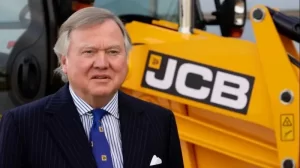
    After years of boardroom whispers, palace-intrigue rumours and one alleged attempted coup, the question of who will inherit Britain’s most famous yellow-painted family business has finally been settled, and it is not the son the City had been quietly pencilling in. Lord Bamford, the 80-year-old chairman of JCB, has confirmed that his younger son George, not his elder son Joseph (known as Jo), will eventually take the wheel of the Staffordshire-headquartered digger maker. The disclosure, made in
     

JCB succession: Lord Bamford anoints younger son George as heir to £6.5bn digger empire

18 May 2026 at 06:15
Lord Bamford

After years of boardroom whispers, palace-intrigue rumours and one alleged attempted coup, the question of who will inherit Britain’s most famous yellow-painted family business has finally been settled, and it is not the son the City had been quietly pencilling in.

Lord Bamford, the 80-year-old chairman of JCB, has confirmed that his younger son George, not his elder son Joseph (known as Jo), will eventually take the wheel of the Staffordshire-headquartered digger maker. The disclosure, made in an interview with the Daily Telegraph, brings to an end one of the longest-running succession sagas in British family enterprise and reshapes the future of a group that turns over £6.5bn, operates 22 factories across four continents and employs 19,000 people worldwide.

“In terms of us remaining a family business, that is very important, and we do have plans,” Lord Bamford said. “I’m very lucky and highly privileged to be in charge of this business at the moment. I don’t intend to be forever. I am 80, for heaven’s sake.” Asked directly who would step into his shoes, he replied: “It will be George.”

From heir apparent to outsider

For the best part of two decades, Westminster watchers and the wider engineering community had assumed Jo Bamford was being groomed to take over. He joined the family firm in 2004, was appointed to the board in 2006 and rose through a succession of senior roles, including head of major contracts, a brief widely read in the industry as a finishing-school posting for a future chairman.

What changed, according to people familiar with the boardroom, was an episode in which Jo is said to have pressed his father to step aside. Lord Bamford, by all accounts, viewed the approach as an attempted coup rather than a constructive nudge. The fallout has been swift and unambiguous: George, the family’s third child, has since been installed as deputy chairman, a clear public signal that the line of succession had quietly been redrawn.

The succession is yet to be formally rubber-stamped at board level, but few in the sector now doubt the trajectory. For a privately held company of JCB’s scale, the choice of chairman is not merely a question of family harmony; it shapes capital allocation, factory footprints, R&D priorities and the firm’s political voice for a generation.

Who is George Bamford?

If Jo was the obvious candidate, George has been the unconventional one. Best known outside engineering circles for the Bamford watch brand, which he founded and which built a cult following customising Rolex, TAG Heuer and other luxury timepieces, he has spent the past two decades building his own commercial reputation in the lifestyle and luxury goods market.

He will retain ownership of the Bamford watch business, but JCB is now becoming his full-time job. Those who have worked with him describe a brand-builder with an instinctive grasp of design and marketing, attributes that may prove useful as the digger maker leans further into electrification, hydrogen power and the premiumisation of construction equipment.

The inheritance-tax backdrop

The Bamford succession is playing out against a tax backdrop that has rattled family businesses across the United Kingdom. From 6 April 2026, the Treasury’s reforms to agricultural and business property reliefs have introduced a £2.5m 100 per cent relief allowance, with qualifying assets above that threshold attracting an effective 20 per cent inheritance tax charge rather than full exemption.

For the United Kingdom’s 5.3 million family firms, the change has been seismic. As the House of Commons Library has set out, the reforms close what ministers regard as a loophole exploited by the ultra-wealthy, but critics argue that they catch ordinary trading businesses in the same net as estate-planning vehicles.

Speaking at a business conference in April, Jo Bamford warned that the new regime could push the family’s empire abroad. “The family tax… is a real problem,” he said. “It could quite easily become an American business. I love being in Britain. But I would say to a political party of any stripe, look, there’s only so much you can ultimately do.” Lord Bamford, a long-time Conservative donor who has also written cheques to Reform UK, has been similarly vocal about Whitehall’s direction of travel, concerns explored in our recent piece on Lord Bamford’s £300m family windfall and the wealth-tax debate.

A sector-wide reckoning

JCB is far from alone. From Dyson to Global Brands, blue-chip family-controlled firms have warned that the new regime could force restructurings, share sales or outright relocations to safeguard jobs and intergenerational ownership. Business Matters has tracked the broader fallout in its analysis of how the £2.5m cap is reshaping family-business planning, with more than half of surveyed firms already pausing investment.

For Lord Bamford, the calculation has long been about more than tax. JCB’s ownership structure, headquartered in Rocester since 1945, is the bedrock on which the company’s long-term capital expenditure programme rests — including the recent decision to double its Texas plant in response to United States tariffs. A clean succession line gives lenders, customers and 19,000 employees a clearer view of the next chapter.

The lessons for other founders

The Bamford story is unusual in scale but not in shape. Even the most polished succession plans can be derailed by sibling rivalry, mismatched ambitions and an incumbent who is reluctant to let go. As Business Matters has previously explored in our five steps to successful business succession planning, early, candid conversations with successors, ideally years before any handover, remain the single biggest predictor of whether a family firm survives the generational baton change.

For Jo Bamford, life outside the JCB chair is unlikely to be quiet. He has built a substantial second career in clean energy, founding the hydrogen fuel firm Ryze Power and stepping in to rescue Northern Ireland’s Wrightbus from collapse. Few City observers expect him to disappear from the FTSE conversation.

For George, the in-tray is daunting but enviable: a globally respected brand, a balance sheet that has weathered tariffs, war in Ukraine and a cooling construction market, and a workforce that has known only one family at the helm. The yellow JCB livery has carried the Bamford name for three generations. On the strength of his father’s words this week, it is on course to do so for a fourth.

Read more:
JCB succession: Lord Bamford anoints younger son George as heir to £6.5bn digger empire

  • ✇AllBusiness.com
  • Great Quotes from 25 Top Entrepreneurs: Wisdom for Success and Innovation Dominique Harroch
    By Dominique A. Harroch and Richard D. Harroch The words of successful entrepreneurs carry extraordinary weight. They've walked the path of innovation, faced countless challenges, and emerged as leaders who shape our global economy. This collection brings you the most recent and widely-cited quotes from 25 of today's most influential living entrepreneurs, offering wisdom to fuel your own journey toward success.1. "If I were a student today, irrespective of whether it's for math or science or che
     

Great Quotes from 25 Top Entrepreneurs: Wisdom for Success and Innovation

9 December 2025 at 21:27


By Dominique A. Harroch and Richard D. Harroch

The words of successful entrepreneurs carry extraordinary weight. They've walked the path of innovation, faced countless challenges, and emerged as leaders who shape our global economy. This collection brings you the most recent and widely-cited quotes from 25 of today's most influential living entrepreneurs, offering wisdom to fuel your own journey toward success.

1. "If I were a student today, irrespective of whether it's for math or science or chemistry or biology—doesn't matter what field of science I'm going into or what profession—I'm going to ask myself, 'How can I use AI to do my job better?'" —Jensen Huang, NVIDIA CEO

Context: Speaking in the "Huge Conversations" show, Huang emphasized the critical importance of learning to work with AI tools early in one's career. As the leader of the company powering the AI revolution, his advice reflects the reality that AI literacy will be essential for future success.

2. "There is the possibility in the next three to five years that one of these techniques would get enough true logical Qubits to solve some very tough problems." —Bill Gates, Microsoft Co-founder

Context: Gates offered an optimistic timeline for quantum computing breakthrough during a Yahoo Finance interview, demonstrating his continued forward-thinking approach to transformative technologies even decades after founding Microsoft.

3. "If you want to be autonomous, start your own company." —Brian Chesky, Airbnb CEO

Context: Chesky challenged conventional management wisdom about employee autonomy, advocating for his "founder mode" approach to leadership that emphasizes being deeply involved in company details while empowering teams.

4. "Our bet is sort of that in the next year probably...maybe half the development is going to be done by AI, as opposed to people, and then that will just kind of increase from there." —Mark Zuckerberg, Meta CEO

Context: At LlamaCon in April 2025, Zuckerberg shared Meta's aggressive timeline for AI-powered development, illustrating how even software creation itself is being revolutionized by artificial intelligence.

5. "Let your joy be in your journey—not in some distant goal." —Tim Cook, Apple CEO

Context: Cook's philosophy emphasizes the importance of finding fulfillment in the process of building and creating, rather than fixating solely on end results. This mindset has helped Apple maintain its culture of excellence while pursuing ambitious innovations.

6. "For me, it matters that we drive technology as an equalizing force, as an enabler for everyone around the world." —Sundar Pichai, Google/Alphabet CEO

Context: Pichai's vision for technology's role in society reflects Google's mission to organize the world's information and make it universally accessible, emphasizing technology's potential to level playing fields globally.

7. "The cloud is still in its early stages, and we're going to see decades of growth ahead of us." —Andy Jassy, Amazon CEO

Context: Jassy continues to champion cloud computing's transformative potential, drawing from his experience building AWS from the ground up into one of the world's most valuable business divisions.

8. "Stone Age. Bronze Age. Iron Age. We define entire epics of humanity by the technology they use." —Reed Hastings, Netflix Co-founder

Context: Hastings' perspective on technological eras reflects his understanding of how fundamental shifts in technology reshape entire civilizations—insight that guided Netflix's transformation from DVD-by-mail to streaming giant.

9. "The future of work is not about replacing humans with technology, but about augmenting human capabilities with technology." —Marc Benioff, Salesforce CEO

Context: Benioff's vision for AI and automation emphasizes enhancement rather than replacement, reflecting Salesforce's approach to building tools that empower rather than eliminate human workers.

10. "I'd say maybe 20%, 30% of the code that is inside of our repos today and some of our projects are probably all written by software." —Satya Nadella, Microsoft CEO

Context: Speaking at Meta's LlamaCon in April 2025, Nadella revealed how deeply AI has penetrated Microsoft's development processes, showcasing the practical transformation happening in tech companies today.

11. "The key is not to predict the future, but to be prepared for it." —Daniel Ek, Spotify CEO

Context: Ek's approach to innovation emphasizes adaptability over prediction, a strategy that has helped Spotify navigate the complex music industry and expand globally.

12. "Infrastructure is about removing friction. The best infrastructure is invisible." —Patrick Collison, Stripe CEO

Context: Collison's philosophy on building payment systems reflects Stripe's approach to creating seamless financial infrastructure that enables rather than complicates business operations.

13. "The biggest opportunities often come disguised as impossible problems." —Drew Houston, Dropbox CEO

Context: Houston's perspective on problem-solving reflects the entrepreneurial mindset that turned file synchronization challenges into a multi-billion-dollar business opportunity.

14. "Culture is not about what you say, it's about what you do repeatedly." —Dara Khosrowshahi, Uber CEO

Context: Khosrowshahi's focus on cultural transformation has been central to Uber's evolution from a controversial startup to a more mature public company focused on sustainable growth.

15. "The most important thing is to try and inspire people so that they can be great at whatever they want to do." —Susan Wojcicki, Former YouTube CEO

Context: Wojcicki's leadership philosophy emphasizes empowerment and inspiration, principles that guided YouTube's growth into the world's largest video platform.

16. "Starting a company is like jumping off a cliff and assembling a plane on the way down." —Reid Hoffman, LinkedIn Co-founder

Context: Hoffman's vivid metaphor captures the essence of entrepreneurship—taking bold action despite uncertainty and building solutions while navigating challenges in real-time.

17. "Make every detail perfect and limit the number of details to perfect." —Jack Dorsey, Former Twitter CEO

Context: Dorsey's design philosophy emphasizes the power of simplicity and focus, principles that have guided his approach to building both Twitter and Square.

18. "We think, mistakenly, that success is the result of the amount of time we put in at work, instead of the quality of time we put in." —Arianna Huffington, Thrive Global CEO

Context: Huffington's advocacy for well-being and work-life balance challenges traditional notions of entrepreneurial success, promoting sustainable approaches to achievement.

19. "I truly believe that we have to change the way we think about how we treat people, how we love people, and how we lift people up." —Whitney Wolfe Herd, Bumble Founder

Context: Wolfe Herd's philosophy extends beyond business to social impact, reflecting Bumble's mission to create healthier relationship dynamics both in dating and professional networking.

20. "The best way to predict the future is to build it, one customer at a time." —Tony Xu, DoorDash CEO

Context: Xu's customer-centric approach has driven DoorDash's growth from a Stanford dorm room idea to the leading food delivery platform in the United States.

21. "Data is the new oil, but insights are the new gold." —Ryan Smith, Qualtrics CEO

Context: Smith's perspective on data analytics emphasizes that raw information is less valuable than the actionable insights derived from it—a principle at the heart of Qualtrics' experience management platform.

22. "The whole world should be able to design. We want to democratize design and make it accessible to everyone." —Melanie Perkins, Canva CEO

Context: Perkins' vision has driven Canva's mission to simplify graphic design, making professional-quality design tools accessible to millions of non-designers worldwide.

23. "The best software is the software that helps people do things they couldn't do before." —Stewart Butterfield, Slack Co-founder

Context: Butterfield's philosophy on product development emphasizes enablement and empowerment, principles that transformed workplace communication through Slack's intuitive design.

24. "The most successful entrepreneurs are the ones who can turn their personal pain points into solutions for millions of people." —Julia Hartz, Eventbrite Co-founder

Context: Hartz's insight reflects the entrepreneurial journey of identifying universal problems through personal experience and building scalable solutions that benefit entire markets.

25. "Transportation is not just about getting from point A to point B; it's about connecting communities and creating opportunities." —Logan Green, Lyft Co-founder

Context: Green's broader vision for mobility extends beyond ride-sharing to urban planning and social equity, reflecting Lyft's mission to improve how people move through their cities.

Key Themes from Today's Entrepreneurial Leaders

These quotes reveal several powerful themes that define successful entrepreneurship today:

1. AI as the Great Equalizer: Leaders like Huang, Nadella, and Pichai emphasize that artificial intelligence is not just a tool but a fundamental shift that will determine competitive advantage across all industries.

2. Purpose Over Profit: Many of today's most successful entrepreneurs, from Chesky to Wolfe Herd, emphasize that meaning and mission drive sustainable success more than pure financial motivation.

3. Continuous Learning: Whether it's Gates exploring quantum computing or Huang advocating for AI tutors, top entrepreneurs never stop learning and adapting to new technologies and market realities.

4. Quality Over Quantity: From Dorsey's focus on perfecting fewer details to Huffington's emphasis on quality time over total hours, effective leaders prioritize depth over breadth.

These thoughts from today's most successful entrepreneurs offer more than inspiration—they provide a roadmap for navigating an increasingly complex and rapidly changing business landscape. Their wisdom reminds us that success is not just about having great ideas, but about executing them with purpose, resilience, and an unwavering commitment to continuous growth.

As you build your own entrepreneurial journey, let these insights guide your decisions, inspire your vision, and remind you that today's impossible dreams often become tomorrow's inevitable realities. The future belongs to those who are bold enough to embrace change, wise enough to learn from both success and failure, and passionate enough to pursue purpose over profit.

"The biggest risk is not taking any risk," as Zuckerberg reminds us. In a world of unprecedented change and opportunity, these entrepreneurial voices light the path forward for the next generation of innovators and leaders.

Related Articles:

About the Authors:

Dominique A. Harroch is the Chief of Staff at AllBusiness.com. She has been the Chief of Staff or Operations Leader for multiple companies where she leveraged her extensive experience in operations management, strategic planning, and team leadership to drive organizational success. With a background that spans over two decades in operations leadership, event planning at her own start-up and marketing at various financial and retail companies. Dominique is known for her ability to optimize processes, manage complex projects and lead high-performing teams. She holds a BA in English and Psychology from U.C. Berkeley and an MBA from the University of San Francisco. She can be reached via LinkedIn.

Richard D. Harroch is a Senior Advisor to CEOs, management teams, and Boards of Directors. He is an expert on M&A, venture capital, startups, and business contracts. He was the Managing Director and Global Head of M&A at VantagePoint Capital Partners, a venture capital fund in the San Francisco area. His focus is on internet, digital media, AI and technology companies. He was the founder of several Internet companies. His articles have appeared online in Forbes, Fortune, TIME, MSN, Yahoo, Fox Business and AllBusiness.com. Richard is the author of several books on startups and entrepreneurship as well as the co-author of Poker for Dummies and a Wall Street Journal-bestselling book on small business. He is the co-author of a 1,500-page book published by Bloomberg on mergers and acquisitions of privately held companies. He was also a corporate and M&A partner at the international law firm of Orrick, Herrington & Sutcliffe. He has been involved in over 200 M&A transactions and 250 startup financings. He can be reached through LinkedIn.

Copyright © by Richard D. Harroch. All rights reserved.


  • ✇Business Matters
  • Dragons’ Den’s Tej Lalvani lines up £900m sale of Vitabiotics to Bain Capital Jamie Young
    The Lalvani family is on the brink of cashing in more than half a century of patient brand-building, with US private equity giant Bain Capital understood to be days away from sealing a near-£1 billion swoop on Vitabiotics, the UK’s largest multivitamin maker. City sources suggest a deal valuing the family-owned group at around £900 million could be announced as early as this week, capping an auction that began in early 2025 and has run hot and cold for more than a year. Talks remain “delicately
     

Dragons’ Den’s Tej Lalvani lines up £900m sale of Vitabiotics to Bain Capital

1 June 2026 at 06:20
The Lalvani family is on the brink of cashing in more than half a century of patient brand-building, with US private equity giant Bain Capital understood to be days away from sealing a near-£1 billion swoop on Vitabiotics, the UK's largest multivitamin maker.

The Lalvani family is on the brink of cashing in more than half a century of patient brand-building, with US private equity giant Bain Capital understood to be days away from sealing a near-£1 billion swoop on Vitabiotics, the UK’s largest multivitamin maker.

City sources suggest a deal valuing the family-owned group at around £900 million could be announced as early as this week, capping an auction that began in early 2025 and has run hot and cold for more than a year. Talks remain “delicately placed”, insiders cautioned, and there is still a risk the transaction slips or unravels at the eleventh hour.

For Tej Lalvani, the former Dragons’ Den panellist who has run the company since 2015, the deal would mark a remarkable chapter in a story that began on the warehouse floor. Fresh out of university three decades ago, Lalvani drove a forklift at the family business before working his way up through operations to the corner office, succeeding his father, Kartar, who founded the firm in 1971.

A British supplements powerhouse

Vitabiotics is the rare British consumer-health champion that has built genuine high-street recognition. Its stable of brands, Wellman, Wellwoman, Perfectil, Pregnacare and Menopace among them, sit on pharmacy shelves in more than 100 countries, while its celebrity ambassador roster reads like a Strictly after-party guest list: former host Tess Daly, supermodel David Gandy and broadcaster Davina McCall have all fronted campaigns.

Under Tej Lalvani’s leadership, the group’s annual global sales are said to have almost doubled from £101 million to £195.6 million, although the exact figures are hard to verify. Vitabiotics Group Holdings, the parent entity, sits within a complex ownership structure ultimately registered in the British Virgin Islands, an arrangement that allows the company to keep the finer points of its financial performance under wraps. The Lalvani family is ranked 255th on The Sunday Times’ Rich List, with an estimated fortune of £525 million.

A controversial buyer

If completed, the sale would represent another statement deal in UK consumer health for Boston-headquartered Bain Capital, which has been ploughing capital into the nutrition and wellness space, including its 2023 acquisition of US sports nutrition group 1440 Foods and a stake in India’s Emcure Pharmaceuticals.

It would also reopen a familiar debate. Bain is no stranger to controversy in the British market: in 2021, its £530 million swoop on the mutual insurer LV was famously rejected by members in a vote that ricocheted through Westminster and the City. The firm has spent the years since rebuilding its reputation among UK boards and policymakers, and a Vitabiotics deal would underscore how appetite for British family-owned consumer brands has rebounded, a theme Business Matters has tracked across the sector, including Danone’s recent €1 billion swoop on Huel.

The sale process has been overseen by boutique investment bank Houlihan Lokey. After fielding interest from several of the world’s largest buyout houses, the shortlist was whittled down to Bain and Blackstone earlier this year, before Vitabiotics entered exclusive talks with Bain last month. EQT and TPG, two of the other early suitors, dropped away as the price tag firmed up at close to £1 billion.

That valuation puts the business at roughly 4.5 times its claimed sales, a punchy multiple that reflects both the defensive cash flows associated with supplements and the broader resurgence in UK private equity dealmaking, where buyout houses are paying up for resilient consumer brands amid choppier macro conditions.

The Vitabiotics sale would also be a useful barometer of where deep-pocketed sponsors see growth in the post-pandemic wellness boom, with consumers continuing to spend on preventive health products even as broader discretionary categories soften.

What it means for Lalvani

For Tej Lalvani himself, the sale would mark the end of an era. He joined Dragons’ Den in 2017 and stayed on the BBC show for four series, backing companies that ranged from herbal tea brands and protein shake bottles to knitting accessories. Like many Dragons’ Den investors before him, he leveraged the platform to raise his profile as much as to build a portfolio, though his day job at Vitabiotics has always overshadowed his television deals.

What he chooses to do with a windfall of this scale will be watched closely. With Bain expected to retain the operational team, Lalvani is likely to remain involved in some capacity, at least through a transition period. According to reports in the Financial Times, the deal would rank among the largest sponsor-led acquisitions of a UK family-owned consumer business this year.

Bain Capital declined to comment. Vitabiotics had been approached for comment.

Read more:
Dragons’ Den’s Tej Lalvani lines up £900m sale of Vitabiotics to Bain Capital

Brad Burton interview: how the UK’s no.1 motivational speaker rebuilt after lockdown wiped out 4Networking, and survived a four-year online stalking campaign

21 May 2026 at 20:54
The founder of 4Networking lost a £2 million business in an afternoon, then spent four years being smeared online by a woman he had met for 30 seconds.

The founder of 4Networking lost a £2 million business in an afternoon, then spent four years being smeared online by a woman he had met for 30 seconds.

In an unflinching conversation with Richard Alvin, he describes the four seconds that nearly ended it all, and the platform failures he now wants the next Secretary of State to put right.

There is a moment, about twenty minutes into our conversation, when Brad Burton goes very still. We are talking about the period in 2022 when his business had collapsed, his stalker was posting fifteen lies a day across LinkedIn, Facebook, Instagram and X, and the platforms were responding to his complaints with cut-and-paste boilerplate. He is sitting at his desk in Somerset, the same desk he sat at then.

“Four seconds,” he says. “For four seconds, I thought I can’t do this anymore.” He pauses. “Luckily those four seconds happened when I was sat at my desk, as in another setting the outcome might have been different, either way it motivated me to go to the doctors and get some antidepressants. Hadn’t done them for 25 years. That just shows you how severe this was.”

It is a remark, delivered in the matter-of-fact Salford cadence familiar to anyone who has ever booked Burton for a keynote, that reframes the whole interview. Britain’s self-styled “number one motivational speaker”, the man who built 4Networking from a £25,000 debt and a pile of pizza delivery sheets in 2006 into the country’s largest face-to-face business network — was, on his own admission, four seconds from a very different ending.

We had sat down for the latest edition of the ‘In Conversation Podcast’ to talk about three things, all of them, in his view, urgent for anyone running a small business in 2026: how you rebuild when turnover goes to zero with no playbook; what happens when the professional platform you have anchored your reputation to stops protecting you; and what resilience, mental, financial, reputational, actually looks like on the other side. They proved to be the same story.

From £2.3 million to nought in a single afternoon

The first collapse was televised. On 20 March 2020, with 4Networking turning over £2.3 million a year at its peak and running 5,000 face-to-face breakfast meetings in Premier Inns and Brewers Fayre up and down the country, Boris Johnson told the country to stay at home.

“When you’re running 5,000 networking meetings in Brewers Fayres and Holiday Inn Expresses up and down the land, that’s a problem,” Burton says, with characteristic understatement. The original assumption that “this will be a short pause, we’ll be back”, turned into a “dance of the seven veils”, a fortnightly extension that he believes did more damage than honesty would have.

Burton’s response was to invoke what he calls his 24/24/24 framework. “If I can’t make a decision in 24 seconds, revisit in 24 minutes. If after 24 minutes I can’t make a decision, I revisit in 24 hours. If after 24 hours I can’t make a decision, I’ve just made a decision, it’s not important. Next.” Within days, 4Networking had become the first network in the country to move wholesale onto Zoom, under the banner 4N Online. He calls it “drawing a picture of a sandwich when you’re hungry”, a holding measure rather than a substitute. He exited the company in 2022.

That should have been the story: a textbook British SME pivot, a clean founder exit, a man in his early fifties moving on to keynotes and books. It was not.

Thirty seconds at Aston Villa

In January 2019, at one of Burton’s personal development events at Aston Villa Football Club, a woman in an audience of around 200 was introduced to him by a mutual contact and asked for a selfie. The exchange lasted less than a minute. Her name was Sam Wall.

A year later, with Britain locked down and Burton’s identity as the country’s networking-in-chief evaporating in real time, Wall began posting on social media. The first post was vague; the second referenced “a high-profile speaker”; the third named him. Within days she had 30,000 LinkedIn followers, more than Burton’s own, and was alleging he had given her death threats, poisoned her cat, slashed her tyres and put a tracker on her car. Burton was 200 miles away in Somerset throughout lockdown.

“I was 200 miles away in lockdown and being accused of poisoning her cat — and Linkedin did nothing”

“People don’t do checks and measures on social media,” he says. “It was a modern-day witch hunt. I was guilty until proven innocent.” A cease-and-desist letter, served at a cost of £3,000, was promptly photographed and posted to her feed beneath the caption: “I’m not allowing this guy to bully me into submission.” Supporters cheered her on. Speaking engagements began to be quietly cancelled. Family members were drawn in.

The legal road, when he finally took it, was as slow as it was bruising. A statement given at Taunton police station vanished from the system. Wall was arrested, bailed for 30 days, “30 days of peace”, and resumed her campaign, in Burton’s recollection, “30 days and 10 minutes later”. She forged what purported to be a stalker protection order against him and posted it online. She wrote a 22,000-word article about him on LinkedIn. By his own count, she made roughly 500 posts about him across the major platforms over four years.

In March 2025, the case finally reached a national audience. BBC Panorama broadcast My Online Stalker, presented by Darragh MacIntyre, with Burton and the Manchester tech entrepreneur Naomi Timperley as its central voices. Channel 4’s Social Media Monsters followed with a second-episode treatment of the same case. ITV covered the sentencing. In October 2025, at Minshull Street Crown Court, Sam Wall was jailed for 28 months for what Judge Neil Usher described as a “prolonged, deliberate and calculated” campaign and an “unrelenting barrage” that was “breathtaking” in its scope.

Burton’s case is one of the fewer than two per cent of stalking complaints in this country that result in a conviction.

“There is no leadership at LinkedIn”

It is the response of the platforms, and one platform in particular, that animates him now. Wall’s LinkedIn account, as of publication, remains live, and so does much of the content she posted about him. Business Matters has previously reported on the mounting pressure on LinkedIn to act.

“We contacted LinkedIn legals. We contacted support. We tagged in everybody,” Burton says. “Not a single piece of content came down. We had people from America come on Zoom calls, they wouldn’t even turn the cameras on, saying, ‘She’s not doing anything illegal.’ I said, ‘What happens if she gets convicted?’ They said, ‘If she gets convicted, do let us know and we’ll see what we can do.’ So guess what? We let them know. They did nothing about it.”

Top-tier legal advice, he says, surfaced a structural problem: LinkedIn hides behind European law jurisdictionally rooted in Ireland and corporate decision-making rooted in California. “They’ve got this double moat. Nobody wanted to champion it.” Reporting Wall’s account, by design, blocked the reporter from her output rather than removing it. “That’s not a solution.”

If he had ten minutes with the Secretary of State and LinkedIn’s UK MD, what would he ask for? “Imagine if on your platform, I called you this, and I said this about your family. Would you ignore it and block me? Or would you make some changes and get me off the platform? That is exactly what should have happened here. Your business is people, and that’s the bit that’s been lost.” He goes further: there is, he says, “no leadership” at the UK level. “Nobody stepped forward and said, ‘I’m the UK managing director. I’m going to sort this crap.'”

It is a critique that lands at a moment when the regulatory tide is turning. The Online Safety Act is reshaping platform obligations in the UK, and stalking prosecutions, although still woefully low against a high base of reported offences, are at a record high. Burton’s case is the gap between the law and its enforcement made flesh.

Building the antidote

What Burton always does, and is doing again, is build. His new venture, Motivational Business Network, has opened for paid membership at £75 a month, vetted, deliberately slow, and capped at the kind of room size where, as he puts it, “you go and put yourself in a room with 50 people who are on side and positive, and tell me that’s a waste of time.”

The product cue is something called Shine: every member receives 100 daily “Shine points” they can award to others for genuine help, the awards visible on a member’s profile as social proof. “When everyone’s shouting, no one’s listening,” he says. “We’ve got to start getting quieter. We’ve got to start talking again. Less AI, more human.”

He pauses, the Salford grin back in place. “When I built 4Networking, it was a wobbly Jenga tower. This time we’re building it slow, methodical. No rush. Let’s get it right, not right now, which goes 100 per cent against everything I’ve ever done.”

For a man who came within four seconds of a different outcome, “right, not right now” sounds less like a strapline and more like a hard-won operating principle. British business, and the platforms that profess to serve it, would do well to take the note.

Read more:
Brad Burton interview: how the UK’s no.1 motivational speaker rebuilt after lockdown wiped out 4Networking, and survived a four-year online stalking campaign

Class Action Claims Administrator Agrees To Stop Taking Vendor Rebates After Kickback Scrutiny

Amid criticism that claims administrators have secretly profited from class action payouts, Philadelphia-based Angeion agreed not to accept rebates from prepaid card issuers, banks or other vendors in a Kansas City data breach case.

© Getty

  • ✇Business Matters
  • James Watt plots brewing comeback with community-owned Second Best venture Jamie Young
    Barely two months after the spectacular implosion of the craft brewer he built into a £2bn icon of British entrepreneurship, James Watt is climbing back into the fermentation tank. The BrewDog co-founder has unveiled Second Best, a new community-funded beer business that will hand up to 19.3 per cent of its equity, free of charge, to the small investors and bar staff whose holdings were obliterated when BrewDog was sold to Canadian-American cannabis and drinks group Tilray Brands for £33m in Mar
     

James Watt plots brewing comeback with community-owned Second Best venture

25 May 2026 at 02:46
BrewDog co-founder and CEO James Watt has announced that all five finalists of his Next Unicorn competition will each be taking home a share of his £1million investment

Barely two months after the spectacular implosion of the craft brewer he built into a £2bn icon of British entrepreneurship, James Watt is climbing back into the fermentation tank.

The BrewDog co-founder has unveiled Second Best, a new community-funded beer business that will hand up to 19.3 per cent of its equity, free of charge, to the small investors and bar staff whose holdings were obliterated when BrewDog was sold to Canadian-American cannabis and drinks group Tilray Brands for £33m in March.

Announcing the venture on LinkedIn, Mr Watt struck an unusually contrite tone. “Thousands of people trusted me to build a brilliant beer business and create value for them. It was an obligation I took very seriously. And I, for one, am not done with that obligation,” he wrote.

Under the proposal, former BrewDog “Equity Punks” will be invited to become “Second Founders”, claiming a stake in the new company identical in size to the one they held in the old one. “No catches, no cash required, and your equity in Second Best will always rank alongside my own,” Mr Watt said. “You’ll own it. I’ll fund it. And I’ll dedicate myself to building it.”

Almost all former BrewDog bar staff, who held shares at the point of collapse, are also expected to qualify. By Friday evening, Mr Watt told The Telegraph, more than 2,000 former Punks had registered interest – 500 of them within the first ten minutes of his announcement.

A leaner, canned-first model

In a marked departure from the sprawling bricks-and-mortar empire that became BrewDog’s defining feature, Second Best will be built around canned beer rather than pubs. According to the Financial Times, the venture will launch with two pale ales and a lager, brewed in Germany and across Europe. Mr Watt has indicated that a handful of specialist beer-focused pubs may follow once the brand is bedded in.

In a nod to changing British drinking habits, the company will also tease the market with what Mr Watt describes as an “alcohol-adjacent” concept before its first brews land. “I am going to make a non-alcoholic beer for my non-drinking wife,” he said – a reference to his spouse, the former Made in Chelsea star and I’m A Celebrity winner Georgia Toffolo.

The pivot reflects the wider commercial reality facing UK brewers. The low and no-alcohol category has surged past 200 million pints a year, while a punishing combination of input costs, business rates and shrinking discretionary spend has triggered a wave of insolvencies across the craft sector – a backdrop Business Matters has explored in its analysis of whether it is last orders for the UK craft beer sector.

Second Best has yet to secure all the licences and approvals required to begin trading, and no launch date has been confirmed.

From £2bn darling to £33m fire sale

The new venture marks a striking second act for one of Britain’s most polarising entrepreneurs. Founded by Mr Watt and Martin Dickie in a unit in Fraserburgh, Aberdeenshire, in 2007, BrewDog rode the craft beer wave to operate more than 120 bars across 57 countries and was valued at around £2bn at the height of its 2021 fundraising.

That high water mark proved fleeting. Five consecutive years of losses from 2019 onwards combined with mounting debts to its private equity backer, TSG Consumer Partners, to leave liabilities of more than £800m by the time of the brewer’s collapse. The eventual sale to Tilray, which Business Matters covered in detail at the time of the £33m rescue deal that closed 38 bars and cut 484 jobs, wiped out TSG, both founders and the entire Equity for Punks community – an army of more than 200,000 small investors who had collectively put in around £75m over seven crowdfunding rounds.

For Mr Watt, the fallout came on top of a difficult few years personally and professionally. He stepped down as chief executive in 2024, a move chronicled in Business Matters’ coverage of his departure amid controversies over workplace culture allegations first raised by more than 60 former employees in 2021. He has consistently said management needed to “listen, learn and act”.

Following March’s sale he publicly described himself as “heartbroken” for the Equity Punks who “did not get the return on their investment they wanted” and for having “dedicated the best 20 years of my life to something that ultimately did not have the ending we all wished for”.

Will the Punks bite a second time?

The central commercial question is whether trust, once forfeited at this scale, can be rebuilt. Equity Punks were as much a marketing engine as a funding mechanism; their evangelism turned BrewDog into a household name. Reproducing that flywheel without the headline-grabbing pub rollouts – and without the eye-catching valuations that powered successive raises – will be the test.

Industry observers note that Mr Watt is, in effect, attempting to invert the BrewDog playbook: lighter on capital expenditure, heavier on community ownership, and explicitly self-funded by the founder rather than underwritten by private equity. Coverage by trade title The Grocer suggests the canned-first, Europe-brewed approach is designed to keep fixed costs low and routes-to-market flexible while the brand finds its footing.

Whether it works will depend less on the beer and more on the maths. As City AM noted in its analysis of the “equity punk” comeback, Mr Watt’s pledge that Second Founders will always rank alongside him is a direct response to the preferential share structure that left ordinary BrewDog investors at the back of the queue when the music stopped.

“I feel an obligation to the Equity Punk investors. I want to try to create the future of beer,” Mr Watt told the Financial Times. “Hopefully, the second beer business I build with the community will be the best one.”

The name, at least, sets the expectations accordingly.

Read more:
James Watt plots brewing comeback with community-owned Second Best venture

Why The Case For Sourcing From Africa Has Never Been Stronger, And Still Gets Ignored

Africa's richest biodiversity, fastest-growing consumer market, and most innovative food founders are open for business. American buyers still aren't paying attention.

© AFP via Getty Images

  • ✇Malay Mail - All
  • Bumiputeras must move up value chain to become industry leaders, says DPM Zahid
    KUALA TERENGGANU, June 2 — Bumiputera ownership should not be confined to small-scale businesses but must progress towards controlling larger segments of the value chain, says Deputy Prime Minister Datuk Seri Dr Ahmad Zahid Hamidi.Ahmad Zahid, who is also Rural and Regional Development Minister, said Bumiputera entrepreneurs should no longer be viewed merely as small vendors, ancillary suppliers or players at the end of the industrial chain, but instead be elevat
     

Bumiputeras must move up value chain to become industry leaders, says DPM Zahid

2 June 2026 at 10:31

Malay Mail

KUALA TERENGGANU, June 2 — Bumiputera ownership should not be confined to small-scale businesses but must progress towards controlling larger segments of the value chain, says Deputy Prime Minister Datuk Seri Dr Ahmad Zahid Hamidi.

Ahmad Zahid, who is also Rural and Regional Development Minister, said Bumiputera entrepreneurs should no longer be viewed merely as small vendors, ancillary suppliers or players at the end of the industrial chain, but instead be elevated to become principal manufacturers, technology owners and market leaders.

“In the halal industry, for instance, Malaysia’s strength cannot stop at certification alone. Halal must become a value chain that we control, from raw materials, processing, packaging and logistics to marketing and international markets.

“That is why the proposal to establish a consortium of large-scale Bumiputera anchor companies to produce critical raw materials such as halal gelatine, enzymes and active pharmaceutical ingredients should be regarded as a strategic move. We must reduce dependence on imports and build Bumiputera capabilities in high-value halal sectors,” he said when delivering the keynote address at the 2026 Bumiputera Entrepreneurs Economic Convention (KEUB) at the Terengganu Equestrian Resort here today.

At the same time, he said many Bumiputera entrepreneurs in the food and franchise sectors possessed quality products but continued to face challenges in terms of costs, operational scale, standards and market access.

“Therefore, approaches such as group purchasing, centralised commercial kitchens and franchise incubator models can serve as pathways to consolidate purchasing power, standardise quality and elevate Bumiputera brands to a higher level,” he said.

Ahmad Zahid also urged more Bumiputera entrepreneurs to venture into future-oriented sectors such as aero-tech, drones, automation and high-technology industries.

“Bumiputera youths cannot remain merely consumers of these technologies. They must become technicians, designers, component suppliers, service providers, and, ultimately, owners within the industrial value chain.

“This is the true meaning of economic empowerment. Bumiputera entrepreneurs must be moved out of limited and restricted spaces into more strategic positions within the nation’s value chain,” he said.

Meanwhile, Ahmad Zahid said the measurement of Bumiputera economic success must be redefined, no longer focusing solely on participation but placing greater emphasis on control and ownership in high-value economic sectors.

“For too long, we have measured success through participation. How many Bumiputeras are in business, how many entrepreneurs use digital platforms, and how many youths are involved in the gig economy. All these are important, but they are not sufficient because in today’s economy, particularly in the digital platform space, participation does not necessarily lead to ownership.

“That is why the true value of the digital economy lies not merely in transactions. Its real value is in platform ownership, data control and equity creation. In that spirit, I would like to see a bolder effort to develop large-scale, competitive Bumiputera digital platforms capable of becoming Malaysian brands,” he said.

In addition, Ahmad Zahid said Bumiputeras must move beyond being technology users and become value creators through technology to remain relevant and competitive in the new economy driven by data, automation and artificial intelligence (AI).

Accordingly, he said the necessary shift was to build Bumiputera strength in the technology sector so that they would not merely use applications but become application developers and owners of technology solutions.

Ahmad Zahid also called for the entire Bumiputera economic ecosystem to be mobilised in a more integrated manner, uniting policy, capital, technology, talent, markets and courage into a national movement capable of delivering meaningful impact.

“I believe that when Bumiputeras own platforms, master technology and lead value chains, we will not only build a stronger economy but also a community that is more confident about its future,” he said. — Bernama

  • ✇Business Matters
  • Alvotech founder Robert Wessman threatens to quit Britain over ‘anti-wealth’ tax regime Amy Ingham
    The Icelandic-born billionaire behind Nasdaq-listed biosimilars group Alvotech has become the latest international entrepreneur to warn that Britain’s tax direction is making the country uninvestable for mobile capital. Róbert Wessman, the 56-year-old founder and chief executive of Alvotech and the owner of fast-growing French wine venture Maison Wessman, has told Business Matters in an interview at his Pall Mall club that the “whole package” of inheritance tax, capital gains tax and political i
     

Alvotech founder Robert Wessman threatens to quit Britain over ‘anti-wealth’ tax regime

25 May 2026 at 02:18
The Icelandic-born billionaire behind Nasdaq-listed biosimilars group Alvotech has become the latest international entrepreneur to warn that Britain’s tax direction is making the country uninvestable for mobile capital.

The Icelandic-born billionaire behind Nasdaq-listed biosimilars group Alvotech has become the latest international entrepreneur to warn that Britain’s tax direction is making the country uninvestable for mobile capital.

Róbert Wessman, the 56-year-old founder and chief executive of Alvotech and the owner of fast-growing French wine venture Maison Wessman, has told Business Matters in an interview at his Pall Mall club that the “whole package” of inheritance tax, capital gains tax and political instability is steadily pushing him towards the exit.

“It’s just the whole scheme has changed so much, which makes it very difficult, not only for foreigners to come here, but for wealthy people, who live here, are born here, and have always been here, to basically stay here,” Wessman said.

His warning lands as Britain digests the most striking edition of the Sunday Times Rich List in living memory, with one in six members of the 2026 list dropping out and the UK billionaire population falling to 157, twenty fewer than four years ago. Almost a third of the 350 British nationals on the main list no longer live on the British mainland.

‘Not a pro-business country anymore’

Wessman, who moved his family from Reykjavík to London in 2019 and opened a Hammersmith head office for his Aztiq investment vehicle two years later, said he no longer regarded the UK as a pro-business destination.

“At the same time, the stability is not really there. You had Brexit, it was a big issue for the industry, for the country, for the business, and then all the tax legislation now,” he said.

He spoke before the former health secretary Wes Streeting, who has launched a Labour leadership bid against Sir Keir Starmer, pledged what he called a “wealth tax that works”, centred on aligning capital gains rates with income tax. The proposal has been costed by allies at around £12 billion a year.

Asked about politicians’ appetite for taxing the wealthy, Wessman was unsparing: “We see this in many countries, that this can be the flavour of the day for politicians. But in the end, countries are built on employment, on jobs, high-paying jobs preferably, value creation. And hopefully you can then benefit from having the business in the country.”

His comments echo a growing chorus of warnings from international business owners. Henley & Partners has forecast that Britain will lose more millionaires than any country bar China this year, and a BDO survey recently found that two-thirds of the UK’s ultra-wealthy have considered relocating, citing policy inconsistency as a bigger problem than the headline tax rate itself.

From Icelandic generics to Nasdaq biosimilars

Wessman has built, and lost, fortunes before. He turned Delta, an obscure Reykjavík generics business, into Actavis, one of the world’s largest generic drugmakers, before losing an estimated €250 million in the 2008 Icelandic banking crash. That episode triggered a long and bitter legal battle with fellow Icelandic financier Björgólfur Thor Björgólfsson over a highly leveraged pre-crisis buyout.

Undeterred, he has founded seven companies over three decades and is now ploughing capital into Alvotech, the Nasdaq, Icelandic and Swedish-listed group he is positioning as a global challenger in biosimilars.

The group has invested $2 billion since 2013, employs 1,500 staff, most of them in Reykjavík, and is being built deliberately as the “fourth leg” of the Icelandic economy alongside fishing, tourism and manufacturing. Alvotech has five approved biosimilars on the market, generated revenues of $593 million last year and is guiding to $650 million to $700 million in 2026. It is currently valued at around $1 billion in New York.

Wessman holds a 35 per cent stake through Luxembourg-domiciled Aztiq, plus a further 30 per cent through a partnership with Temasek, the Singapore sovereign wealth fund, and private equity house CVC Capital Partners.

Biosimilars, close copies of complex biological drugs whose patents have expired, are notoriously expensive to develop and frequently trigger patent litigation, as Alvotech experienced in its dispute with AbbVie over the autoimmune blockbuster Humira. Wessman argues they are essential if state-funded healthcare systems are to avoid being “sunk” by the cost of modern biologics.

A château, two million bottles and Norah Jones

His diversification into wine began as a hobby with the 2004 acquisition of the 12th-century Château de Saint-Cernin, near Bergerac, and the release of an inaugural vintage in 2016. Maison Wessman is now on track to produce around two million bottles this year, supplying French retailer Intermarché and backed by the American jazz singer Norah Jones, whom Wessman met through a mutual contact after Enrique Iglesias played at his wedding.

‘We are leaving with a lot of capital, a lot of jobs’

Wessman, who is not a non-dom, said he moved to London “against the stream when Brexit was happening” because of the capital’s practical access to his businesses across Asia, the United States and central and eastern Europe. His Russian-born wife and six children are settled in “world-class” London schools.

“London is the most amazing city to live in. It has amazing education. It has everything to offer. It has amazing history,” he said.

But he believes Brexit was a strategic error for what he called “a very proud nation”, leaving Britain less integrated into European supply chains and badly diminished as a listing venue.

“Since Brexit, many of the big banks don’t ever bring up the UK as an alternative, as a listing venue anymore,” he said.

That listings problem now compounds with sweeping fiscal reform. The chancellor, Rachel Reeves, has scrapped the centuries-old non-dom regime and replaced it with a new four-year residence-based test for foreign income and gains, plus a residence-based inheritance tax that captures worldwide assets for those resident in the UK for ten of the previous twenty years. Capital gains tax rates were also lifted in the October 2024 Budget to 18 per cent and 24 per cent.

The early evidence is unflattering: around 1,800 non-doms have already quit the UK in the wake of the reforms, raising serious questions about whether the package will deliver the £34 billion Treasury revenue target.

Wessman said he had recently looked at properties in Milan and made clear he was reluctantly being pushed in that direction.

“I don’t regret paying high taxes in the UK,” he said, “but it has to be within certain certainties and scope. I’m sitting with my tax adviser getting an update two to three times a year of what might be coming next, and it’s all over the place. This is not encouraging anyone to live here.”

“I really love to live here. But overall, I think where you have mobile capital, which can be based anywhere, it will push more people out.

“We are leaving with a lot of capital. We are leaving with a lot of jobs. We are leaving without even thinking that the UK would be a good idea to build any manufacturing or R&D or anything. That’s the sad part of it.”

For a government banking on wealthy non-doms to part-fund public services, that is a warning shot from precisely the sort of internationally mobile, job-creating, IP-rich founder the Treasury insists it still wants to attract.

Read more:
Alvotech founder Robert Wessman threatens to quit Britain over ‘anti-wealth’ tax regime

  • ✇Business Matters
  • Alan Roper: ‘wage and tax policy has stripped £12.6m out of our profits’ Amy Ingham
    Few retailers wear their politics quite so visibly as Alan Roper. Stand the managing director of Blue Diamond, the UK’s leading garden centre group, with 54 destination sites across Britain and the Channel Islands, in front of a microphone and the easy West Country charm gives way to something rather more pointed. In recent weeks Roper has gone on the record claiming that successive minimum wage rises, layered on top of higher employers’ national insurance, have stripped £12.6m from Blue Diamond
     

Alan Roper: ‘wage and tax policy has stripped £12.6m out of our profits’

12 May 2026 at 16:00
Few retailers wear their politics quite so visibly as Alan Roper. Stand the managing director of Blue Diamond, the UK’s leading garden centre group, with 54 destination sites across Britain and the Channel Islands, in front of a microphone and the easy West Country charm gives way to something rather more pointed.

Few retailers wear their politics quite so visibly as Alan Roper. Stand the managing director of Blue Diamond, the UK’s leading garden centre group, with 54 destination sites across Britain and the Channel Islands, in front of a microphone and the easy West Country charm gives way to something rather more pointed.

In recent weeks Roper has gone on the record claiming that successive minimum wage rises, layered on top of higher employers’ national insurance, have stripped £12.6m from Blue Diamond’s bottom line, money, he says, that would otherwise have been reinvested in stores, suppliers and people.

“I’m not against the minimum wage,” he insists, in the office above one of his flagship centres. “But you have to recognise that prior to Labour, it was the Conservatives who increased it by ten per cent for two years in succession. Then Labour came in with another 6.7 per cent, plus the 3.5 per cent employers’ NI rise. That is a major hit. I don’t know anyone who has not seen a pub go under recently because of these costs. Sometimes I wonder if politicians realise the level of impact this has.”

The £12.6m figure, he is at pains to stress, is not back-of-an-envelope. Blue Diamond benchmarks profit per employee across the group and Roper can trace the number precisely. It also reflects his own choices as an employer. “It is not just the people on the minimum wage. The colleagues who were earning a pound or one-fifty above it, as a good employer, I chose to maintain that gap. When their pay moved up, the department managers’ salaries moved up. That is where the 12.6 million comes from. I wish it had happened over eight years; instead, it happened in three.”

The consequence has been a quietly ruthless review of full-time equivalent hours, first across the garden retail estate and now in the restaurants. “We benchmarked the most efficient centres against the rest and got everybody working on the same page in terms of hours recruited per day,” he says. “Restaurants are naturally trickier because we won’t compromise service. But we have reduced man-hours, and we’re not the only retailer doing it.”

He is sceptical of those who claim artificial intelligence will fill the gap. “In this format I don’t think AI is going to have a big impact on man-hour reduction. Although I am trialling a full-size salesman avatar in one of our centres this year, I saw one at the Retail Tech Show in London and thought, well, that’s novel, give it a go.”

Such pragmatism has guided 27 years of growth at Blue Diamond, which has now completed its fifty-fourth deal. Yet for every acquisition there is a much larger pile of opportunities Roper has walked away from, something he attributes, only half-jokingly, to the cautionary tale of Wyevale, the once-mighty chain whose collapse he watched at uncomfortably close quarters.

“Wyevale at one point was close to £300m of turnover from about 130 sites,” he says. “That is barely £2m per centre, and at that size you are going to struggle to make money. They got into this mindset of: we want to be national, we’ll just buy centres. Small, large, the demographics didn’t matter. There was no filter on their judgement. It had a garden centre on the tin, so they bought it. The problem was in their DNA from very early doors. Private equity may have finished it off, but the issue was already there.”

Blue Diamond’s filter has remained narrow: demographics, footprint, location, and what Roper calls the “shape” of the opportunity. “I have never said, where’s my fifty-fifth centre,” he says. “That megalomaniac approach is a disaster. It is about the quality of the opportunity, growing sustainably, with low debt on the balance sheet.” Asked where Blue Diamond will be in five years, however, he answers without theatre: “If the right opportunities come, we could easily double in size.”

The most striking strategic shift in the wider sector is one Roper saw coming long before his rivals. In February last year, catering sales overtook live plant sales across the UK garden centre industry for the first time in four years. Blue Diamond’s restaurant arm grew faster than its retail business in 2025. Walk into a busy Blue Diamond at lunch on a Saturday and the queue for breakfast, cake and afternoon tea can resemble that of a casual dining group.

Roper bridles, mildly, at the suggestion that his stores have drifted into hospitality. “Catering goes back 30 years here. I had a large restaurant in a garden centre 30 years ago. What is happening is that other operators have belatedly caught up. Garden centres are a destination, a day out. Customers expect a nice restaurant where they can have breakfast or afternoon tea. It is a prerequisite. Without a restaurant, I think you would lose half your customers.”

The catering footprint, he points out, is far smaller than the planteria and almost always sits at the end of the customer’s natural route through the store. “It is part of the heartbeat. The pressure on us is always to find more space to grow the restaurants. Increasingly, customers demonstrate an insatiable desire for them.”

The same instinct for the local sits behind one of the more counter-intuitive parts of Blue Diamond’s playbook: a refusal to slap a single masterbrand on every site. Acquisitions at Wilton House, the Chatsworth Estate, the Grosvenor Estate and others have all retained their original names, with Blue Diamond co-branded.

“Wilton was my first big move, back in 2001,” he says. “People came there because it was the Wilton House Estate. You couldn’t simply call it Blue Diamond. So we kept the name and put Blue Diamond on it. The same is true at Chatsworth, at Grosvenor, and at the new centre we are building on Lord Iveagh’s Elveden Estate, which will be Elveden Garden Centre.” He bats away the standard corporate playbook. “Customers see their garden centre as part of their local community. Over the years the Blue Diamond brand has caught up alongside the local brand. We’re now in a sweet spot where they see it as both. When we rebadged three of the former Dobbies sites as Huntingdon Garden Centre last year, we were getting emails saying ‘glad you’re coming’ before we had even opened.”

Equally distinctive is Blue Diamond’s commitment to British growers. Unusually for a retailer of its scale, the group will exhibit at the National Horticulture Trade Association plant show at Stoneleigh in June with the explicit aim of meeting smaller suppliers it does not yet stock. “A lot of growers don’t approach groups because they assume we won’t be interested,” Roper says. “We will be. The challenge is volume. Where we can’t take a grower nationally, we’ll regionalise them, the south-west or the north-west. Knowing the family that grows the fuchsias is a strong USP. It’s a win for the grower, a win for us, and it’s something the customer really wants.”

Underpinning everything is data. Two decades ago Roper built what he calls his Best Practice Indicator, or BPI, an internal benchmarking engine that ranks every centre, department, category and individual line on its conversion of footfall into profit. A weekly league table places the 54 centres in order, one to 54. Where a centre underperforms, a BPI calculator now being rebuilt with artificial intelligence will tell the team exactly which lines were missed and why.

“It is the eighty-twenty rule,” he says. “Twenty per cent of your product does most of the work – hydrangeas, salvias, the genuses you cannot get wrong. The right plant, the right product, in the right place at the right time, at the right price. If you get all of that right, conversion goes up. If you don’t, customers feel it is hard work and they switch off.” It is, he argues, what makes growth safe. “I wrote my own retail ethos. I tell my team to define their church and then write their religion. Once everyone is on the same page, you can give people ownership. But you can only give them ownership if you can measure their decisions. BPI does that.”

On consumer demand, Roper concedes the macro picture is hard to read while weather still dominates. “We are up against a very hot, very dry March and April last year. So it is hard to tell what is real.” At the high-ticket end, suites of garden furniture at £2,000 and pergolas at £4,000, he says he is not yet seeing softness, “but I am not stupid enough to think it isn’t coming. I’m introducing an easy-payment system because I think recalibration is coming.” Last year’s business rates reform was, he says, a marginal win: smaller stores benefited, larger sites took six-figure increases, “but if it helps small businesses, I’m all for it.”

What would he do with a day in Number 11? He pauses, then offers something close to a manifesto. “I understand the need to get debt down. But instead of punitive solutions that suppress growth, this government needs to consult the business community on creating a more Thatcherite environment – or, to use a horticultural analogy, a growing environment where businesses can prosper, employ more people and pay more tax. At the moment, reactions feel knee-jerk and we end up on the back foot, repairing profitability.” He sighs, briefly. “Some days I look at it all and think it would be easier to retire.” Then a grin. “I won’t be doing that.”

Read more:
Alan Roper: ‘wage and tax policy has stripped £12.6m out of our profits’

❌
Subscriptions