Normal view

  • ✇Antiques and Vintage - flickr
  • 20260331-MORTADELO Y FILEMON 001-NB007-4K Manuel Gual
    Manuel Gual posted a photo: The Forgotten Archive of a Spanish Spy Agency. MORTADELO Y FILEMON Description: A cinematic retro espionage collection set in a fictional 1970s Spanish intelligence world, filled with dusty archives, classified files, typewriters, surveillance rooms, laboratories, old telephones, secret maps, dim offices, deserted streets, vintage storefronts, and mysterious objects that suggest abandoned missions, bureaucratic conspiracies, and forgotten undercover operations.
     

20260331-MORTADELO Y FILEMON 001-NB007-4K

Manuel Gual posted a photo:

20260331-MORTADELO Y FILEMON 001-NB007-4K

The Forgotten Archive of a Spanish Spy Agency. MORTADELO Y FILEMON

Description:
A cinematic retro espionage collection set in a fictional 1970s Spanish intelligence world, filled with dusty archives, classified files, typewriters, surveillance rooms, laboratories, old telephones, secret maps, dim offices, deserted streets, vintage storefronts, and mysterious objects that suggest abandoned missions, bureaucratic conspiracies, and forgotten undercover operations.

These images were generated by Artificial Intelligence.

  • ✇Malay Mail - All
  • Rodri puts Manchester City future on hold as Spain star focuses on World Cup
     LONDON, June 2 — Spain midfielder Rodri Hernandez said he is focused on the World Cup and will ‌only address his future at Manchester City after the tournament.The 2024 Ballon d’Or winner is entering the final year of his contract with the ‌Premier League club and has been linked with a move to Real Madrid.“Well, I’m trying not to make too much of it, but it is part of my job, especially when a player has been nearing the end of his contract for some time - it’s
     

Rodri puts Manchester City future on hold as Spain star focuses on World Cup

2 June 2026 at 08:26

Malay Mail


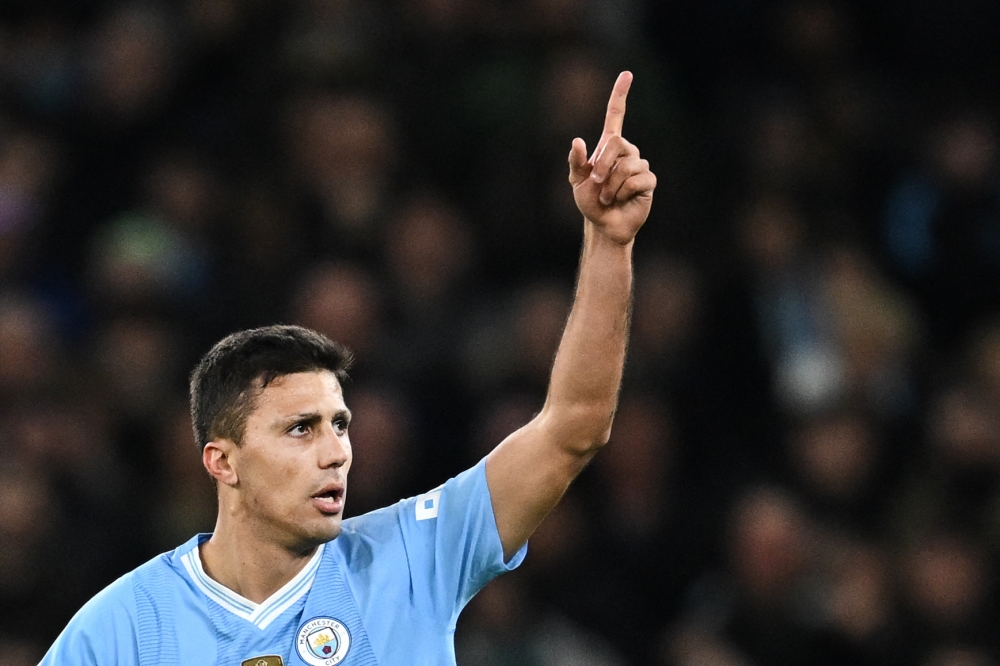
LONDON, June 2 — Spain midfielder Rodri Hernandez said he is focused on the World Cup and will ‌only address his future at Manchester City after the tournament.

The 2024 Ballon d’Or winner is entering the final year of his contract with the ‌Premier League club and has been linked with a move to Real Madrid.

“Well, I’m trying not to make too much of it, but it is part of my job, especially when a player has been nearing the end of his contract for some time - it’s only natural that names come up,” the 29-year-old told reporters yesterday. 

“But anyway, I’m very calm, I know exactly where I stand, and yes probably if there hadn’t ‌been a World Cup, I might be in a different situation ⁠now but with a World ⁠Cup on the horizon, my responsibility is ⁠to stay focused.

“We’re here to ⁠talk about the ⁠World Cup and everything that concerns my future, I’ll wait until the end of the World Cup.”

European champions Spain will face ⁠Cape Verde, Saudi Arabia and Uruguay in Group H at the June 11 to July 19 tournament in North America.

Rodri said he had urged his Spain teammates to follow tennis great Rafa Nadal’s example after watching a documentary about the 22-times Grand ⁠Slam champion.

“What I told them is that we need to try to play without the ball like a small team. ⁠With that mindset of not thinking you’re the best,” he added.

“I ⁠was just ⁠watching the documentary on Nadal and he was always talking about that - always one more ball, one more effort. And that’s what the ‌great champions do and, above all, bringing out all the talent this team has, which is very big.”


  • ✇Latin America Reports
  • International calls for US-Cuba de-escalation grow amid latest threats Raphael McMahon
    The leaders of Mexico, Spain and Brazil called for Cuba’s sovereignty to be respected as it continues to face threats by Washington. The joint statement came during a meeting of left-wing leaders in Spain and also vowed to send humanitarian aid to the crisis-ridden island. The plea comes as the President Donald Trump administration ratchets up punitive measures on the communist-run island in the hopes of forcing political regime change.  “We express our deep concern regarding the seriou
     

International calls for US-Cuba de-escalation grow amid latest threats

20 April 2026 at 16:35

The leaders of Mexico, Spain and Brazil called for Cuba’s sovereignty to be respected as it continues to face threats by Washington.

The joint statement came during a meeting of left-wing leaders in Spain and also vowed to send humanitarian aid to the crisis-ridden island.

The plea comes as the President Donald Trump administration ratchets up punitive measures on the communist-run island in the hopes of forcing political regime change. 

“We express our deep concern regarding the serious humanitarian crisis the Cuban people faces … [and] we reiterate the need to respect at all times international law and the principles of territorial integrity, sovereign equality and the peaceful settlement of disputes”, said Mexican President Claudia Sheinbaum, Spanish Prime Minister Pedro Sánchez and Brazilian President Luiz Inácio Lula Da Silva in a joint statement on Saturday. 

Although the U.S. was not directly mentioned, the plea appears to be aimed at the White House as tensions rise between the two neighbors. Since news broke on Wednesday that the Pentagon is ramping up preparations for an operation against Cuba, a U.S. Navy surveillance drone has been observed flying over Cuba’s coast for several hours and Trump has promised that “a new dawn for Cuba” is imminent. 

Hope for a peaceful solution, however, remains. Havana and Washington are currently engaged in official diplomatic negotiations; a U.S. government delegation visited Havana earlier in April, marking the first visit of an official U.S. government plane since former President Barack Obama’s trip in 2016.

The U.S. delegation reportedly informed their Cuban counterparts that they saw an end to political repression, the liberation of high-profile political prisoners and economic liberalization as prerequisites for easing the longstanding economic and commercial embargo on the island. 

These sanctions, which have historically been condemned by the vast majority of the international community at the United Nations General Assembly, have caused far-reaching material shortages on the island and hindered the island’s ability to engage in international trade and commerce, according to UN experts. 

Recently, the U.S. intensified sanctions, declaring Cuba a national security threat and blockading the vast majority of oil destined for the island, which is now facing an acute humanitarian and economic crisis as a result of the intensified measures.

Sheinbaum, Lula and Sánchez’s promise of support represents the latest in a series of international offers and shipments of aid. Sheinbaum’s own government has already sent humanitarian shipments to the island, and the Chinese, Chilean and Canadian administrations have also sent or pledged to send aid to the island. 

Furthermore, a civilian humanitarian aid mission to Cuba, which brought food, medicine and solar equipment to the island, was organized in March. 

Featured Image: Spanish Prime Minister Pedro Sánchez and Brazilian President Luiz Inácio Lula Da Silva during the former’s visit to Brazil in 2024.

Image Credit: Ricardo Stuckert via Flickr

License: Creative Commons Licenses

The post International calls for US-Cuba de-escalation grow amid latest threats appeared first on Latin America Reports.

  • ✇Latin America Reports
  • ‘The return home begins today!’: María Corina Machado rallies thousands in Madrid Catherine Ellis
    Madrid, Spain – Venezuela’s opposition leader, María Corina Machado, drew thousands of supporters to Madrid’s Puerta del Sol on Saturday, telling them that they would soon be able to return to Venezuela.“Today we begin our return home,” she said to raucous applause from the crowd.Machado appeared on a balcony draped with the Spanish and Venezuelan flags overlooking the square and flanked by members of her team. It was a moment that felt closer to a presidential address than a political rally,
     

‘The return home begins today!’: María Corina Machado rallies thousands in Madrid

20 April 2026 at 17:34

Madrid, Spain – Venezuela’s opposition leader, María Corina Machado, drew thousands of supporters to Madrid’s Puerta del Sol on Saturday, telling them that they would soon be able to return to Venezuela.

“Today we begin our return home,” she said to raucous applause from the crowd.

Machado appeared on a balcony draped with the Spanish and Venezuelan flags overlooking the square and flanked by members of her team.

It was a moment that felt closer to a presidential address than a political rally, followed by chants calling for elections to vote her in and cries of “president, president, president” filling the square at various points throughout her speech.

The Madrid rally marks an attempt by Machado to build momentum, amid uncertainty over the opposition’s next steps and anticipation about when she will go back to Venezuela.

Machado won the opposition’s 2023 primary by a landslide but was barred from running in the 2024 presidential election. Edmundo Gonzalez ran in her place and is widely believed to have won. 

But since the capture of Nicolas Maduro by U.S. forces on January 3, many Venezuelans want fresh elections and do consider Delcy Rodriguez, now interim president, to represent them.

A few minutes after Machado’s balcony appearance, she stepped onto a stage in her signature white top and jeans — the same look she wore during dozens of rallies in Venezuela ahead of the 2024 elections — as well as rosary beads around her neck, gifted by supporters.

Machado, who won the Nobel Peace Prize in 2025, lifted small children onto the stage to hug them, as various gifts were passed through the crowd towards the stage — pictures, flowers, and more rosary beads.

She said that on January 3 a huge hole opened up, and that force and energy had begun to flow: “Now, having lived through what we’ve lived through, having endured the worst repression and persecution, having overcome fear, we are now unstoppable — unstoppable.”

While she criticized interim president of Venezuela, Rodriguez, she praised the U.S. president.

“There is one leader in the world, one head of state, who has risked the lives of his country’s citizens for the freedom of Venezuela. And that is Donald Trump,” Machado said, referring to the U.S. capture of Maduro in January.

Machado also paid tribute to the city of Madrid, which she said had welcomed and integrated Venezuelans at their time of need — but said soon they would be able to go back to Venezuela.

“Today the whole world has its eyes on this Plaza del Sol, because it knows that here today we are beginning the return home,” she shouted. “Pack your bags, because we’re going back.”

Spain hosts one of the largest Venezuelan communities in Europe, making it a key base of support for the opposition abroad.

Many Venezuelans at the gathering said that they did want to return home.

“We were nurses, eighteen years of service, and we had to leave home, we had to leave work, we had to leave everything,” a woman called Nazareth told Latin America Reports. She had left with her friend in September 2025 because of persecution by authorities in Venezuela. 

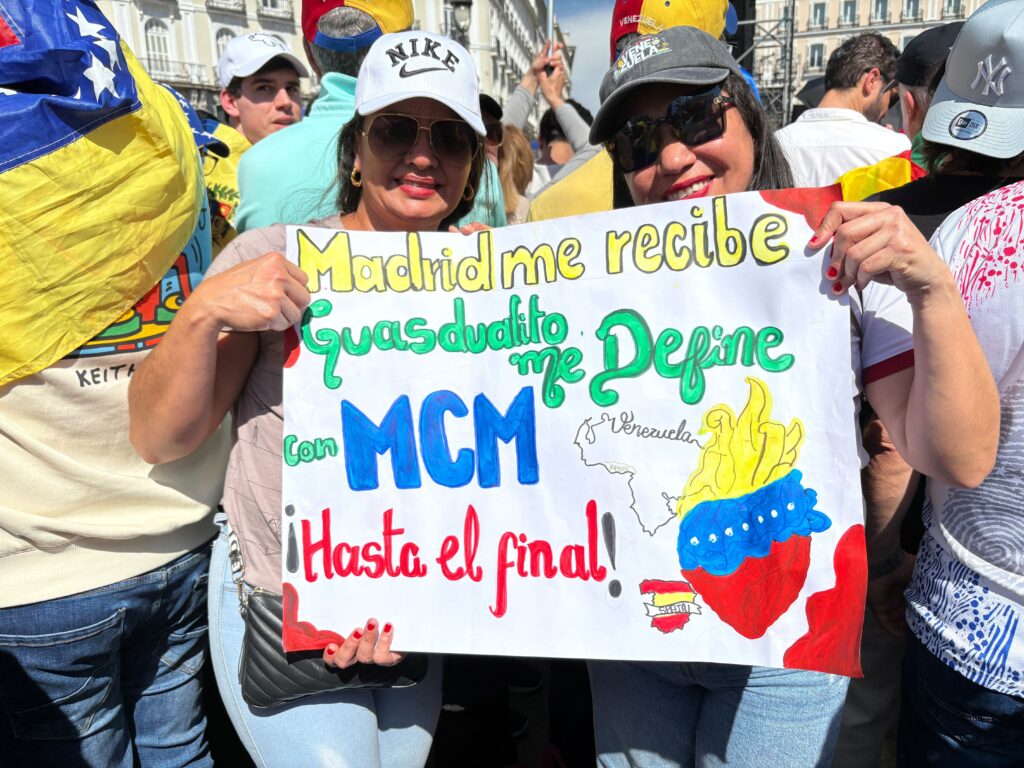
Nazareth, pictured right, holds a sign reading: “Madrid receives me, Guasdualito (a town in Venezuela) defines me. With MCM until the end!” Image credit: Catherine Ellis

But she said she wants to  go back as soon as it is safe enough — and believes Machado can make that happen: “I’m with María Corina to the very end and beyond. She is a warrior woman, a woman who represents all of us.”

Others who had lived in Spain for years said Madrid was now their home, although some were beginning to consider a return. Liliana Urbina came to Spain 20 ago, when Hugo Chávez was still in power. But she said the changes since January 3 and Machado’s leadership now had her considering a permanent return to her home country.

“When I arrived here, I forgot about the idea of returning, but María Corina has changed that. She has shown the world that we can rebuild the country, that we are united, and that we will move forward,” she told Latin America Reports. “So it is feasible, and it is possible, and it is a dream that we too now have — of returning.”

The event was at times more like a concert than a rally, with musical performances from well-known Venezuelan performers such as Carlos Baute and opera singer Víctor García Sierra.

Many Venezuelans had arrived as early as 2 P.M. to secure their spots, bringing supplies as well as musical instruments to play for others around them. Others dressed up as President Trump or Nicolas Maduro, and posed for photos with the crowd.

MCM supporters dressed as Donald Trump and Nicolás Maduro. Image credit: Catherine Ellis.

As the day progressed and the crowd increased, several people fainted due to the heat and lack of shade.

Earlier in the day, Machado had attended a second symbolic ceremony during her visit. This time, she was awarded the Medal of the Community of Madrid. Edmundo González also received the honour but was unable to accept it in person as he is currently in hospital. On Friday she received the “llave de Oro” — golden key — an honour usually reserved for heads of state.

On Friday and Saturday, María Corina met with the country’s two main opposition leaders — Alberto Núñez Feijóo of the PP and Santiago Abascal of Vox. But she did not meet with Prime Minister Pedro Sánchez, who was hosting a conference of left-wing leaders — including Petro, Lula and Sheinbaum — in Barcelona. However, Sánchez said he had offered to meet her.

María Corina will visit the Spanish Senate on Monday.

Featured image description: Maria Corina Machado spoke to a crowd of supporters on Saturday, April 18. Featured image credit: Catherine Ellis.

The post ‘The return home begins today!’: María Corina Machado rallies thousands in Madrid appeared first on Latin America Reports.

  • ✇Colossal
  • We Spent a Week Quarantined on an Uninhabited Island with 80 Artists Grace Ebert
    A muscular Englishman in a khaki kilt and black beret hops atop the edge of an old well clad in traditional Spanish tile, his sleeves rolled up to his elbows in what can only be called an act of bravery.  High winds and rain pelt a group of visitors from all directions, and yet, this charismatic performer stands tall above the cobblestone to announce that he’s been living on this vacant island for nearly two centuries. He’s here to give us a tour. “This has been my home for 174 years,” the
     

We Spent a Week Quarantined on an Uninhabited Island with 80 Artists

4 May 2026 at 19:13
We Spent a Week Quarantined on an Uninhabited Island with 80 Artists

A muscular Englishman in a khaki kilt and black beret hops atop the edge of an old well clad in traditional Spanish tile, his sleeves rolled up to his elbows in what can only be called an act of bravery.  High winds and rain pelt a group of visitors from all directions, and yet, this charismatic performer stands tall above the cobblestone to announce that he’s been living on this vacant island for nearly two centuries. He’s here to give us a tour.

“This has been my home for 174 years,” the man says, introducing himself as Captain Horatio Hollingwood. “I arrived in command of a well-known British merchant ship, responsible for transporting goods of every sort. But alongside grain, wool, and oil, there travelled with us certain rather unwelcome companions—terrible diseases. We stopped here for a sanitary inspection. And from here, I never left.”

the opening to an 18th-century lazaretto
Photo by Christopher Jobson

As our group endures the Balearic Islands’ mercurial spring weather and shivers among towering stone walls and outbuildings, this exuberant actor introduces us to the Lazaretto of Mahón, an 18th-century fortress and infirmary that once housed merchants, shipping crews, and any travelers seeking entry to Spain. His ability to rouse a group of studio artists into the turbulent outdoors is a fitting introduction to the activities of the week ahead. Alongside nearly 80 others from Slovakia to Argentina, Washington D.C. to Melbourne, we’re here on this small, uninhabited island for Quarantine, a residency-style program conceived by artist Carles Gomila, who is determined to help artists break free from creative blocks while giving them permission to fail, discover, iterate, and hopefully, discover something new about themselves. 

For seven days, participants follow a rigorous schedule, arriving by boat on the island by 8:30 a.m. and leaving no earlier than 9:30 p.m. Their days are filled with talks, workshops, and meetings with invited artists who serve as mentors, the schedule of which isn’t shared in advance. Phones, laptops, and any device with an internet connection are banned, and there’s no option to retreat to a hotel bed or wander off for an afternoon. Such a demanding and purposefully opaque schedule invites artists to settle into discomfort, abandon expectations, and confront the insecurities and anxieties capable of stifling their best work. The theme of this edition is Tears in Rain, which takes its name from the iconic monologue at the end of Ridley Scott’s Blade Runner.

“What I wish now is to share with you the story of the people who lived here over the past centuries,” the actor continues. “Your quarantine, unlike theirs, is not compulsory. You have chosen to be here, to experience something meaningful in the way you live your lives and understand your creative process. This is a space and a time for transformation. Some passed here from life into death. Yours is a passage from blockage into freedom. Follow me.”

Getting to the island is no small feat—our journey from Chicago took two days and required three flights, a car trip, a 15-minute walk, and a short boat ride—and there’s no open, public access to the lazaretto. Given its remote location and secret programming, Quarantine asks interested artists to apply on a true leap of faith, one that many describe as the first moment they had to relinquish control and believe the bold claims the program boasts. Testimonials include lofty statements about the organizers “minting a legion for the revolution” and how participants feel “like my insides have been blown out.” Some people even get the program’s tally logo tattooed, and many have returned for multiple visits.

two men draw each other
Photo by Christopher Jobson

If you’re thinking this sounds like a cult, you’re not alone. When Quarantine’s organizers invited us to observe the April 2026 edition, we were skeptical, and so were the friends and colleagues with whom we shared our plans. As it turns out, many of the participants had similar reservations, which we learned when we landed in Menorca and met an artist at baggage claim. (In keeping with the spirit of Quarantine and the idea that what happens on the island stays on the island, we’re only sharing information about participants anonymously.) He was coming from Los Angeles and first encountered the program through one of the session’s mentors, Yuko Shimizu, whom he’d long admired and previously collaborated with. Lured by the opportunity to untether from daily life and connect with professional artists, he hoped to reinvigorate his practice and figure out how to take the next step, something former Quarantine participants lauded and that he hoped he could access, too. Was it a cult, though? None of us was sure.

From the 18th to 20th century, the Spanish government required all travelers, no matter their origin, to sequester on the island for 40 days or if they fell ill, longer. These groups were cordoned off by their presumed and actual illnesses, and about five percent died during their stay, succumbing to infectious diseases like the Bubonic Plague and Yellow Fever. Today, the double-walled sanatorium is mid-restoration as the local government repairs crumbling limestone halls and terracotta walkways and trims back an abundance of thistles. Along with a handful of loquacious peacocks whose eerie calls echoed across the island, just a skeleton grounds crew and the occasional tour group occupy the island with any regularity.

Quarantine is one of two recurring events held on the lazaretto, with weeklong editions each April and October that are supported by the local government and local tourism organization, Fundació Foment del Turisme de Menorca. Nearly everything needed for the program must be loaded onto boats and carried to the island for every edition, and a local caterer packs food for 80 and traverses the harbor each lunch and dinner. Enormous musical instruments like the bilas—a rare, standing contraption of flat bells conceived by Russian Alexander Zhikharev—even make their way over for live, outdoor performances.

A sort of mystical bootcamp for artists, Quarantine is both intensely communal and unabashedly introspective. Gomila designs the workshop sessions, known as the “Art Lab,” to tap into as many emotions and responses as possible, often frustration, confusion, and eventually, clarity. Many incorporate music, and almost all center on life drawing, whether through self-portraiture or enthusiastic models who embrace the spirit of the project as much as the participants. They don costumes, hold sabres as props, and accessorize to an outlandish extent. Models are invited to share in the creative process, too, and as one tells us one evening over glasses of Cava, the program allows her to reconnect with the self she doesn’t always encounter in her life as an architect.

a group of people gather around a table filled with artwork
Photo by Christopher Jobson

Everyone we meet at Quarantine echoes this sentiment, whether they’re full-time artists or not. There’s a young father whose work at a video game design studio is forcing him to rely more and more on A.I. A fine art educator laments the corporatization of her position as a faculty member at a for-profit university. And countless others who work in tech, finance, government, design, and illustration have ventured to the Mediterranean to reclaim focus, hone their voice, and if they’re lucky, make something that excites them.

The accomplished group of mentors doesn’t hurt either. April’s edition included Shimizu, Martin Wittfooth, Mu Pan, Phil Hale, Yulia Bas, Sean Layh, and Adam Miller, while past sessions featured Miles Johnston, Jeremy Mann, and Nicolás Uribe, to name a few. Mentors each present a morning masterclass on a wide range of topics, from Wittfooth’s concept of art as a “spirit artifact” to Shimizu’s courage in changing careers after a decade in a corporate job. Layh shares his story of picking up his paintbrush for the first time in more than a decade to re-learn his abilities over two and a half years on a single canvas (last month he won an Archibald Prize). Participants also receive one-on-one sessions with three mentors, in which no topics are off limits. They can ask for guidance in developing a particular technique, although most choose to utilize their 45-minute sessions to chat about more personal problems they’ve both faced and connect about what it means to be an artist in today’s world. 

This equalizing ethos is the foundation of Quarantine. When participants complete an exercise, all work is displayed on a central table, and if they’d like, they can share something with the group. There’s no critique, no comparison, and no need to explain why they made the decisions they did. The focus instead is on the process, on seizing moments of low-risk spontaneity. Experimentation and abandoning patterns that no longer serve their creativity are encouraged, along with developing practices to work through frustrations and insecurities. The wide range of skills is liberating: many artists have worked full-time for more than a decade, while others are painting with oils for the very first time.

“What happens here is so psychological,” shares one participant from Argentina who heard about Quarantine by following Layh. “Because it’s all so mysterious, I was worried it was going to be cheesy, but I’ve cried three times this week.”

a person paints on an easel
Photo by Romas Tauras

On the final day, after participants have painted and sketched for dozens of hours, been subjected to creative exercises they hope to never encounter again and others they will gladly replicate at home, and let themselves be vulnerable in a way that rarely happens outside a therapist’s office, what seems to stand out is the camaraderie and an overwhelming sense of belonging. In comparison to the eager anxieties of the first day, the group has settled into a shared clarity, knowing not to fear mistakes and feeling a new sense of kinship among like-minded peers. They pair off to get coffee, encourage one another to try a strange technique, and make plans to meet up once they return home. We were told that WhatsApp group chats from previous editions continue to this day. A large contingent from a previous year also wants to return en masse. 

The last evening under a star-studded sky, unusually visible to us city dwellers, a fire pit appeared adjacent to the well that the Englishman jumped atop on day one. All 80 of us gathered around, and one mentor, Bas, kicked us off. In her hands were an old letter that once held significant weight in her life and a work on paper. She walked over to the fire and tossed both in, then asked everyone else to do the same. 

As the fire pit grew so full of paintings and drawings and sketches and notes that pieces spilled onto the cobblestone, the communal sense of catharsis and release was palpable. Artists danced hand in hand, cried, hugged, and stood solemnly watching their breakthroughs crumble into ash. The idea, of course, was that these material objects–these “spirit artifacts” in Wittfooth’s parlance–were just that: artifacts. Artworks made on the island were both irreplaceable and irrelevant, as the program had already built up a herd immunity to any sense of assuredness or control. What Quarantine offers instead is a shared pathology, one that focuses not on remedying the symptoms of creative blocks or failures but rather zeroes in on the underlying cause.

people gather around a fire to burn artwork
Photo by Christopher Jobson
people sit in chairs in a hall
Photo by Romas Tauras
a group gathers outdoors by a half wall
Photo by Romas Tauras

Do stories and artists like this matter to you? Become a Colossal Member today and support independent arts publishing for as little as $7 per month. The article We Spent a Week Quarantined on an Uninhabited Island with 80 Artists appeared first on Colossal.

Cannes Hit ‘La Bola Negra’ Posts First Clip As Elástica Films Sets October 2026 Release In Spain

22 May 2026 at 12:17
EXCLUSIVE: Spanish distributor Elástica Films has set an October 2026 release for Javier Ambrossi and Javier Calvo’s Cannes smash La Bola Negra and unveiled a first clip. News of the release date comes just hours after the film’s triumphant Cannes competition premiere, where the feature received a 22-minute ovation in the presence of the directors and […]

  • ✇Latin America Reports
  • King Felipe VI leads Spain as latest EU country to acknowledge colonial abuses  Daniel Goldstraw
    King Felipe VI of Spain spoke publicly about the country’s colonial past upon his visit to Madrid’s Museum of Archeology in mid-March, in what has been seen as a landmark moment of recognition from the Spanish Crown.  The King attended an exhibition at the Museum titled “Half of the World: Women in the Indigenous Mexico”, alongside Mexican ambassador to Spain Quirino Ordaz Coppel.  During the visit, the royal head acknowledged “abuses” and “ethical controversies” that took place during the
     

King Felipe VI leads Spain as latest EU country to acknowledge colonial abuses 

24 March 2026 at 20:56

King Felipe VI of Spain spoke publicly about the country’s colonial past upon his visit to Madrid’s Museum of Archeology in mid-March, in what has been seen as a landmark moment of recognition from the Spanish Crown. 

The King attended an exhibition at the Museum titled “Half of the World: Women in the Indigenous Mexico”, alongside Mexican ambassador to Spain Quirino Ordaz Coppel. 

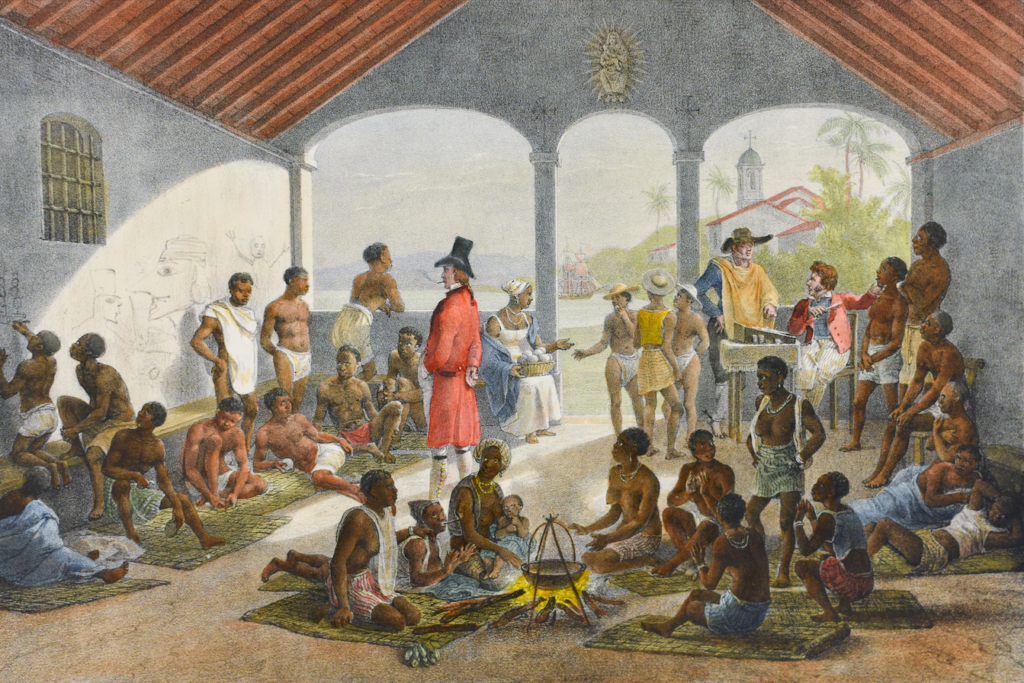
During the visit, the royal head acknowledged “abuses” and “ethical controversies” that took place during the 1500s as part of Spain’s conquest of the Aztec Empire – what is now Mexico – as well as its subsequent colonization of much of the rest of the Americas. 

This has since remained a strong point of contention across the political divide, both in Spain and the Americas. While some claimed that Spain’s conquest of the region was as a civilising mission, others point out how it entailed the deaths of as much as 80 or 90% of Indigenous populations in Central and Southern America; either directly through Spain’s wars of conquest, or through enslavement and diseases carried over by Europeans. 

If accurate, this represents the single largest-ever human mortality event in proportion to the global population at the time, second in absolute terms only to the death toll from World War II.

The Spanish Empire was one of the largest in the world at the time of its Americas conquests, and continued to rule over much of the region for the next three centuries – and was a great source of wealth and prestige for the monarchy.

Reopening old wounds

This history of colonialism has caused tension in recent years between Spain and Mexico particularly, with the Mexican government having repeatedly called for a formal apology from Spain. 

In 2019, then-President of Mexico Andrés Manuel López Obrador wrote to both the King of Spain and to the Pope, calling for an official and public recognition of historical abuses committed during the conquest. No such apology was forthcoming, however. Instead, the Spanish government stated that events which took place 500 years ago “cannot be judged by the light of contemporary ideas.”

In response, Mexico’s current President Claudia Sheinbaum Pardo elected not to invite King Felipe to her inauguration in 2024, citing the Spanish Monarchy’s lack of any formal apology. This was met with anger by the Spanish government, with Spanish Prime Minister Pedro Sánchez describing the act as “unacceptable.” 

Spain has since made attempts at redressing this, with some acknowledgements now being given of its imperial past. 

Late last year, Spanish Foreign Minister José Manuel Albares publicly recognised the “pain and injustice” experienced by Mexico’s Indigenous population, during a visit to the same exhibition in Madrid.

“The shared history between Spain and Mexico, like all human history, has its light and shadow,” Albares stated. “There was injustice, and it is only right to acknowledge and regret it. That is part of our shared history; we cannot deny it or forget it.”

This line was echoed by King Felipe in his visit earlier this month – a rare acknowledgement from the Crown. 

Whilst the King maintained that past monarchs had acted with “an intention to protect,” he accepted that this may not have been fulfilled “as intended,” and that there had also been “much, much abuse.”

“There are aspects of our past that, when examined through the lens of contemporary values, cannot make us feel proud,” the King admitted. 

“However, it is essential to evaluate these events within their historical context, utilising an objective and rigorous analysis rather than excessive moral presentism.”

Too little, too late?

How far these statements will go towards repairing relations between Spain and Mexico remains to be seen. 

The comments made both by King Felipe and Minister Albares have been welcomed by Mexico, with Sheinbaum acknowledging the “gesture of rapprochement” made by the monarch. She had previously expressed her congratulations to Albares on what she described as “this first step.”

“Forgiveness elevates nations,” Sheinbaum had stated previously. “It is not humiliating, on the contrary. Recognizing history, acknowledging grievances, asking for forgiveness – or expressing regret – and embracing it as part of history elevates governments.”

Nevertheless, Felipe’s statement still falls short of a formal apology for Spain’s actions during its imperial past. “It’s not everything we would have liked,” Sheinbaum stated in response to the King’s speech, “but it’s a step.” 

“One could say that it is not everything we would have wanted, but it is a gesture of reconciliation by the King in terms of what we were talking about: an acknowledgement of excesses, exterminations that happened during the Spaniards’ arrival,” the Mexican president added.

“It won’t be enough,” maintained historian Humberto Beck of the Colegio de México university, who claims it will be seen merely “as a substitute for an official apology.” 

“Making relations between the two countries contingent on this apology has been a mistake by the Mexican government that distracts from the deeper issues, which are reflection, a continuous process of memory and recognition on the part of both societies,” he told newspaper El Pais

A wider pattern

This avoidance of any apology from Spain largely mirrors how most nations have operated when faced with similar demands. 

Earlier this month in the UK, for example, dozens of British MPs likewise called for a formal apology from the government over its past involvement in occupied Palestine – from 1918 to 1948.  

The Britain Owes Palestine campaign group had previously submitted a 400-page petition demanding an apology over alleged war crimes committed by Britain at the time. Liberal Democrat MP Layla Moran, the first British MP of Palestinian descent, stated

“The consequences of those actions have profoundly shaped the conflict we witness today, yet successive governments have refused to acknowledge this record or offer a formal apology. If Britain is serious about promoting peace in Gaza today, it must begin by confronting its historical role, recognising the harm caused, and taking meaningful responsibility for it.” 

No apology from the UK government has as yet been forthcoming, with its Foreign Office stating it does not routinely comment on such petitions. 

Whilst countries such as Australia have, since 1998, held an annual ‘National Sorry Day,’ acknowledging abuses committed against Aboriginal people, these remain comparatively rare.

Such apologies are usually only made where countries feel compelled to do so – in cases where there would be a stronger political backlash if they did not, according to Boston University professor Thomas Berger.

“Apologies are not cheap. It is not simply having your leader say ‘I’m sorry’; it means a whole set of policies, including compensation, educational policies, commemoration policies, how to remember the past in museums, at cultural sites, and through holidays and events,” he argued

Generally, such apologies have tended to be made only in cases where this is a significant movement within the country itself calling for one – as in the case of the Aborigines in Australia – or where it has been crucial for nations to reestablish normal, working relationships with the other countries involved. 

This was the case for Germany after WWII, Berger noted, adding that it “was very much under pressure, economically, politically, geostrategically, to be sensitive to views of victims in democratic countries in particular – France, Holland, Italy, and Israel.” 

The same arguably was true for Italy when it issued an apology to Libya in 2008, whilst it was in the process of signing a key agreement with the Gaddafi regime over trade and migration. 

The UK similarly extended an apology to Ireland for the Great Famine in the run up to the Good Friday Agreement, even as it ignored similar requests for an apology from South Africa.

Contested legacies

More often than not, most governments will seek simply to issue statements of sorrow or regret rather than outright apologies in order to avoid further questions around issues such as reparations, as well as political backlash.

Mixed reactions to the Spanish King’s statement exemplify as much. While some on the left have welcomed the King’s comments – with Inclusion Minister Elma Saiz Delgado backing the King’s words – others on the right have expressed anger – particularly those who continue to defend Spain’s colonial legacy. 

Alberto Núñez Feijóo, leader of the conservative People’s Party (PP), stated that “bringing under scrutiny in the 21st century things that happened in the 15th century is crazy.” 

He went on to add that Spaniards should take pride in their history, emphasizing the positives of Empire – as well as the negatives. 

“The arrival of Spain in America led to an exceptional linguistic and cultural community. Any Spanish action during the conquest can be compared favourably to any other action by any other empire of that period.”

The far-right VOX party has gone even further in defending Spain’s actions, hailing the conquest as “the greatest work of evangelization and civilization in universal history.” 

Vox MEP Hermann Tertsch expressed his astonishment at the King for siding with those “who only seek to damage and discredit Spanish history.”

This was emphasized by British historian Felipe Fernández-Armesto, professor at the University of Notre Dame

“I’m happy to see that the King has emphatically and clearly not apologised,” Fernández-Armesto told EU Reports

“It’s meaningless to issue apologies for matters beyond one’s own responsibilities. When popes or politicians do it, you can be sure they’re concealing misdeeds of their own. The King has said that moral judgements about the past must be free of presentism: that is true, and one should not blame people in the past for being themselves or for conforming to the standards of their days.” 

“There has never been an abuse-free polity. Spaniards in general and Spain as a whole have every reason to be proud of the period when much of the Americas formed parts of the Spanish monarchy,” the scholar added.

“I don’t hear Madame Sheinbaum apologising for the massacre of Indigenous people in modern, independent Mexico. The whole enterprise of a global monarchy such as Spain’s was scarred with failure: that’s a matter for regret, but not for redress, apologues, but no apologies.”

Featured image: S.M. el Rey ha clausurado el X Congreso Iberoamericano de Periodismo
Source: Casa de América via Flickr
Creative Commons Licenses

This article was originally published by Daniel Goldstraw on EU Reports and was re-published with permission.

The post King Felipe VI leads Spain as latest EU country to acknowledge colonial abuses  appeared first on Latin America Reports.

  • ✇TheHill - Just In
  • Flight returns to Newark over apparent passenger joke Ashleigh Fields
    A flight bound for Spain from New Jersey returned to Newark Liberty International Airport after the name of a passenger's Bluetooth device raised security concerns.  Officials did not reveal the name of the device but did note it was a “certain four-letter word” and was “compromising” the safety of the flight headed to Palma de...
     

Flight returns to Newark over apparent passenger joke

1 June 2026 at 13:46
A flight bound for Spain from New Jersey returned to Newark Liberty International Airport after the name of a passenger's Bluetooth device raised security concerns.  Officials did not reveal the name of the device but did note it was a “certain four-letter word” and was “compromising” the safety of the flight headed to Palma de...

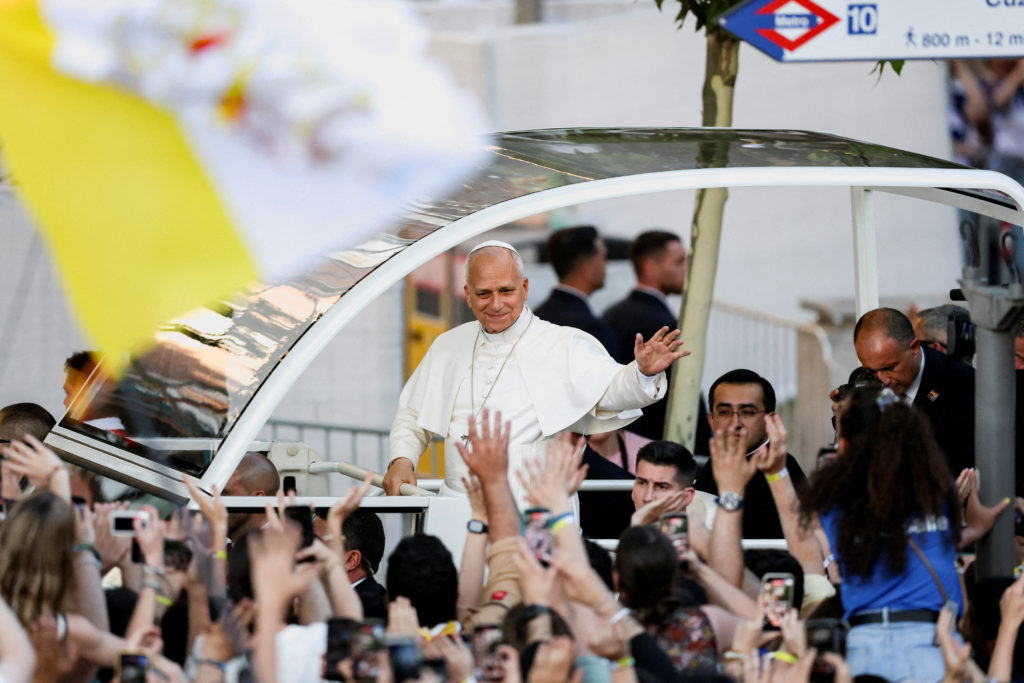
Pope Leo XIV warns against 'fanning the flames of polarization' on first papal visit to Spain in 15 years

Pope Leo XIV urged Spaniards on Saturday to stop "fanning the flames of polarization" as he arrived in Spain at a moment of political turmoil for the Socialist-led government and a credibility crisis for the Catholic Church.

❌
Subscriptions