Normal view

  • ✇AllBusiness.com
  • Top 6 Secure Team Chat Apps to Improve Work Communication: A Complete Guide Rebecca Lazar
    Post sponsored by ZenzapIf you’ve ever tried to track down a decision buried in a message thread or remember where a task was mentioned, you’ve probably seen how messy team communication can get. When conversations are scattered across emails, texts, and different apps, updates get missed, and company information can end up being stored on personal devices.This usually happens when teams rely on personal messaging apps that were never designed for team communication. You need a secure team chat
     

Top 6 Secure Team Chat Apps to Improve Work Communication: A Complete Guide

12 March 2026 at 18:33


Post sponsored by Zenzap

If you’ve ever tried to track down a decision buried in a message thread or remember where a task was mentioned, you’ve probably seen how messy team communication can get. When conversations are scattered across emails, texts, and different apps, updates get missed, and company information can end up being stored on personal devices.

This usually happens when teams rely on personal messaging apps that were never designed for team communication. You need a secure team chat app that keeps conversations organized and gives you clear control over who can see and do what.

6 Secure Team Chat Apps to Improve Team Communication

Below are six secure team chat apps that help improve workplace communication, along with a clear breakdown of who each is built for and what to take into consideration when choosing.

1. Zenzap: A Secure Team Chat App to Improve Work Communication

Zenzap is one of the best team chat apps for businesses that want strong security, organized team communication, and better team accountability.

Zenzap is intuitive and easy to use. Anyone can start using it immediately. At the same time, it gives you all the professional features and admin control your business needs.

Why Zenzap Stands Out

Zenzap was built to close the gap between consumer messaging apps that lack business control and enterprise team communication apps that can feel overwhelming for non-technical teams.

You get:

  • One-click offboarding so you can instantly remove access when someone leaves
  • Secure cloud storage, with data stored in the cloud and not on employee devices
  • Full admin oversight
  • Role-based permissions so you can control exactly who can see and do what
  • Audit logs and activity tracking
  • Built-in accountability so you can turn messages into tasks
  • A mobile-first experience that makes daily team communication more convenient for frontline workers
  • Compliance with industry-standard regulations

Zenzap is easy to roll out because it is intuitive and familiar, so teams can start using it with little to no training. You can also import existing chats and add the whole team easily, which helps make setup faster across multiple locations and teams.

Why It Works Best

Zenzap gives you a secure and practical way to manage team communication. It supports daily team communication while making it easier to stay organized, keep information visible, and maintain control as your business grows.

Zenzap delivers:

  • Secure, professional features without complexity
  • Affordable, cost-effective pricing
  • A mobile-first experience
  • Clear visibility and control so nothing falls through the cracks

Zenzap is a work chat app built for businesses that need clarity and control in their internal communication.

2. Slack: Built for Technical Teams

Slack is a well-known team communication app that’s built for highly technical teams.

Strengths

  • Complex workflows
  • Custom automations

What to Keep in Mind

Slack can work well if your team needs custom automations and spends much of the day at a desktop. However, it can often feel too complex or overwhelming for non-technical teams.

Cost is another thing to watch as your team grows. And for frontline teams, it may also be harder to adopt if the app feels too complex for everyday use.

3. Microsoft Teams: For Microsoft-Based Teams

Microsoft Teams is a team communication app frequently chosen by companies that already operate within the Microsoft 365 ecosystem.

Strengths

  • Connects natively with Microsoft 365 tools
  • Built-in video conferencing
  • Included in Microsoft 365

What to Keep in Mind

Teams is an all-in-one corporate tool that can feel slow and too formal for quick team communication. Its interface is often described as clunky and confusing, especially on mobile, which can also make adoption harder for some teams.

4. Google Chat: Simple and Convenient Chat App

Google Chat is a messaging app built directly into Google Workspace, making it convenient for businesses already using Google tools.

Strengths

  • Easy access inside Gmail
  • Familiar interface
  • Lightweight messaging

What to Keep in Mind

Google Chat was designed for simple, direct messaging and may not provide everything you need to manage internal communication in a more organized way.

5. Discord: Community-Focused Communication

Discord is a social communication app that was built for gaming communities and social groups.

Strengths

  • Conversational and informal
  • Drop-in voice channels
  • Community engagement features

What to Keep in Mind

Discord was originally designed for social communities, so it may not offer the professional security, admin controls, or focused environment that a business needs. It can also feel chaotic for work communication.

6. Twist: Async-Focused Messaging

Twist is a team communication app that’s designed around asynchronous team communication. It organizes discussions into threads to reduce noise.

Strengths

  • Thread-based setup
  • Reduces real-time interruptions
  • Suitable for distributed teams

What to Keep in Mind

Twist is optimized for slower, async-first environments. It is less suited for fast-paced operational teams that rely on real-time coordination.

It also has more limited capabilities, rarely gets new features, and has basic search functionality.

What Makes a Secure Work Chat App Truly Secure

Secure team communication means having clear control over who can access conversations, how data is stored, and visibility across the workspace. A secure work chat app should help you manage all of that easily.

Here is what to look for:

Centralized Admin Control

A secure team chat app should let you:

  • Control exactly who can see and do what
  • Set role-based permissions
  • Monitor workspace activity
  • Access downloadable audit logs

Without that level of control, your security depends on individual behavior rather than company policy.

One-Click Offboarding

When someone leaves, you should be able to remove access immediately.

Delays increase risk. The ability to instantly remove access prevents:

  • Former employees retaining sensitive information
  • Ex-employees poaching staff
  • Compliance risk

Secure Cloud Storage

Team communication should stay in secure cloud storage rather than being stored on personal devices.

This helps keep conversations, files, and updates in one secure place, makes information easier to manage, and reduces the risk of important company data being tied to individual employee devices.

Compliance Readiness

Compliance is an important part of choosing a team chat app, especially for businesses that handle sensitive employee, customer, or internal information.

Your team chat app should support the data protection and industry requirements that apply to your business, such as GDPR, HIPAA, and SOC 2.

Why Many Businesses Struggle with Internal Communication

The issue usually isn't that your teams have no way to message each other. It's that your communication app doesn't match the way your business actually works.

Personal messaging apps are easy to use, but they may not give you enough control for internal communication. Enterprise team communication apps may offer more control, but they can also require more training and feel less convenient for non-technical teams to use every day.

In many companies, that leaves people switching between apps, chasing updates across locations, and trying to remember where a task, file, or decision was last shared.

That's where communication starts to fall through the cracks, and why many businesses are looking into team chat apps that provide a balance of both professional features and ease of use.

Choosing the Right Team Communication Software

The best team communication software should help you keep team communication clear without making the work chat app harder to use than the work itself.

Look for a team communication app that gives you:

  • Clarity so everyone knows where information lives
  • Accountability so you can turn messages into tasks
  • Accessibility so that every employee actually uses it
  • Control so you decide who has access to what

You shouldn't have to choose between usability and compliance.

You shouldn't have to sacrifice professional control for convenience.

The right professional team chat app gives you both.

Final Thoughts

To improve internal communication, you need a secure team chat app because it makes team communication easier to manage, easier to keep organized, and easier to control across your business.

When conversations, updates, and files stay in one secure place, your team can communicate more clearly, important information is easier to find, and you’ll have better visibility into daily team communication.

About the Author

Post by:

Rebecca Lazar

Rebecca Lazar is the Product Marketing Manager at Zenzap. She specializes in helping companies become more efficient and communicate better, while ensuring data security and compliance.

Company: Zenzap

Website: https://www.zenzap.co
  • ✇Eos
  • Hundreds of Candidates Put the “Science” in “Political Science” Emily Gardner
    Research & Developments is a blog for brief updates that provide context for the flurry of news regarding law and policy changes that impact science and scientists today. More U.S. scientists are running for state and federal office in the U.S. midterm elections than ever before, Nature reports. Scientist-candidates represent an array of parties, although most profiled in Nature identify as Democrats. 314 Action, an organization focused on getting Democrats with scientific backgro
     

Hundreds of Candidates Put the “Science” in “Political Science”

17 April 2026 at 18:03
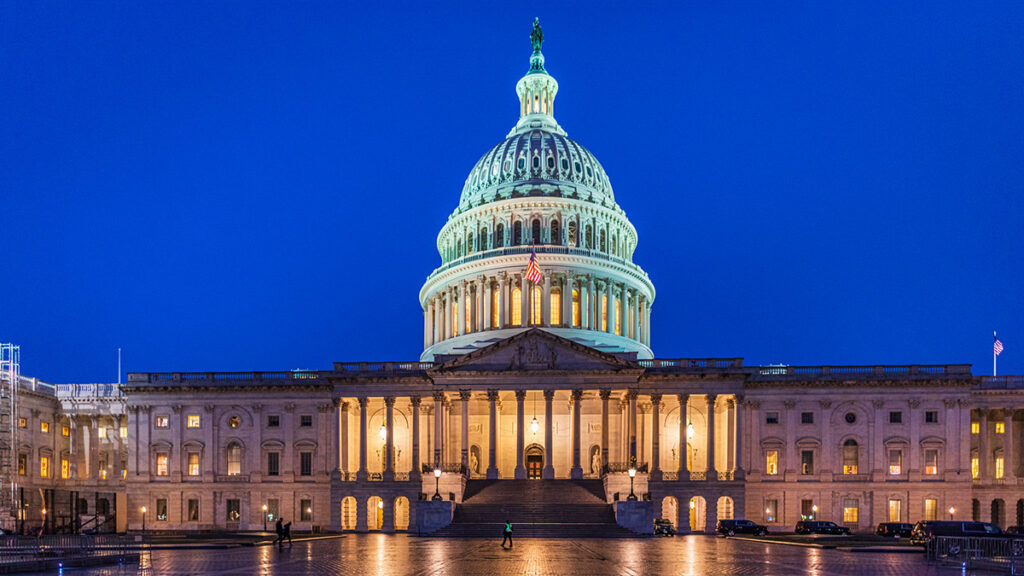
The U.S. capitol building seen at night.

Research & Developments is a blog for brief updates that provide context for the flurry of news regarding law and policy changes that impact science and scientists today.

More U.S. scientists are running for state and federal office in the U.S. midterm elections than ever before, Nature reports. Scientist-candidates represent an array of parties, although most profiled in Nature identify as Democrats.

314 Action, an organization focused on getting Democrats with scientific backgrounds elected to public office, offers financial support and training to candidates who apply for it. This year, the organization told Nature, they’ve received nearly three times as many applications as usual.

Sam Wang, a neuroscientist at Princeton and director of the Princeton Gerrymandering Project, is running to represent New Jersey’s 12th Congressional District.

“Usually, scientists stick with a specialized field,” Wang, a Democrat, wrote in an opinion for The Daily Princetonian. “However, I am deeply unhappy with how unequally power is divided in our society. So I have used my statistical abilities to level one part of democracy’s playing field: by repairing unfair elections.”

Why Now?

This year, Democratic candidates appear to be motivated by cuts to federal science programs, grants, and agencies, Nature reports, while Republican candidates like Jeff Wilson, who is running to represent the 13th district of Illinois, cite the pursuit of energy independence.  Third-party scientist-candidates have also run, and scientists are entering local and municipal arenas, too.

Specifically, with the recent repeal of the Endangerment Finding, loosened restrictions on pollution, and plans to break up the National Center for Atmospheric Research, some candidates and their supporters think science needs a more prominent position in public policy.

The rise in scientist candidates may also be part of an ongoing trend. More than 200 STEM professionals ran for office in the 2024 election, as Eos reported in October 2024.

“There are a lot of people who believe that science can help us live better lives and that science really does need to be front and center when we’re making public policy,” Jess Phoenix, a volcanologist, science advocate, and former Democratic candidate for the U.S. House of Representatives told Eos at the time.

In March, thousands of people attended Stand Up for Science rallies across the country to protest the misuse of science in federal policy and extensive staffing and funding cuts to scientific agencies. Since President Trump took office in 2025, more than 10,000 PhD-level scientists have left the federal workforce, Science reported in January.

Pew research data shows that public trust in scientists has declined since the COVID-19 pandemic, but it has seen modest improvements since 2023. The latest poll, released in January, found that 77% of adults in the United States have a great deal or a fair amount of confidence in scientists to act in the public’s best interest, compared to 73% in 2023. The percentage is consistently higher among Democrats than Republicans: 90% versus 65%, in 2026. In contrast, only 27% of respondents reported at least a fair amount of confidence in elected officials.

“The last thing I want [is] to become a politician,” wrote one Redditor in response to the Nature story. “But at this rate I may not have a choice if current politicians keep screwing it up.”

—Emily Gardner (@emfurd.bsky.social), Associate Editor

These updates are made possible through information from the scientific community. Do you have a story about how changes in law or policy are affecting scientists or research? Send us a tip at eos@agu.org.

A photo of a hand holding a copy of an issue of Eos appears in a circle over a field of blue along with the Eos logo and the following text: Support Eos’s mission to broadly share science news and research. Below the text is a darker blue button that reads “donate today.”
Text © 2026. AGU. CC BY-NC-ND 3.0
Except where otherwise noted, images are subject to copyright. Any reuse without express permission from the copyright owner is prohibited.
  • ✇Ontario Nature Blog
  • How To Talk to Loved Ones About the Environment You Love Erin Kobayashi
    During Ontario Nature’s Bill 5 Explained webinar, Carolynne Crawley – co-founder of Turtle Protectors and Founder of Msit No’kmaq – encouraged the audience to, “Engage in meaningful conversations with those you know in a good way… It’s really important we take that time to share. And if someone has a difference of opinion and supports these bills, inquire why. Ask them. Ask them questions.” Climate change, biodiversity loss and environmental policy are complex topics that can quickly become em
     

How To Talk to Loved Ones About the Environment You Love

12 February 2026 at 14:32

During Ontario Nature’s Bill 5 Explained webinar, Carolynne Crawley – co-founder of Turtle Protectors and Founder of Msit No’kmaq – encouraged the audience to, “Engage in meaningful conversations with those you know in a good way… It’s really important we take that time to share. And if someone has a difference of opinion and supports these bills, inquire why. Ask them. Ask them questions.”

Climate change, biodiversity loss and environmental policy are complex topics that can quickly become emotional or divisive. We asked four environmental communications experts from David Suzuki Foundation, Sierra Club Canada Foundation, Greenpeace Canada and Ontario Nature about how to talk to your loved ones about the environment you love.

Here’s what we learned:

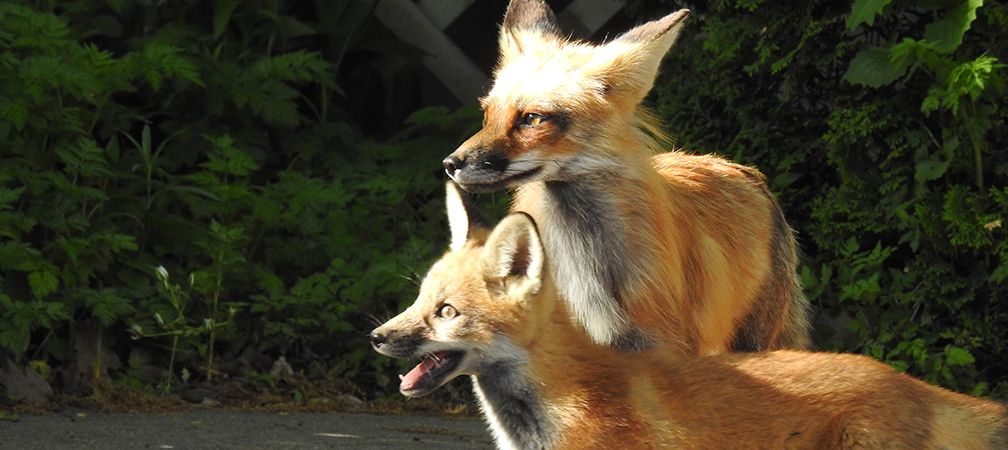
Red foxes, Mimico, mammals, canids, wildlife families
Red foxes, Mimico © Janice Guy

Start From Connection, Not Conflict

When talking about environmental issues, Becca Kram Dos Santos, Communications and Public Engagement Specialist at David Suzuki Foundation, recommends leading with what you share rather than what divides you.

“Instead of opening with the latest environmental headline or climate catastrophe, try to first connect with something you both care about like family, the cost of groceries and/or your favourite green space,” she says. This approach keeps the conservation grounded and human rather than abstract or argumentative.

Ontario Nature’s Communications Manager, Melina Damián, echoes this approach. “Focus on your shared values. Regardless of where people stand in the political spectrum, I bet everyone cares about community, family, safety and a better future,” she says. “When you have a conversation with someone with differing views, it could help to focus on what a shared future would look like – a world where everyone feels included and the wellbeing of people and nature go hand in hand.”

Connor Curtis, Director of Communications at Sierra Club Canada Foundation reinforces finding common ground. “Ask your family member what worries them most about climate change and then share what worries you – share emotions and listen to their concerns first so you know how they see things and so you establish that both of you do care on some level.”

Beaver family feeding on vegetation, three beavers in the wild, wetland builders, ecosystem enhancers, biodiversity
Beaver family feeding on vegetation © Janice Guy

Listen First, Lead with Empathy

“Simply listen,” Kram Dos Santos says. “When people feel heard, they’ll be more open to new information. From there, you can begin to gently connect the dots.”

Sien Van den broeke, Nature and Biodiversity Campaigner at Greenpeace Canada, echoes this sentiment. “Just understanding that people have different lived realities helps me meet them with empathy and care. Try to find out what their experience has been before asserting your own opinions,” she says. “Leaving space for everyone to share their thoughts, I find, helps a lot in learning where they come from and finding solutions together.”

Damián agrees that good conversations grow from focusing on shared values and deep, respectful listening. “Approach others from a place of empathy and curiosity. Or as one of my favourite authors, Edgar Villanueva from Decolonizing Wealth, would say: try to ‘listen in colour.” Damián explains that listening in colour is a superpower that can help bridge divisive views by encouraging good listening that includes being open, empathetic and holistic.

Red-breasted mergansers, female and ducklings, wildlife families, freshwater, biodiversity
Red-breasted mergansers © Peter Ferguson

Think Strategically and Make Room for Self-care

Curtis offers a practical point: you don’t have to debate everyone.

“Think strategically and talk to the right people,” they advise. “To do that you have to identify the people in the room who haven’t made their minds up yet or are truly persuadable and focus your energy and time on them.”

Rather than trying to persuade everyone at a gathering, Curtis suggests being strategic about where you invest your time and emotional effort. This is not about avoiding difficult conversations but about recognizing limits and choosing discussions where dialogue and understanding are more likely.

“My point being, don’t spend five hours talking with someone who either already agrees with you or will never agree with you. Spend one hour each talking to five different people who are on the fence or in the middle on an issue with the aim of bringing them closer to agreeing with environmental action.”

Common loon and juvenile loons, Algonquin Provincial Park, wetlands, biodiversity, Federation of Ontario Naturalists, wildlife families
Common loon and juvenile loons, Algonquin Provincial Park © Noah Cole

This approach isn’t just about being effective; it also helps keep conversations sustainable over time, so you don’t feel exhausted or discouraged by every disagreement.

It’s reminiscent of Crawley who stressed the importance of self-care during the Bill 5 Explained webinar. “When we are doing this work, whether you are First Nations, whether you are in an organization, or an individual community member, and you are trying to do whatever you can to stand up against these things… it’s really important for us to take care of ourselves in the process. So, we continue to fill up our cups, so we don’t burn out.”

  • ✇Eos
  • How to Study Coastal Evolution Saima May Sidik
    Source: Earth’s Future Coastal landscapes are constantly being reshaped by natural forces, and as climate change causes more frequent storms and sea level rise, that change will only intensify. Because these areas are densely populated with homes, tourist destinations, and industries, understanding how and where the coast will change is a pressing issue. However, reliable predictions that lead to actionable knowledge are rare. Lentz et al. describe the state of knowledge regarding coastal
     

How to Study Coastal Evolution

15 April 2026 at 13:00
A dense urban development is seen on a shoreline. Ominous clouds herald the onset of a storm, and waves lap against the shore.
Source: Earth’s Future

Coastal landscapes are constantly being reshaped by natural forces, and as climate change causes more frequent storms and sea level rise, that change will only intensify. Because these areas are densely populated with homes, tourist destinations, and industries, understanding how and where the coast will change is a pressing issue. However, reliable predictions that lead to actionable knowledge are rare.

Lentz et al. describe the state of knowledge regarding coastal evolution, highlight gaps in scientists’ understanding, and describe opportunities for integrating information from various models, data sources, and end users.

Current coastal evolution predictions are often focused on too specific a location and are therefore hard to generalize or analyze too large a region and therefore lack detail, the authors say. In addition, it’s challenging for researchers to link the effects of acute events, such as storms, with long-term trends like sea level rise.

Improving these simulations will likely require combining many different types of models, including physics-based numerical models, models based on empirical measurements, and statistical models that include machine learning. To fully understand potential changes, the authors note that it is also essential to consider both coastal processes and human actions.

The researchers recommend several ways to improve consistency and collaboration in the field of coastal change forecasting. First, standardizing approaches and outcomes would make it easier to produce national-scale predictions. Right now, the variety of tools used across different locations makes it difficult for scientists to compare results and communicate effectively. They also emphasize the need for using coordinated research approaches. Stronger transdisciplinary collaboration, accompanied by essential training and support, would also enable scientists to make better predictions, the researchers say.

Comparing predictions to real-world observations of coastal landscape change could also help untangle this multifaceted challenge. By studying how coastlines have already changed, researchers can validate models and choose those that are performing best. Such comparisons require datasets that adequately capture coastal landscape change across both time and space. Remote sensing data and the use of artificial intelligence (AI) for data processing may help provide these improved datasets, the researchers suggest.

Engaging end users during the project planning process is also helpful because only end users truly know what kind of information they need to adapt to landscape change. Knowing how to engage end users can be difficult for physical scientists, but various tools and specialized personnel exist who can help coordinate these interactions, the authors say. (Earth’s Future, https://doi.org/10.1029/2024EF005833, 2026)

—Saima May Sidik (@saimamay.bsky.social), Science Writer

The logo for the United Nations Sustainable Development Goal 13 is at left. To its right is the following text: The research reported here supports Sustainable Development Goal 13. AGU is committed to supporting the United Nations 2030 Agenda for Sustainable Development, which provides a shared blueprint for peace and prosperity for people and the planet, now and into the future.
A photo of a telescope array appears in a circle over a field of blue along with the Eos logo and the following text: Support Eos’s mission to broadly share science news and research. Below the text is a darker blue button that reads “donate today.”
Citation: Sidik, S. M. (2026), How to study coastal evolution, Eos, 107, https://doi.org/10.1029/2026EO260115. Published on 15 April 2026.
Text © 2026. AGU. CC BY-NC-ND 3.0
Except where otherwise noted, images are subject to copyright. Any reuse without express permission from the copyright owner is prohibited.
  • ✇Eos
  • The 50-Hour Livestream That Aims to #SaveAmericasForecasts Emily Gardner
    Research & Developments is a blog for brief updates that provide context for the flurry of news that impacts science and scientists today. This week, a parade of scientists will spend 50 hours straight speaking about the importance of weather and climate research in the United States. Now in its second year, the Weather & Climate Livestream will feature hundreds of scientists describing their work and why it matters. Last year’s event, which lasted 100 hours, saw more than 180
     

The 50-Hour Livestream That Aims to #SaveAmericasForecasts

1 June 2026 at 12:08
Illustration of a blue television with the words “The Weather & Climate Livestream” on the screen.

Research & Developments is a blog for brief updates that provide context for the flurry of news that impacts science and scientists today.

This week, a parade of scientists will spend 50 hours straight speaking about the importance of weather and climate research in the United States.

Now in its second year, the Weather & Climate Livestream will feature hundreds of scientists describing their work and why it matters. Last year’s event, which lasted 100 hours, saw more than 180,000 views and led to 30,000 phone calls to Congress to #SaveAmericasForecasts.

“The first aspect of it is just communicating science,” said Haley Crim, a climate literacy researcher at MIT and the founder of Climateliteracy.earth. “The second half of it is to inspire people to call their representatives in support of funding for climate and weather science, and science more broadly.”  

Last year, Crim was an “avid watcher” of the livestream, so she was happy to help when a friend asked her to pitch in for the second iteration. But it’s also more personal this year, as she has since lost her position as a contractor with NOAA.

“It has a whole new meaning now, this year,” she said.

The livestream begins at 4 p.m. ET on Monday, 1 June, ending at 6 p.m. ET on Wednesday, 3 June. Speakers include meteorologist Jeff Masters and climate scientists Adam Sobel of Columbia University and Kim Cobb of Brown University. AGU President Brandon Jones and president-elect Benjamin Zaitchik will also speak from 2 p.m. to 2:40 p.m. ET on Wednesday, 3 June.

Science Under Attack

Since Donald Trump began his second presidential term in 2025, federal science funding has faced extensive cuts, with more proposed. In June 2025, for instance, a budget document proposed eliminating NOAA’s Office of Oceanic and Atmospheric Research. In December 2025, the administration announced plans to break up the National Center for Atmospheric Research.

“This is really a full-frontal attack on climate science.”

“This is really a full-frontal attack on climate science,” said Andrew Williams, a climate scientist at Scripps Institution of Oceanography who is helping to organize the livestream and will speak during it.

He added that even though Congress pushed back against the most drastic cuts proposed last year, leaving key science program budgets mostly intact, many agencies haven’t yet seen the money they’ve been granted in the budget. For instance, according to the organization Grant Witness, 112 grants have been awarded in the NSF Directorate for Geosciences so far this year, compared with 948 in total in Fiscal Year (FY) 2025. The average total number of grants awarded between FY21 and FY24 was 1,418.

Both Crim and Williams said they hope the livestream provides the public with a better understanding of how climate and weather research affects us all, from allowing for timely evacuation warnings to affecting insurance rates. Williams offered the example of the Geophysical Fluid Dynamics Laboratory, a federally funded NOAA research lab that would be eliminated under the president’s proposed FY2027 budget.

“It builds the engine of the U.S. weather forecasting model, which is what tells you day to day what the weather is going to be,” he said. “We’ve all been able to take for granted that these things are happening because the U.S. has for decades, for 60 or 70 years, had strong and stable federal funding for weather and climate science.”

—Emily Gardner (@emfurd.bsky.social), Associate Editor

These updates are made possible through information from the scientific community. Do you have a story about science or scientists? Send us a tip at eos@agu.org.

A photo of a hand holding a copy of an issue of Eos appears in a circle over a field of blue along with the Eos logo and the following text: Support Eos’s mission to broadly share science news and research. Below the text is a darker blue button that reads “donate today.”
Text © 2026. AGU. CC BY-NC-ND 3.0
Except where otherwise noted, images are subject to copyright. Any reuse without express permission from the copyright owner is prohibited.
❌
Subscriptions