Reading view

The Fiery Tornadoes That Could Mop Up Oil Spills
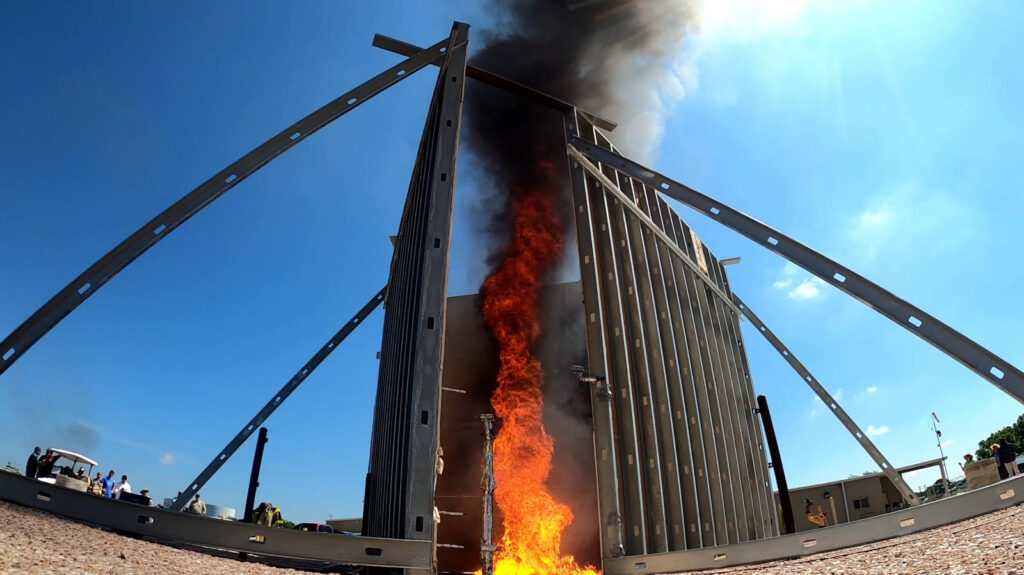
A fire whirl during May 2023 experiments at TEEX Brayton Fire Training Field

It’s been more than a decade since Michael Gollner and his colleagues first watched a viral YouTube video of a fire tornado fueled by Jim Beam bourbon.

A warehouse in Kentucky had just been struck by lightning, funneling almost a million gallons of the flammable spirit into a nearby retention pond. As the flames whipped across the surface of the water, however, something in the atmospheric stars aligned: The flames coalesced into a towering fire whirl, more commonly known as a fire tornado.

“We saw that and went, ‘Wow, that would be a neat application’” for cleaning up oil spills, said Gollner, a mechanical engineering professor at the University of California, Berkeley Fire Research Lab. “I wonder if we could do that on purpose.”

A French pyrotechnic show, Manda Lights, intentionally created this fire tornado. Credit: Ima Julien Cie Manda Lights/Wikimedia Commons, CC BY-SA 4.0

They could, in fact. As Gollner and his collaborators recently reported in Fuel, fire whirls offer the potential to clean up oil spills more quickly and cleanly than existing methods.

Oil spill responses depend on fast, immediate action. After just 24 hours, crude oil naturally absorbs water and begins to sink beneath the waves, wreaking havoc on marine life.

Alongside other major techniques, such as containment and recovery and chemical dispersal, in situ burning via “fire pools” has been adopted as an imperfect but unavoidable tool for addressing oil spills. Fire pools stop the spread of an oil spill but send clouds of smoke into the atmosphere and leave behind a layer of tar that sinks to the seafloor.

The European Space Agency’s Envisat satellite captured an image of the Deepwater Horizon oil spill 1 week after the accident. Credit: European Space Agency, CC BY-SA 3.0 IGO

Fire Away

If it’s far from shore, there are few methods other than basically corralling it up and burning it.”

Environmental agencies like the Bureau of Safety and Environmental Enforcement (BSEE) “were very excited about the concept of putting a change to what had been the standard for cleanup since the Exxon Valdez,” Gollner said. “There’s good knowledge, there’s an oil spill conference every year.…But if it’s far from shore, there are few methods other than basically corralling it up and burning it.”

In May 2023, Gollner, Texas A&M aerospace engineering professor Elaine Oran, and two dozen others congregated at the Texas A&M Engineering Extension Service’s (TEEX) Brayton Fire Training Field in collaboration with BSEE. The team erected a trio of 5-meter walls that would channel air flow above a central pool of water, about 3 meters square and 1.2 meters deep, topped by either a 15- or 40-millimeter layer of oil. The scale of the setup was a far cry from traditional fire whirl experiments, which take place mostly in laboratories.

“Everything’s bigger in Texas,” Gollner said.

The three walls, constructed with gaps in just the right places, caused air drawn in by the flames to spiral into a swirling, combusting tower. The intense whirlwinds effectively acted as a vortex furnace, increasing burning rates by 40% compared to traditional fire pools while also vaporizing many of the particles that would have polluted the air: Emissions of PM2.5, or particles smaller than 2.5 micrometers across that can be harmful to human health, were 40% lower in the fire whirl experiments than in pool fires.
A team built fire tornadoes like this one in a custom-built, three-walled chamber at the TEEX Brayton Fire Training Field. Credit: Wuquan Cui/Michael Gollner
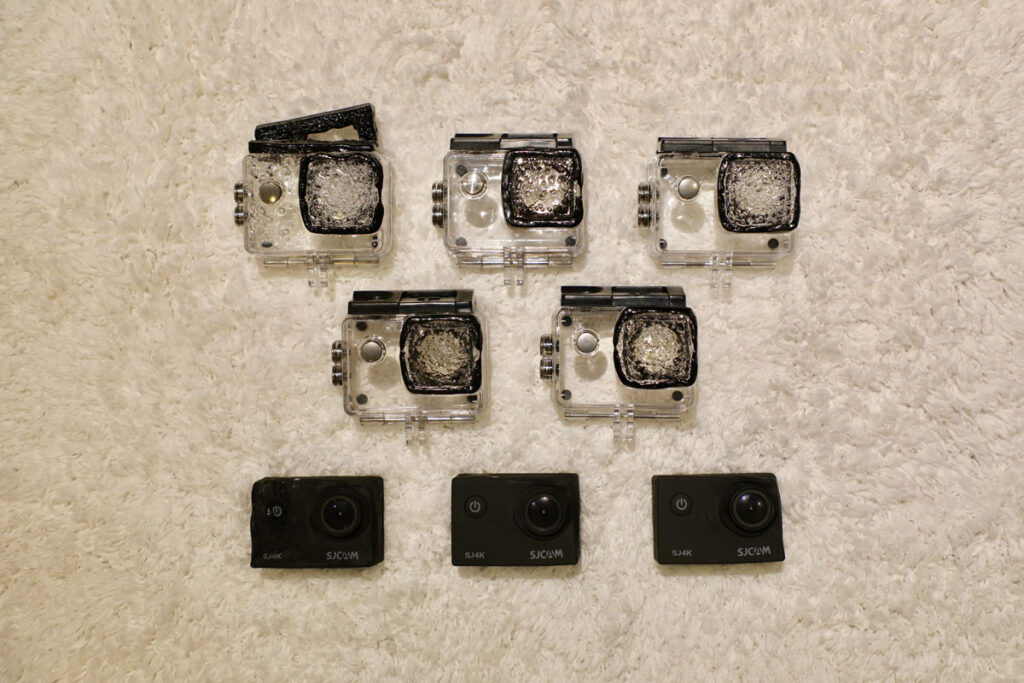
Three cameras and five plastic camera casings are resting on a surface. The camera cases are partially melted.
Cameras recording the fire whirl did their best to survive the experiment. Credit: Wuquan Cui/Michael Gollner

Why these soot reductions occur is still largely a mystery; probing this question would require building a novel laboratory apparatus to take measurements from within the flame itself, Gollner explained. In the field experiments, meanwhile, one of the fire whirls managed to consume 95% of the available fuel, though the remaining tests extinguished prematurely, lowering the overall rates. Ambient wind conditions on the days of the experiments may also have had some effect.

Summoning a fire whirl in even semi-ideal conditions on the outskirts of College Station, Texas, remains a far simpler task than manifesting one in the thick of a disaster: Towing a three-walled tornado generator onto open water becomes as much a question of marine and naval engineering as of fire science. In the experiment at TEEX, the captive firenado rose to the full length of the 5-meter walls; lower walls could make a floating rig easier to transport, but the resulting mix of oxygen and fuel could actually make subsequent air pollution worse, not better.
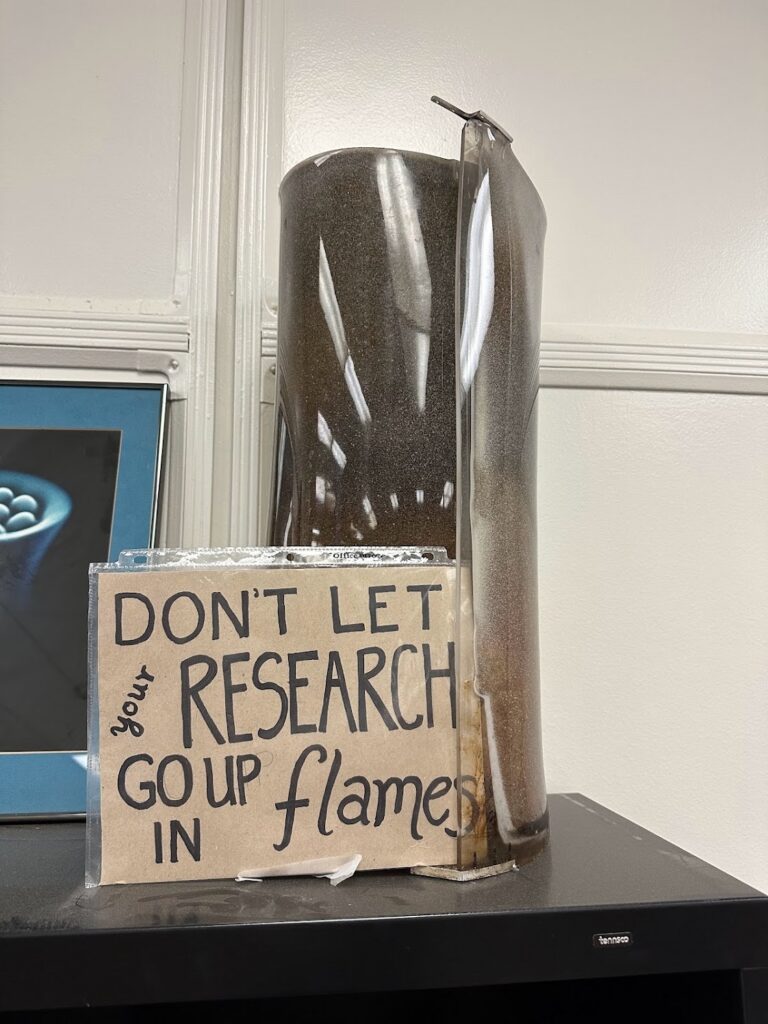
A piece of charred plastic rests on a surface. A sign leaning against the plastic reads, “Don’t let your research go up in flames.”
Years ago, while attending a fire safety conference, Michael Gollner received a frantic call: An experiment back in Maryland had resulted in boilover, splashing the walls and burning up a piece of lab equipment. Gollner has kept the charred remnant ever since, and on his computer, a photo of it is labeled “Don’t let your research go up in flames.” Credit: Michael Gollner

Ali Rangwala, a professor of fire protection engineering at Worcester Polytechnic Institute (WPI) who was not involved with the project, also encourages scientific due diligence. A fire whirl “works very well if the boundary conditions are fixed and well-engineered,” he said in an email to Eos, adding that these whirls have yet to be tested on open water with waves and that the required infrastructure may be costly. (Rangwala helped conduct fire whirl experiments with Gollner at WPI but has not maintained a relationship with the project.)

“The honest fact is that this is a disaster-driven field,” Gollner said. One of the largest oil spills in history, the Deepwater Horizon spill, unleashed more than 750 million liters (200 million gallons) into the Gulf of Mexico. That was in 2010. “We haven’t seen a big oil spill for a long time, and interest in it has wavered.…We require a more interdisciplinary team and more testing. Does anyone have the appetite? Unfortunately, I think it will come with time, when we have another accident.”


Blazing a Trail

Gollner stressed the critical value of fundamental research—of lines of inquiry driven by fascination, not just application. What started as a pure appreciation of a natural wonder has the potential to change fields in ways that researchers have yet to imagine.

“Swirling or not, flames are beautiful,” Gollner said. “It is a natural flow tracer. I can see the fluid mechanics and the combustion interacting.…All the physics, all in one: It’s just beautiful.”

—Jonathan Feakins, Science Writer

Citation: Feakins, J. (2026), The fiery tornadoes that could mop up oil spills, Eos, 107, https://doi.org/10.1029/2026EO260158. Published on [DAY MONTH] 2026.
Text © 2026. The authors. CC BY-NC-ND 3.0
Except where otherwise noted, images are subject to copyright. Any reuse without express permission from the copyright owner is prohibited.
  •  

Can ‘Skyscraper Live’ Bring Some Variety to the Emmy Variety Categories?

You can’t help smiling — with a slightly arched brow — at the streamers’ recent obsession with live events. Television started out as a live medium, after all — virtually all programs were live in the early, golden age of the small screen before the use of film, and then videotape, allowed for more flexibility. […]

  •  

Tom Wuthrich – RIP

Magazine cartoonist Tom Wuthrich, Who signed as “SWISS,” has passed away. Thomas Frederick (Tom) Wuthrich (“SWISS”) August 28, 1945 – May 14, 2026 From the obituary: Tom was a talented Cartoonist, and was also known by his pen name, “Swiss” of Swisstoons. Tom Wuthrich began writing gags for greeting cards in 1972 and then was […]

  •  

20260331-MORTADELO Y FILEMON 001-NB007-4K

Manuel Gual posted a photo:

20260331-MORTADELO Y FILEMON 001-NB007-4K

The Forgotten Archive of a Spanish Spy Agency. MORTADELO Y FILEMON

Description:
A cinematic retro espionage collection set in a fictional 1970s Spanish intelligence world, filled with dusty archives, classified files, typewriters, surveillance rooms, laboratories, old telephones, secret maps, dim offices, deserted streets, vintage storefronts, and mysterious objects that suggest abandoned missions, bureaucratic conspiracies, and forgotten undercover operations.

These images were generated by Artificial Intelligence.

  •  

‘The Four Seasons’ & ‘A Good Girl’s Guide To Murder’ Extend Netflix’s Sophomore Viewership Slump

Two Netflix series that had launched atop Netflix’s weekly Top 10 for English series with their first seasons, The Four Seasons and A Good Girl’s Guide To Murder, returned with their second installments last week. Neither could repeat their debut performances, ranking as No. 3 (The Four Seasons, 4.4M views) and No. 9 (A Good […]

  •  

The Strip Scene & Cartoon News

A roundup of good tidings about comic strip and magazine cartoonists feauring Wayno®, Lincoln Peirce, Sy Barry, Liza Donnelly, Gideon Smiley, Harry Bliss, and cartoonists from The Saturday Evening Post of the 1950s and 1960s. Wayno’s Reuben Portfolio As noted here Wayno® is a finalist for this year’s Silver (divisional) Reuben as Best Newspaper Panel […]

  •  

Agong orders swift gazetting of KL green spaces, flood retention ponds, says Hannah Yeoh

Malay Mail


KUALA LUMPUR, June 6 — His Majesty Sultan Ibrahim, King of Malaysia, has decreed that there should be no delay in gazetting Kuala Lumpur’s green spaces and flood retention ponds, Federal Territories Minister Hannah Yeoh said today.

The matter was raised during Yeoh’s recent audience with the Yang di-Pertuan Agong at Istana Negara, where she also briefed His Majesty on reform initiatives being undertaken by her ministry and Kuala Lumpur City Hall (DBKL).

“The Yang di-Pertuan Agong decreed that we must not delay the decision on the gazetting of areas such as green zones and flood retention ponds, because these are areas of public interest.

“We must expedite it.

“That is why the task force we established is highly crucial for us to protect all these public spaces, as well as for the safety of our senior citizens,” Yeoh told reporters after launching the KL Architecture Festival’s Tropical Fruit Pavilion in Titiwangsa here today.

The issue of flood retention ponds has come under scrutiny following reports that a Malaysian Anti-Corruption Commission (MACC) investigation found several key flood mitigation sites in Kuala Lumpur, including in Jinjang and Batu, had received protection approvals in 1998, but were never formally gazetted.

As a result, the land remained ungazetted for nearly two decades before a land working committee revoked the 1998 approvals in 2015 and alienated about 80 acres of flood retention land to private developers for mixed-use residential projects.

Separately, Yeoh said Kuala Lumpur already has sufficient infrastructure and that the current focus is on improving and revitalising public recreational spaces, particularly for families.

Among the measures introduced is the extension of operating hours at 10 major public parks in the capital, including Titiwangsa Lake Gardens and Perdana Botanical Gardens.

“We are moving the opening time forward from 6am to 5.30am.

“Furthermore, on Fridays and Saturdays, we are extending the closing time from 10pm until 12.30am.

“This is because we want these families to have a healthy environment where they can go out and enjoy time together,” she said.


  •  

Hundreds of rose bushes in bloom at Tokyo’s off-the-beaten-path, next-to-the-tracks flower street

Local road goes from trash dump to treasure.

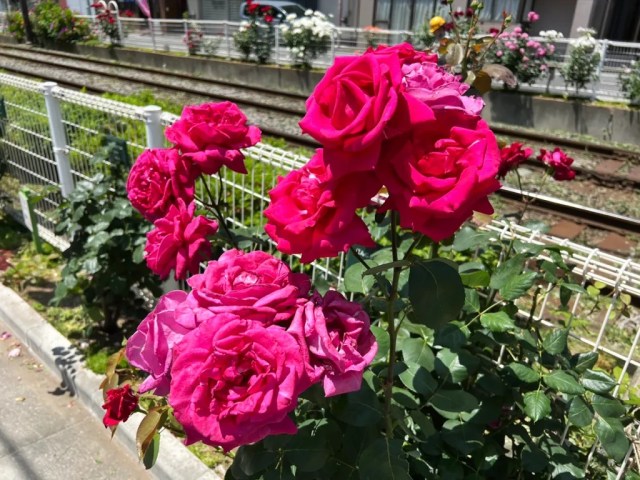
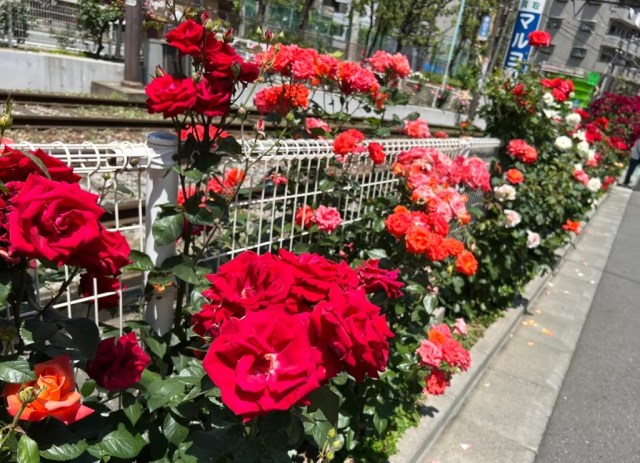
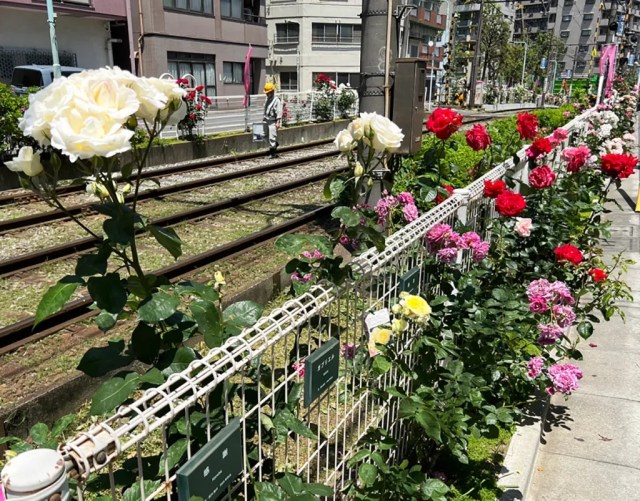
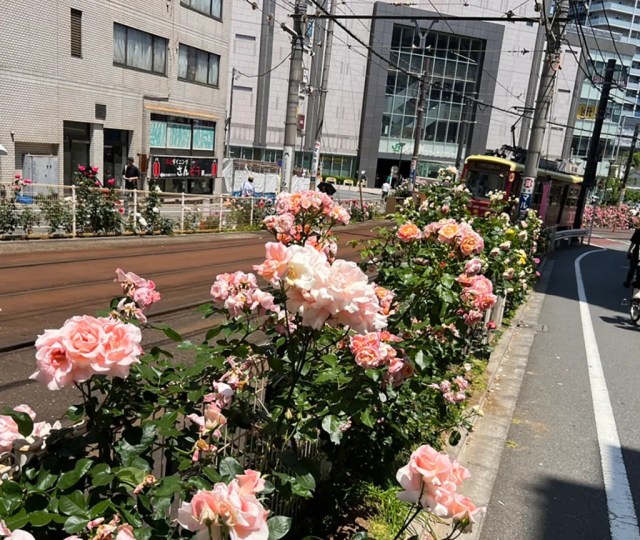
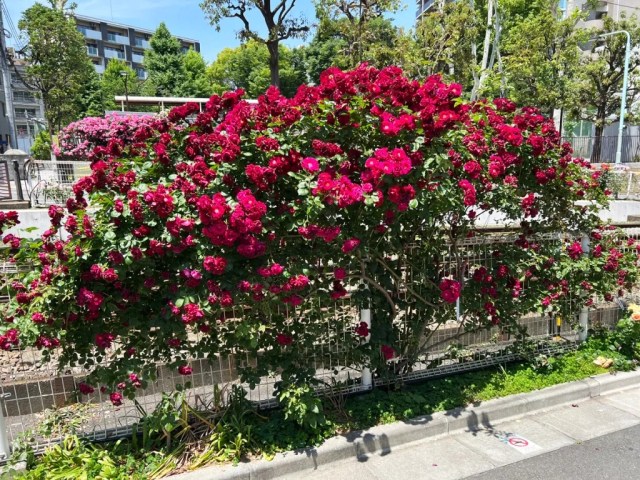
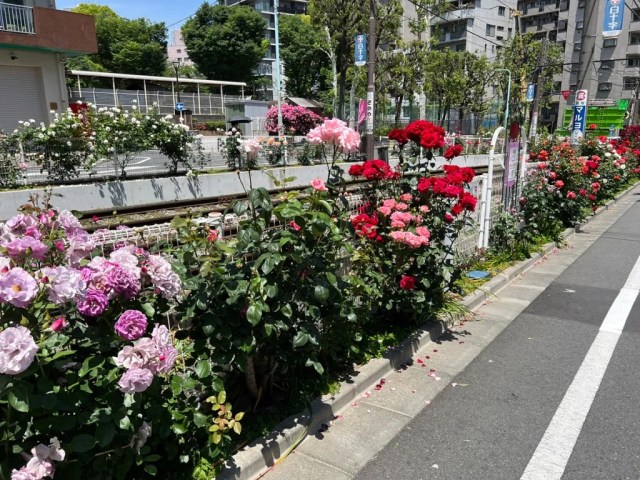
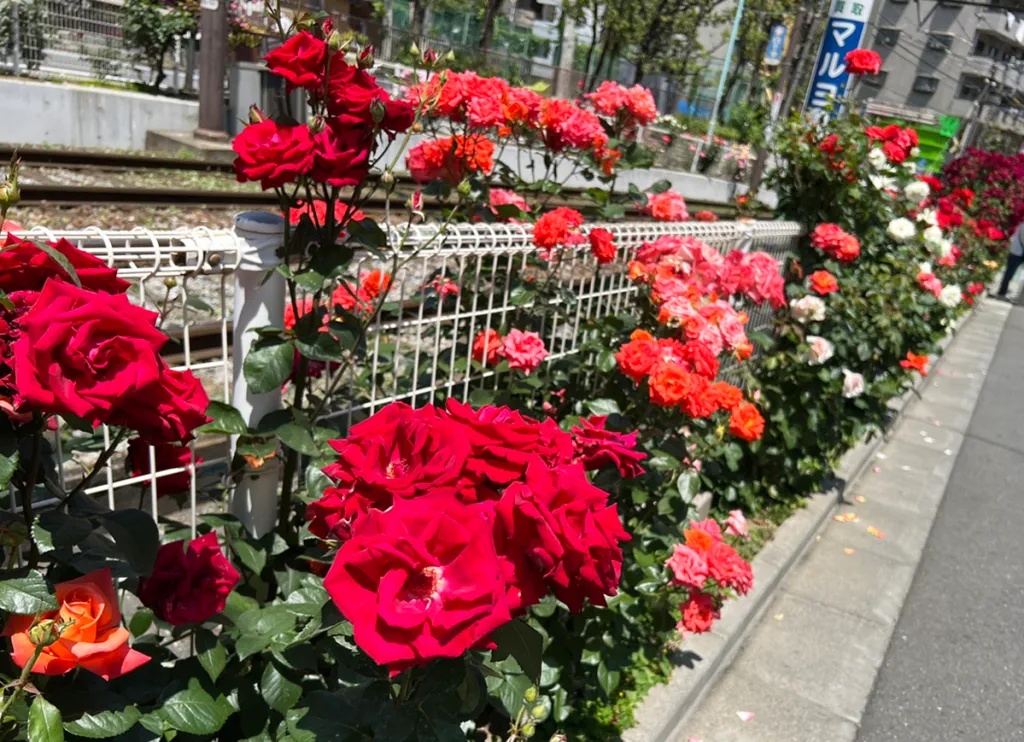
One of Tokyo’s largest and most beautiful collections of roses is in bloom right now. However, you won’t find them blooming inside a park or private garden, but right on the street in the Otsuka neighborhood in Toshima Ward.

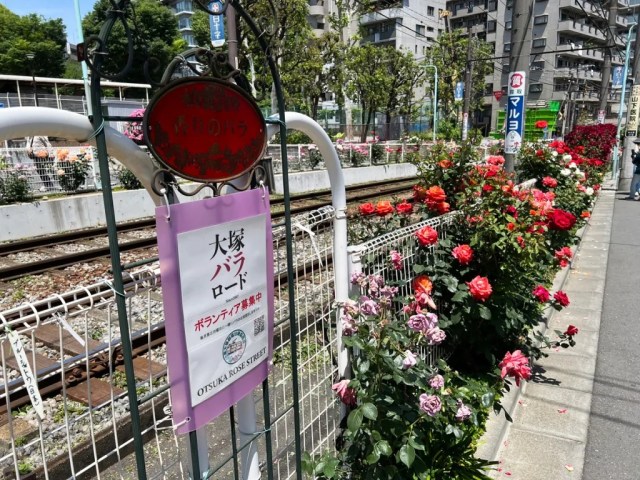
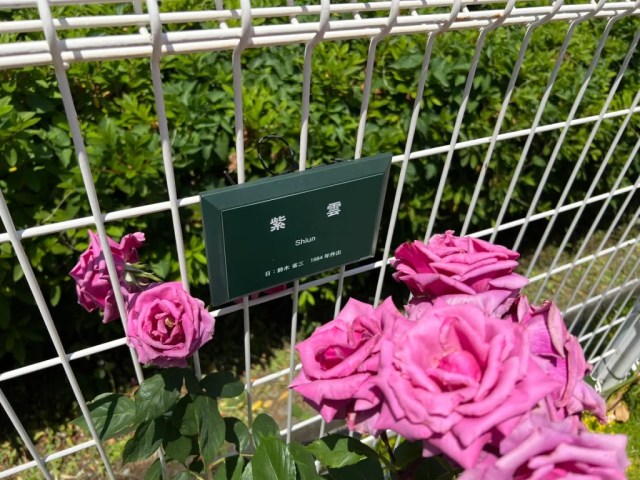
These beautiful flowers, which are in bloom right now, are located on what’s now called Otsuka Rose Road (or Otsuka Rose Street – the signage is sort of inconsistent). However, such a pretty name wasn’t always so fitting for the place. The street used to be cluttered with illegally dumped trash and improperly parked bicycles, and had become a full-fledged eyesore. During projects to clean the place up, workers came across 100 or so rose bushes that had been planted on the roadside long ago, and the decision was made to lean into this floral theme, in hope that it would improve the aesthetics and atmosphere of the neighborhood.

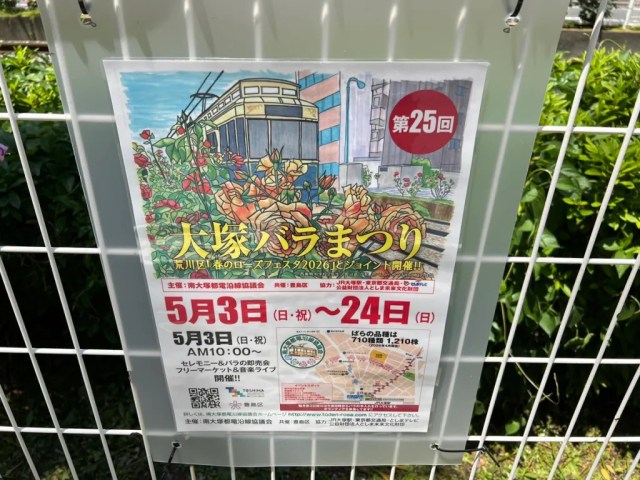
Since then, the number of rose bushes has grown from 100 to 1,210, representing 710 different varieties of the flower. The community even designates the period when the most roses are in bloom as the “Otsuka Rose Festival,” which is celebrating its 25th year from May 3 to 24.

As this is a free event held on a public street, there’s no admission charged. Otsuka Rose Road runs from Otsuka Station to Fujiwara Station, with beautiful scenery the whole way.

▼ Walking route from Otsuka Station to Fujiwara Station via Otsuka Rose Road

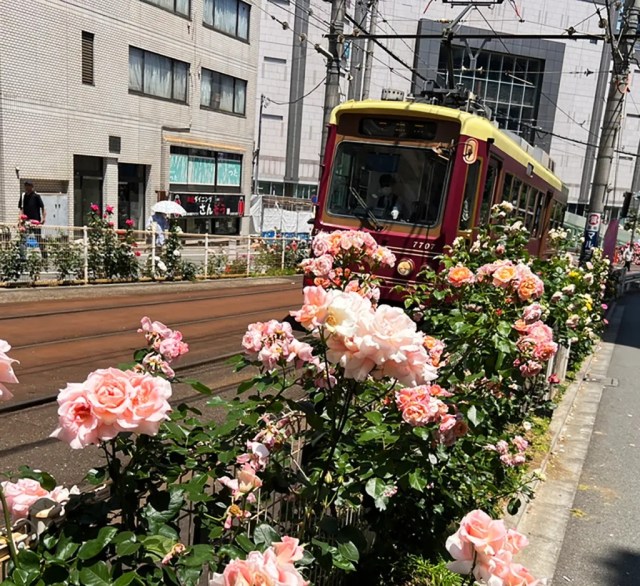
Looking at that map, you might notice that Otsuka Rose Road follows the path of the Arakawa Line. Also known as the Tokyo Sakura Tram, the Arakawa Line is Tokyo’s only remaining streetcar line, so if you’re not in the mood for a stroll, you can also hop on the tram and view the roses while you ride.

Of course, doing the route on foot gives you the opportunity to snap photos of the flowers and tram together, and even if you’re not a train otaku, the combination is a really cool snapshot of how connected the roses are to the local community. Honestly, with the walk between Otsuka and Fujiwara only taking about six minutes, walking Otsuka Rose Road in one direction, then taking the tram back in the other, is a perfectly viable option and lets you see the roses from both perspectives.

Without any flashy, high-profile tourist attractions, Otsuka isn’t on a lot of people’s Tokyo sightseeing itineraries, but it’s located just a bit east of the Ikebukuro neighborhood, and easy to tack on as a side trip if you’re planning to visit the more well-known part of Tokyo, maybe to get some of its newly famous super salty ramen.

Photos ©SoraNews24
● Want to hear about SoraNews24’s latest articles as soon as they’re published? Follow us on Facebook and Twitter!

  •  
❌