 Login
LoginSunset Magazine 1983-05 286
1 June 2026 at 00:38




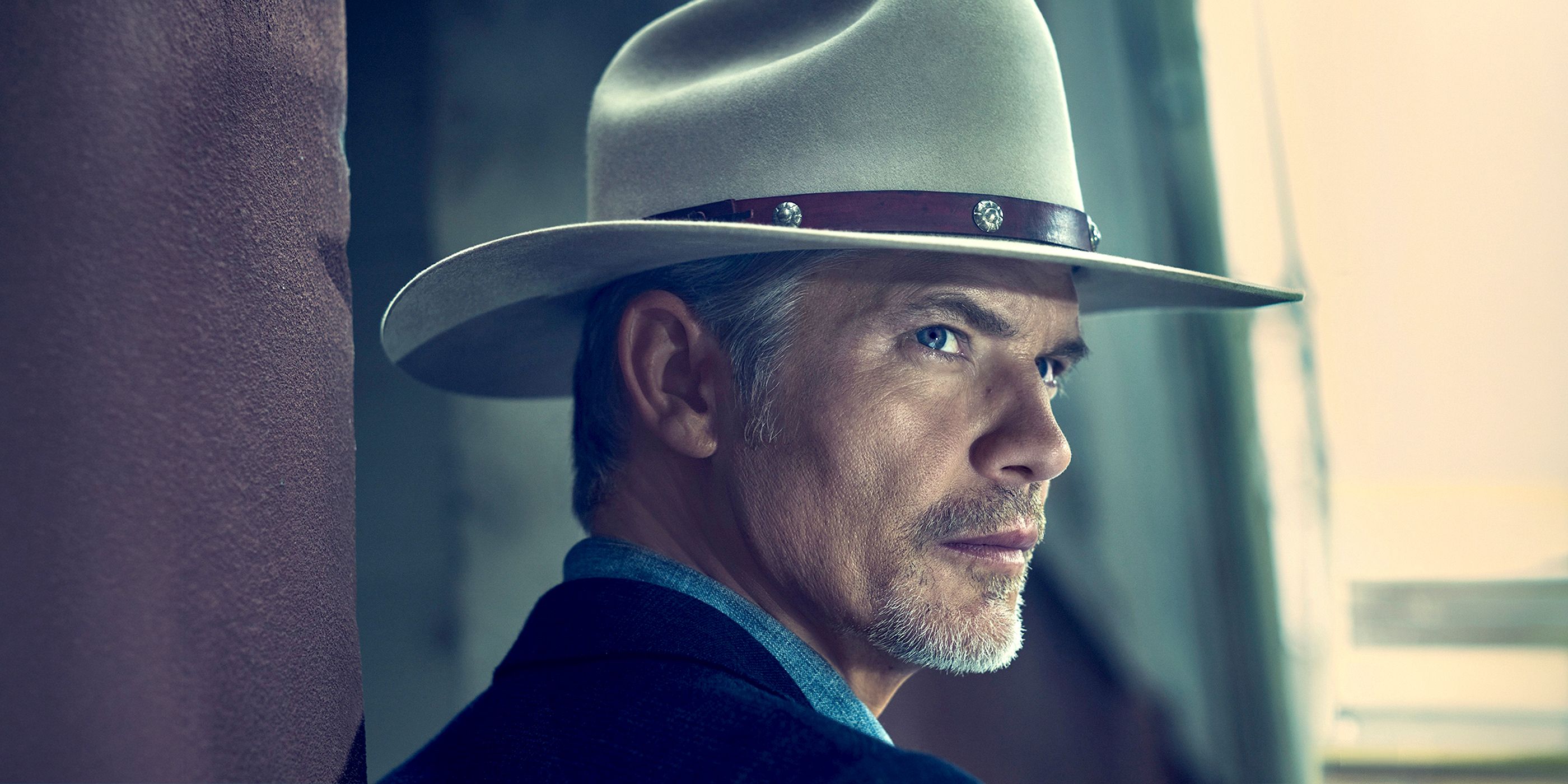
Timothy Olyphant fans are riding high following the news that his latest R-rated thriller, Over Your Dead Body, is now available to watch on streaming, and his new animated series, Mating Season,is dominating Netflix. Olyphant has also been busy as a Star Wars megastar in the last few years, thanks to his role as Cobb Vanth, whom he first played in the second season of The Mandalorian. He later returned as Cobb Vanth in the first and only season of The Book of Boba Fett, and despite there being a massive demand for more of the space sheriff, Star Wars has yet to figure out where is best for him to show up again. Olyphant was also busy last year, starring in one of the best sci-fi shows of the year with Alien: Earth, the spin-off show developed for TV by Noah Hawley (Fargo).


”Before The Boys, before Kick-Ass, before Watchmen, there was Captain Civilian.”
Have you ever dreamed of becoming a superhero? If you’re like most of us, the answer is probably yes. But while many left that dream behind in childhood, one man turned it into a reality. In 1985, young art student Steve Marchant set out to explore a bold question: What if a superhero actually existed? Proudly donning a balaclava, goggles and pink pants over a tight black costume, Steve transformed into Captain Civilian. For eight unforgettable months, he patrolled the streets of Plymouth and Dartington College, fully embracing the superhero life. Before long, some of the students began recognising him as their very own ‘hero’- they witnessed and got involved with it firsthand when there was still no internet, no X, and no TikTok—and even some were eager to join his adventure. And soon, The Captain found himself facing an arch-nemesis… Nearly 40 years later, we’ve brought him back—along with a story that’s never been told. It’s a tale of courage, hope, and laughter that will strike a chord with anyone who ever dreamed of being a hero—or even those who didn’t. Don’t miss this legendary, boldly bizarre, and daftest hero’s return!
Steve Marchant (Captain Civilian)
Steve Marchant read too many comics as a boy in Wolverhampton. After two years at art college in Devon he moved to London where he became a cartoonist, a special needs youth worker and a tutor. Since then he has combined all three in his 29-year career at The Cartoon Museum, where he is the education coordinator/tutor/occasional curator.
The very first issue of Captain Civilian from the eminent Marchant Comics Group is currently exclusive to The Cartoon Museum.
It’s a real pleasure speaking with you, Captain Civilian. What was it like putting on the hero’s costume again after all these years?
Making the video for the Heroes exhibition was the first time I’d worn the costume since, I think, 1992. Being made of nylon, I was worried it might have decayed during the years it sat in a suitcase under my bed, but it slipped on fine. And I’d forgotten how just by wearing it, your whole posture changes – shoulders back, chest out – clothes do make the man, as the saying goes.
Your “Captain Civilian” zine, now available in the Cartoon Museum Shop, tells the story of how you came to exist and be recognised in the real world as a hero. Are there any heroes that particularly inspired you in inventing Captain Civilian? What do you think makes a hero a hero?
What inspired me was all of the superheroes I’d grown up reading, from both Marvel and DC, and in particular the Adam West Batman from the 60s TV series. By the 80s, the Batman in the comics was quite a grim and gritty character, along with other darkly-clad anti-heroes like The Punisher. I wanted to hark back to when superheroes were more fun, I felt that this would enable better interactions with the public.
In real life, heroes don’t wear fancy costumes. Real-life heroes to me are people that put other people before themselves – nurses, doctors, teachers, carers, etc. Having said that, next time I’m in hospital I wouldn’t mind being tended to by a nurse in a skin-tight outfit. But I suppose I’d need to be in BUPA.
“Every week, Captain Civilian took a break from patrolling with a well-earned mug of tea at the Bomb Shelter Cafe.”
What was the reaction when you stood in front of people with your superhero character and costume after all the trial and error?
As you see in the zine, the costume evolved gradually during the first few months. In its earliest stages, where I wore just tights, underpants, balaclava, goggles, and rubber boots, I got laughs and puzzlement at college (which was fine) and nervous glances from the citizens of Plymouth. They probably thought I was on my way home from a fetish club or something. That’s when I realised that I had to adopt more of the classic costume elements. Once I had a chest emblem and a cape, I was suddenly a ‘superhero’ in peoples’ eyes – or more likely a nutter who thought he was a superhero. If the latter opinion was true (and it probably was), that was okay because the whole point of what I was doing was to discover what would happen if a superhero walked among us. And yeah, that’s when people occasionally engaged with me.
“Just these two key elements turned me from being a hapless pervert into a superhero.”
Like Batman’s Joker or Spider-Man’s Green Goblin, the presence of a vicious enemy or rival makes the superhero story more fascinating (For that matter, without enemies, there can be no superheroes!). We hear that villains have appeared in your Captain Civilian world as well. How did you feel when you finally had an enemy to defeat?
The appearance of The “Orrible Phantom” was completely unexpected, and brilliant. It brought to life the aspect of the Spider-Man comics where he gets blamed for New York being plagued by super-villains, that his presence has brought them forward. A later enemy, The Bingo Master, was very much a collaboration between me and a friend of mine. And even later, I became my own villain, as you’ll eventually see.
Captain Civilian’s rival “Orrible Phantom”
In the 40 years since your days patrolling as Captain Civilian, the world of superheroes has changed, with the diversification of heroes in terms of gender, race, age, and the rise of anti-heroes, etc, (yet most of them still wear tight costumes and capes). But no matter how much times have changed, why do you think superheroes still fascinate people today?
In the 80s, superheroes were very much a niche interest. Things have changed and I think it’s largely down to the ubiquity of superheroes in films and TV over the last 25 years. That has revived the genre and taken it to the greater public. Nowadays you see people wearing superhero T-shirts, jackets, caps, everywhere you go, because they love the movies. They’ve probably never read a comic.
As an avid superhero fan for many years, what part of the ”HEROES” exhibition did you get excited about the most?
I love it all, but I got the biggest thrill from seeing all the old American Sunday newspaper strips such as Flash Gordon, Superman, Batman, and Miss Fury – I’d never heard of her but she predates Wonder Woman, she was the first female superhero. The page of Little Nemo in Slumberland is amazing.
And of course, I’m in the exhibition, which has been fun. When I suggested including Captain Civilian I was kind of half-joking, but everyone thought it was a great idea. And that led to the Captain Civilian zine, which is the first of maybe four or five I’m going to publish. Collect the set!!
Lastly, if someone wants to be a hero like you, what would you advise them to do?
Make sure you have a wee before you go out on patrol.
by Haruka Katsuyama
Captain Civilian and all related elements © and Steve Marchant 2024
Meet The Captain!
Want to meet Captain Civilian? Catch him in action at our latest exhibition, “Heroes”, where you can see him in a special video! But don’t worry—he’ll be making a REAL appearance at The Cartoon Museum soon, with issue #2 of his epic saga in print!
And don’t forget, our exhibition HEROES: The British invasion of American comics is on until Saturday, 19 October.



Manuel Gual posted a photo:
Echoes of the 1940s Circus: Steam Trains, Big Top Lights and Forgotten Wonders
Description
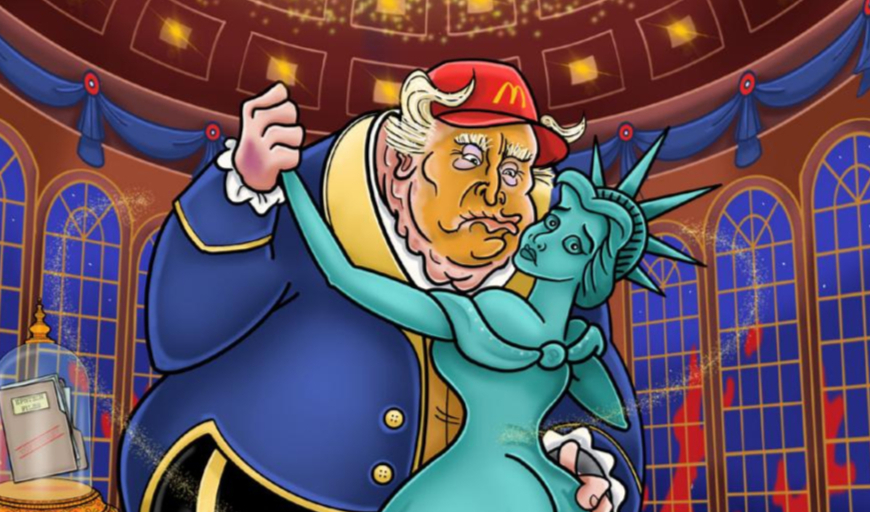
A cinematic journey through a fictional vintage circus world inspired by the atmosphere of the 1940s: steam trains arriving through clouds of smoke, crowded railway platforms, canvas tents rising at dawn, performers preparing behind the scenes, glowing fairground lights, brass bands, trapeze artists, ringmasters, clowns, fortune tellers, animal acts, travelling caravans and the quiet moments hidden between spectacle and exhaustion.
This collection evokes the golden age of travelling circuses as if seen through the lens of an old documentary photographer, but with the visual richness of modern cinematic photography. Warm amber lights, deep shadows, smoky interiors, velvet costumes, weathered wood, worn posters, dusty roads and dramatic faces create a world suspended between memory, theatre and dream. Each image suggests a fragment of a larger story: the arrival of the circus by train, the construction of the tent, the anticipation of the crowd, the tension before the performance, the intimacy of backstage rituals and the melancholy beauty of a show that exists only for one night before disappearing again.
The series blends realism and fantasy, presenting the circus not only as entertainment but as a temporary city of artists, workers, animals, music, mystery and human emotion. It captures both the grand spectacle and the fragile backstage humanity of a travelling world built from canvas, light, discipline and illusion.
All images have been generated by Artificial Intelligence.
